 English
 Lietuvių
 Latviešu
 Eesti
 Polski
 Русский
 Українська
 Deutsch
 Nederlands
 Čeština
 Slovenčina
 Svenska
 Norsk
 Dansk
 Suomi


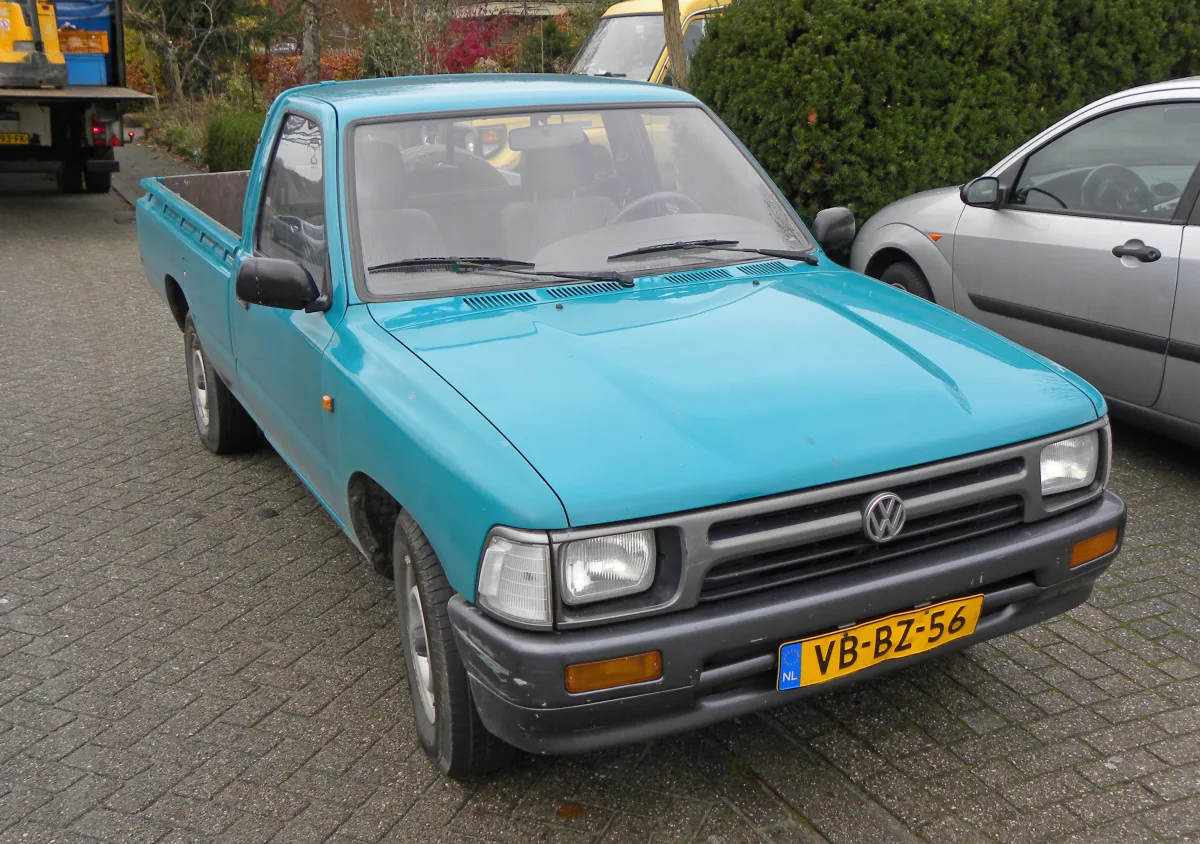
Volkswagen Taro: pickup, engines and what to check
Volkswagen Taro — the pickup that Volkswagen sold in Europe from 1989 to 1997. Technically, it's a Toyota Hilux with a Volkswagen badge. In this article, we look at the body styles, engines, and what to check when buying a used Taro.






Taro in brief
The Taro was developed in collaboration between Volkswagen and Toyota: the vehicle was manufactured in Japan and sold in Europe under the Volkswagen name. It's a straightforward, robust pickup with a ladder-frame construction, designed for work and tough roads.
Due to its origins, the Taro's parts and technology are very similar to the contemporary Toyota Hilux, which is a big advantage today when sourcing parts and finding mechanics.
Body styles and drivetrain
The Taro was offered with a single cab, extended cab (Xtra Cab), and with two drivetrain options — rear-wheel drive or four-wheel drive.
The four-wheel-drive version has greater ground clearance and better traction, but requires more maintenance. If you plan to use the vehicle for work or hunting, opt for this version.
Engines and gearboxes
The Taro was equipped with 2.4-litre diesel and petrol engines — these are simple, long-lasting units without complex electronics. Check the exact power output according to the specific vehicle's documents.
The gearbox is usually manual. Four-wheel-drive versions have an additional transfer case with reduced gearing.
What to check when buying a used Taro
The most important thing is to check for rust on the frame and body. Inspect the frame, sills, wheel arches, and the floor of the cargo bed (load box). During this period, Japanese pickups were quite susceptible to rust.
Check that the engine doesn't smoke, there are no oil or coolant leaks, and it runs smoothly when cold. Test the four-wheel drive and differential lock.
If the vehicle has been used for heavy-duty work, check the suspension, axle alignments, and for any signs of damage from carrying heavy loads.


Trim levels
Names and equipment vary by market and year; we list the versions most commonly found in Europe.
Viena kabina
All productionThe most basic workhorse variant.
- Two seats
- Large cargo bed
- Often comes with basic trim
Xtra Cab
All productionPickup with an extended cab.
- Additional seats behind the front seats
- More space for gear
- More comfortable than a single-cab
4x2
All productionRear-wheel drive only.
- Easier and cheaper maintenance
- Lower fuel consumption
- Less towing capacity
4x4
All productionFour-wheel drive.
- Better towing capacity
- Reduced gearing
- Often — more headroom
Comparing variants
| Viena kabina 4x2 | Xtra Cab 4x2 | Viena kabina 4x4 | Xtra Cab 4x4 | |
|---|---|---|---|---|
| Who it suits | For work | For work with passengers | For off-road work | For versatile use |
| Gearbox | Rear-wheel drive | Rear-wheel drive | All wheels | All wheels |
| Space in the cabin | Two | More | Two | More |
| Price in the used market (relatively) | € | € | €€ | €€ |
If you need a car for work and good mileage — go for a 4x4 with a solid frame. If you mostly drive on roads, a 4x2 will do.
Pros
- Simple and long-lasting design
- Parts and tech similar to the Toyota Hilux
- Robust frame and large cargo bed
- Option to choose four-wheel drive
Cons
- Corrosion — the main issue
- Limited comfort and basic interior
- Outdated safety standards
Frequently asked questions
Is the Volkswagen Taro a Toyota?
Yes, technically it's a Toyota Hilux built in Japan and sold in Europe under the Volkswagen badge.
Is the Taro suitable for work?
Yes, it's a sturdy pickup with a ladder frame and a large cargo bed, perfect for work and tougher roads.
Are parts for the Taro available?
Parts often match those of the contemporary Toyota Hilux, so they're easier to find than for many other old cars. However, this depends on the specific part.
Updated 2026-10-21 · Trim levels and equipment vary by market and model year — check the equipment of the specific car. · Translated automatically


