 English
 Lietuvių
 Latviešu
 Eesti
 Polski
 Русский
 Українська
 Deutsch
 Nederlands
 Čeština
 Slovenčina
 Svenska
 Norsk
 Dansk
 Suomi


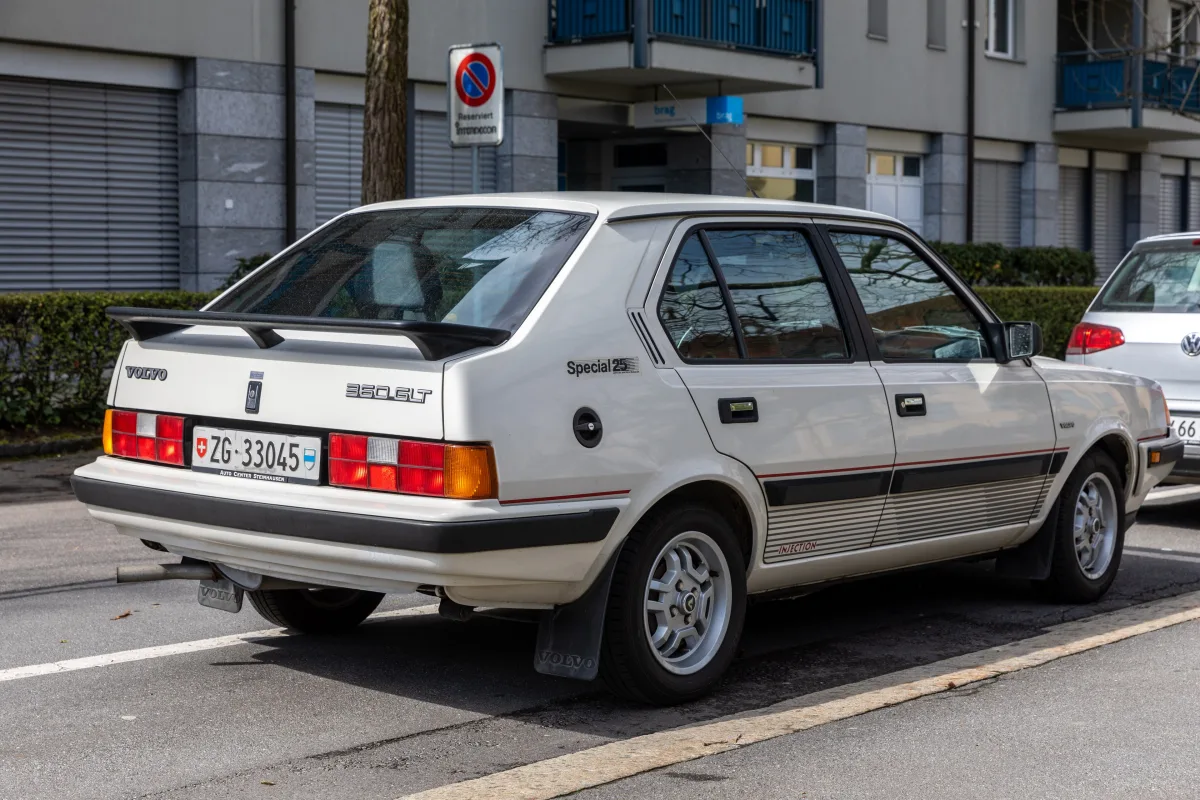
Volvo 360: the more powerful 300 series hatchback with a 2.0-litre engine and what to know
Volvo 360 — the 300 series model with a 2.0-litre engine, produced from 1982 to 1990. We explain how it differs from the 340, which engines are available, and what to check if you come across one in the used market.






Volvo 360 in brief
The Volvo 360 is the more powerful 300 series variant, developed from the earlier 343 and 345. Unlike the smaller 340, it features a 2.0-litre engine from the Volvo 240, making it more lively to drive.
The hatchback was available in three or five doors, and from 1984, a traditional four-door saloon was also offered. Production ended in 1990, with the last 340 rolling off the line in 1991.
What sets it apart
The construction is the same as the 340: engine at the front, gearbox mounted at the rear axle. With the 2.0-litre engine, the gearbox is covered by a tubular bell housing, and the weight distribution is good.
By the standards of the time, it's a fairly safe car, with the 360 GLT versions particularly prized by driving enthusiasts. However, the 300 series is generally considered heavy and sometimes underpowered.
Engines and gearboxes
The 360 came with the 2.0-litre Volvo B200 engine, with power outputs ranging from around 95 to 118hp, depending on the version. Engine variants include the B200K with a carburettor and the B200E with Bosch LE-Jet fuel injection (360 GLT).
In some markets, a diesel 360 was offered in 1985. The gearbox is manual (some versions had an automatic). Check specific details in the car's documentation.
What to check when buying a Volvo 360
Cars are old, so the body condition is key: check for rust on the sills, arches, floor, and rear axle mounts (corrosion protection improved only in later years).
Check the engine, fuel injection system (GLT), gearbox, rear axle, and brakes. Parts, especially specific ones for the 300 series, are scarce in Lithuania, so check availability before buying.


Trim levels
Trim names depend on the market and year; 360 often features GLS and GLT badges.
GLT
1982–1990More powerful version with fuel injection and better equipment.
- Often — B200E engine with fuel injection
- Sportier character
- Better equipment than GLS
GLS
1982–1990The main comfort version.
- Often — simpler engine with a carburettor
- More comfortable interior
- Simpler equipment than GLT
GLS vs GLT comparison
| 360 GLS | 360 GLT | |
|---|---|---|
| Engine | 2.0-litre, often with carburettors | 2.0-litre, often with fuel injection |
| Who it suits | Everyday driving | Those seeking a more spirited drive |
| Power | Less | Around 115 hp |
| Price in the used market (relatively) | Budget | Mid-range |
The GLS is perfect for those needing a straightforward, classic hatchback, while the GLT is for those wanting a more spirited and sporty Volvo.
Pros
- More spirited than the 340, especially the GLT version
- Good weight distribution
- Safe construction for its time
- A rare, classic Volvo
Cons
- Corrosion risk due to age
- Finding parts in Lithuania is tricky
- Heavy and sometimes underpowered
Frequently asked questions
How does the Volvo 360 differ from the 340?
The 360 has a 2.0-litre engine from the Volvo 240, while the 340 has smaller Renault engines. The 360 drives more lively and has a modified gearbox casing gasket.
What body styles does the 360 come in?
Three or five-door hatchback, and from 1984, a four-door saloon.
Is the 360 GLT better?
Often rated as more lively and sporty, but the condition of the specific car is key.
Updated 2026-10-21 · Trim levels and equipment vary by market and model year — check the equipment of the specific car. · Translated automatically


