 English
 Lietuvių
 Latviešu
 Eesti
 Polski
 Русский
 Українська
 Deutsch
 Nederlands
 Čeština
 Slovenčina
 Svenska
 Norsk
 Dansk
 Suomi


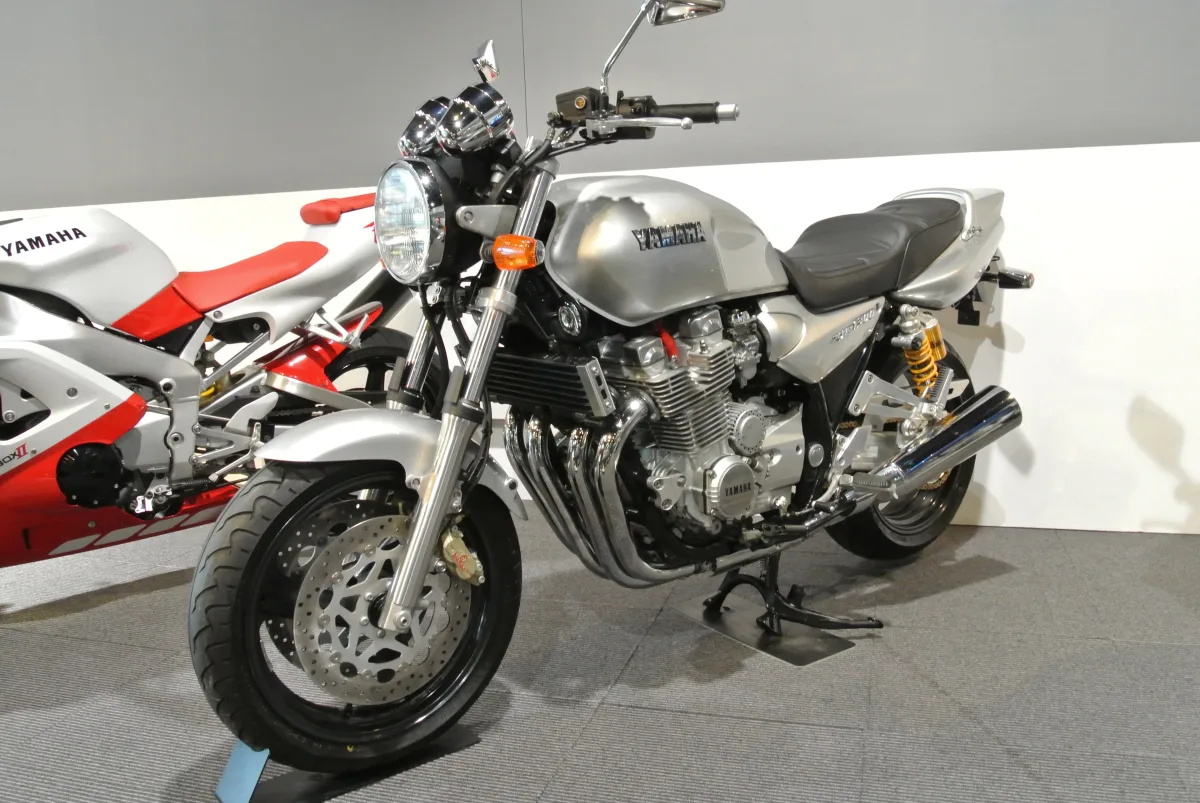
Yamaha XJR 1300: classic naked, generations and what to check
Yamaha XJR 1300 — an air- and oil-cooled four-cylinder classic-style naked motorcycle, produced from 1999 to 2016. We look at its generations, engine, and what to check when buying a used motorcycle.






XJR 1300 in brief
The XJR 1300 is a large, heavy, and powerful naked motorcycle with a classic look: round headlight, twin rear shocks, and large chrome elements. It's designed for those who enjoy traditional motorcycle aesthetics and a powerful four-cylinder engine.
This motorcycle boasts strong torque, easy city handling, and stability on the highway. Due to its hefty weight, it's not as agile as modern naked bikes, but it's a joy to ride.
Generations — what's the difference
The first generation (from 1999) features carburetors, while from around 2007, fuel injection was used, improving engine performance and compliance with emissions standards.
In its final production years, the model received a few updates, and alongside the base version, sportier and retro-style modifications were introduced (e.g., XJR 1300 C and Racer).
Engine and transmission
The engine is a 1251 cm³ four-cylinder, air- and oil-cooled, with power output around 100 hp. It delivers strong and even power across the rev range.
The gearbox is a manual, chain-driven unit. The clutch is hydraulic, making for smooth operation, so the motorcycle is suitable for daily commuting.
What to check when buying a used XJR 1300
In early carburettor versions, check the carburettor synchronisation and whether the engine runs smoothly at idle. Cold start should be straightforward.
Inspect the engine for oil leaks, as air- and oil-cooled engines can seize up. Check the rear shock absorbers, front fork seals, and brake discs.
The 4-in-1 exhaust system and tank can corrode, especially if the motorcycle has been stored in a damp place. Check the service history, valve adjustment, and battery.


Trim levels and versions
Trim levels vary by market and year; below are the main versions.
XJR 1300
1999–2006First-generation motorcycle with carburettors.
- Carburettor engine
- Classic design
- Two rear shock absorbers
XJR 1300 (įpurškimas)
From 2007Updated version with fuel injection.
- Fuel injection
- Improved engine performance
- Often — more modern equipment
XJR 1300 C
Later yearsA different look and minor changes.
- A different look
- Often — different wheels and seats
- The same engine
XJR 1300 Racer
Later yearsA sportier-looking version.
- Sportier handling
- Often — special paint
- The same engine
XJR 1300 versions compared
| Karbiuratorius | Įpurškimas | Racer | |
|---|---|---|---|
| Who it suits | For classic enthusiasts | For daily driving | For retro style enthusiasts |
| Fuel system | Carburetors | Įpurškimas | Įpurškimas |
| Power | Around 100 AG | Around 100 AG | Around 100 AG |
| Maintenance | Carburettor tuning | More basic | More basic |
| Price in the used market (relatively) | Mid-range | Mid-range | High-end |
For daily driving, opt for the fuel-injected version, while classic enthusiasts can choose the earlier carburettor model if it's in good nick.
Pros
- Robust and smooth engine
- Classic looks
- Comfortable and stable ride
- Easily serviced
Cons
- Hefty weight
- Not insubstantial fuel consumption
- The air-cooled engine is sensitive to heat
Frequently asked questions
How much power does the XJR 1300 have?
Around 100 hp, but the exact power depends on the year and market.
Is the XJR 1300 suitable for beginners?
No, it's heavy and powerful. It's best for experienced drivers.
Carburettor or fuel injection?
Fuel-injected versions are simpler for daily driving, while carburettor models are favoured by classic car enthusiasts, although they require more tuning.
Updated 2026-10-21 · Trim levels and equipment vary by market and model year — check the equipment of the specific car. · Translated automatically


