 English
 Lietuvių
 Latviešu
 Eesti
 Polski
 Русский
 Українська
 Deutsch
 Nederlands
 Čeština
 Slovenčina
 Svenska
 Norsk
 Dansk
 Suomi


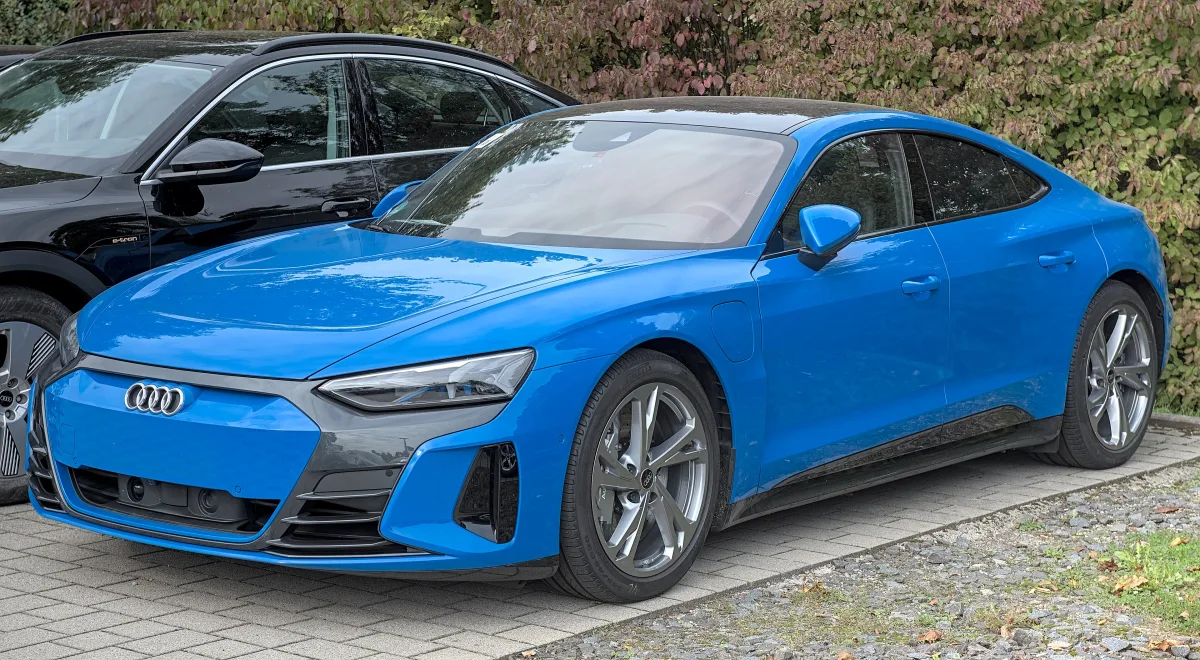
Audi e-tron GT: generations, battery, range, charging and RS
The Audi e-tron GT is an electric four-door sports car that has been in production since 2021 and is technically related to the Porsche Taycan. We look at how the e-tron GT quattro, RS e-tron GT and the 2024 refreshed versions differ, how much range you can realistically expect in winter, how the battery charges and what to check when buying used.






e-tron GT in brief
The e-tron GT was introduced in 2021. It is built on the same platform as the Porsche Taycan and is manufactured at the Audi plant in Böllinger Höfe near Neckarsulm, Germany. The car features an 800V electrical system, allowing it to charge very quickly at compatible stations.
This is a low, wide and very fast car that combines sporty driving with comfort suitable for long journeys. All versions come with two motors and all-wheel drive. There's less space in the rear seats and boot than in a typical saloon, and the low ground clearance requires caution around high kerbs.
Early and refreshed e-tron GT — what's the difference
Early cars (2021–2024) were offered as the e-tron GT quattro (around 476 hp) and RS e-tron GT (around 598 hp), both with temporary power boosts when pulling away. They have an 84 kWh usable battery.
2024 e-tron GT refreshed: the base model has been replaced by the S e-tron GT, the RS e-tron GT performance variant has been introduced, and power has been significantly boosted — the S e-tron GT with temporary power boost hits around 680 hp, with the RS versions even more powerful. The refreshed cars come with a larger, approximately 97 kWh usable capacity battery, faster charging, and increased range.
Battery, range and charging
According to the manufacturer's (WLTP) figures, early e-tron GT models cover around 450–490 km, while the refreshed versions manage around 550–600 km, depending on the variant and wheels. In reality, especially when driving fast, the range is lower, and in winter, you often need to count on around 20–30% less than in summer.
Charging via CCS2 connector: usually with alternating current up to 11 kW (in some cars up to 22 kW). At fast-charging stations, early models charge up to around 270 kW, while the refreshed versions charge up to around 320 kW if the station supports this power.
The rear axle uses a two-speed transmission, which helps both accelerate and cruise efficiently at high speeds. A cold battery charges more slowly, so it's worth pre-heating it before fast charging in winter.
What to check when buying a used e-tron GT
Request a battery health (SoH) report from Audi service or an electric vehicle diagnostic specialist and compare the displayed range when the battery is charged to 100% with the new car's figures. Ask how often fast charging has been used.
This powerful car wears out tyres quickly, so check their condition and the brakes — especially if ceramic or special-coated discs are fitted, as replacing them is expensive. Inspect the front bumper's underside and sills for damage, as the car is low-slung.
Test the air suspension (if fitted), loading with both alternating and constant current, the multimedia system, and the driver-assistance features. Use the VIN to check the history and whether manufacturer-recommended software updates and service work have been carried out.


Versions
The equipment varies by market and year; we list the e-tron GT versions most commonly found in Europe.
e-tron GT quattro
2021–2024The base version of the early cars is quick and comfortable.
- Around 476 hp
- Around an 84 kWh usable battery capacity
- Often — air suspension
RS e-tron GT
2021–2024The more powerful version of the early cars.
- Around 598 hp
- Air suspension
- Often — ceramic brakes and a carbon-fibre roof
S e-tron GT
From 2024The base version of the refreshed model.
- A larger, approximately 97 kWh battery
- Fast charging up to around 320 kW
- Increased range
RS e-tron GT / RS e-tron GT performance
From 2024The most powerful versions of the refreshed model.
- Most powerful in the e-tron GT lineup
- Sportier suspension and brakes
- Often — active suspension
e-tron GT versions compared
| e-tron GT quattro | RS e-tron GT (iki 2024 m.) | S e-tron GT | RS e-tron GT (nuo 2024 m.) | |
|---|---|---|---|---|
| Who it's for | For daily driving and road trips | For spirited driving | For road trips and speed | Maximum power |
| Battery (usable, approximately) | 84 kWh | 84 kWh | 97 kWh | 97 kWh |
| Fast charging (up to, approximately) | 270 kW | 270 kW | 320 kW | 320 kW |
| Power (relatively) | Large | Very large | Very large | Largest |
| Wheels (most commonly) | 20–21 inch | 20–21 inch | 20–21 inch | 20–21 inch |
| Price in the used market (relatively) | € | €€ | €€ | €€€ |
For most buyers, the best choice is the e-tron GT quattro or the refreshed S e-tron GT: they offer ample power with a punch, and maintenance is cheaper than the RS. Refreshed models are worth choosing for their larger battery and faster charging.
Pros
- Very fast and stable on the road
- Incredibly quick acceleration thanks to the 800V system
- Distinctive design and high-quality interior
- Suitable for daily driving and long journeys
Cons
- Less space in the rear seats and boot than a typical sedan
- Expensive tyres and brakes
- Low ground clearance — caution needed around speed bumps and potholes
Frequently asked questions
How does the e-tron GT differ from the Porsche Taycan?
Both cars are built on the same platform and have similar batteries, engines, and charging systems. The differences lie in design, interior, and suspension settings: the e-tron GT is often considered more suited to long journeys, while the Taycan is more sporty.
How far does the e-tron GT really go in winter?
This depends on the version, speed, and temperature. In cold weather, you often need to count on about 20–30% less range than in summer, and even less when driving fast on the motorway.
Is it worth choosing the RS e-tron GT over the standard version?
For daily driving and long journeys, the standard version's power is sufficient with a charger. The RS is worth choosing if you want maximum power and sportier equipment, but its tyres, brakes, and insurance often cost more.
Updated 2026-10-10 · Trim levels and equipment vary by market and model year — check the equipment of the specific car. · Translated automatically


