 English
 Lietuvių
 Latviešu
 Eesti
 Polski
 Русский
 Українська
 Deutsch
 Nederlands
 Čeština
 Slovenčina
 Svenska
 Norsk
 Dansk
 Suomi


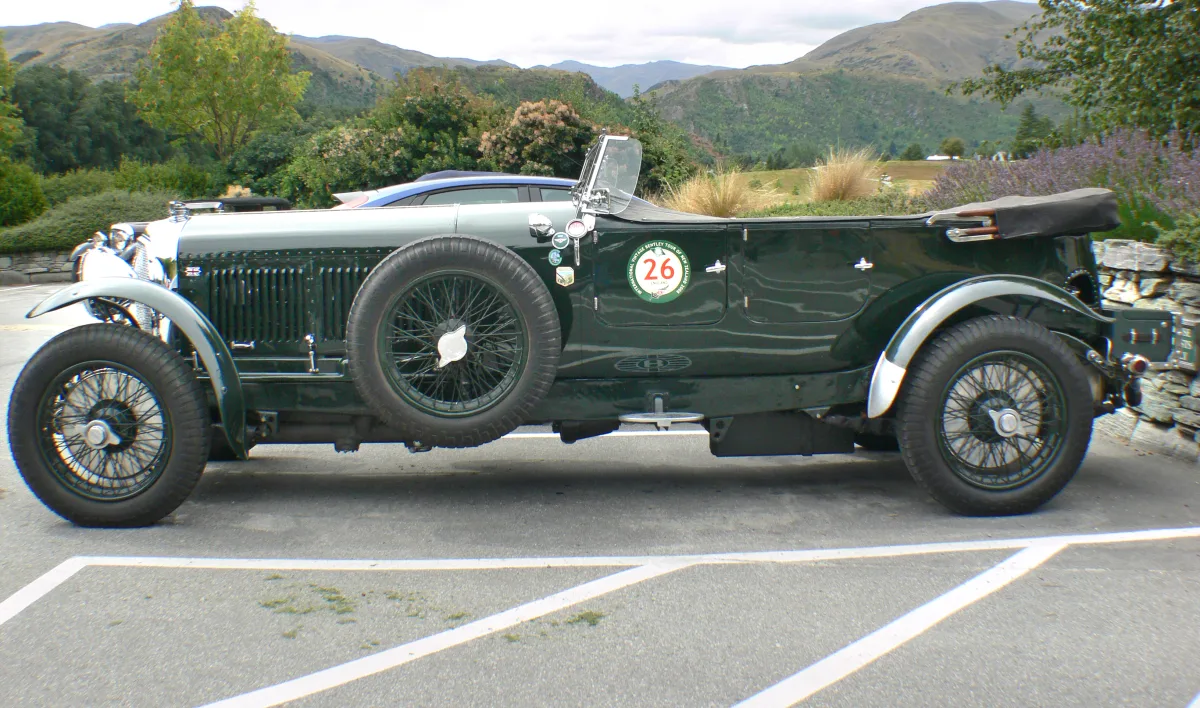
Bentley 6½ Litre and Speed Six: 1926–1930 classic
Bentley 6½ Litre — 1926–1930 saw the production of this large, luxurious W. O. Bentley-designed machine with a 6.6-litre six-cylinder engine. Its sporty counterpart, the Speed Six, became one of the most famous racing Bentleys. We look at the versions, the engine, and what you need to know when buying such a classic car.






6½ Litre in brief
The 6½ Litre was created as an evolution of the 3 Litre, aiming to accommodate larger limousine bodies and offer greater comfort. A total of 362 of these cars were produced, along with 182 sporty Speed Six versions.
This is a luxurious 1920s machine that collectors prize for its history, engineering, and racing glory.
Versions — what's the difference
The standard 6½ Litre was designed for comfortable driving and larger body styles. The Speed Six is the sporty version with a more powerful engine and usually a shorter wheelbase.
The Speed Six won the Le Mans 24-hour race in 1929 and 1930 and is considered the most successful Bentley racing model. In March 1930, Woolf Barnato 'raced' against the famous Blue Train in France and reached London before the train arrived in Calais.
Engine and tech
Both versions feature a 6.6-litre inline six-cylinder engine. The standard 6½ Litre produces around 147 hp at 3500 rpm, while the Speed Six offers around 180 hp, with racing versions being even more powerful.
The wheelbase of the cars ranged from 132 to 152.5 inches: the 6½ Litre was most commonly 150 inches, while the Speed Six was usually shorter. The cars featured four-wheel brakes with servo assistance and drum brakes.
What to check when buying a Bentley 6½ Litre
Due to its rarity, the most important thing is the provenance and documentation. Check the chassis and engine numbers, history, and whether the body is original to the car.
Inspect the wooden body frame, engine, brakes, and suspension. Many cars have been modified over the years, so look for clear evidence of repair and restoration work.
Before buying, consult with a specialist in vintage Bentleys or a club — repairs and parts are expensive.


Trim levels
Bodies were built to order, so versions are specified by the car.
6½ Litre
1926–1930The standard, comfortable version.
- Around 147 hp
- Often had a longer wheelbase (150 inches)
- Suitable for large, luxurious bodies
Speed Six
1928–1930The sporty version that won at Le Mans.
- Around 180 hp
- Often a shorter wheelbase
- Racing pedigree
Ilga ratų bazė
to orderCar for limousines and luxurious bodies.
- Up to 152.5-inch wheelbase
- More room in the cabin
- Often a closed body
Trumpa ratų bazė
to orderA sportier chassis.
- Around 138–140.5-inch wheelbase (Speed Six)
- Sportier handling
- Often an open body
Comparing versions
| 6½ Litre | Speed Six | |
|---|---|---|
| Who it suits | Luxury classics | For the sporting classic and racing history |
| Power | Around 147 hp | Around 180 hp |
| Price in the used market (relatively) | €€€ | €€€ |
The 6½ Litre is for those who value comfort and a spacious body, while the Speed Six is for collectors seeking racing glory. For both, provenance and documentation are key.
Pros
- Luxurious, robust construction
- Racing history (Speed Six — Le Mans)
- Powerful six-cylinder engine
- High collectible value
Cons
- Very high price and maintenance costs
- Lack of modern comforts
- Parts and specialists are hard to come by
Frequently asked questions
How many 6½ Litre and Speed Six were produced?
362 6½ Litre and 182 Speed Six cars.
How does the Speed Six differ from the 6½ Litre?
The Speed Six has a more powerful engine (around 180 HP), usually a shorter wheelbase, and a racing pedigree.
What significance do Le Mans victories hold?
The Speed Six won the 24 Hours of Le Mans in 1929 and 1930, making this model the most successful Bentley in racing history.
Updated 2026-10-21 · Trim levels and equipment vary by market and model year — check the equipment of the specific car. · Translated automatically


