 English
 Lietuvių
 Latviešu
 Eesti
 Polski
 Русский
 Українська
 Deutsch
 Nederlands
 Čeština
 Slovenčina
 Svenska
 Norsk
 Dansk
 Suomi


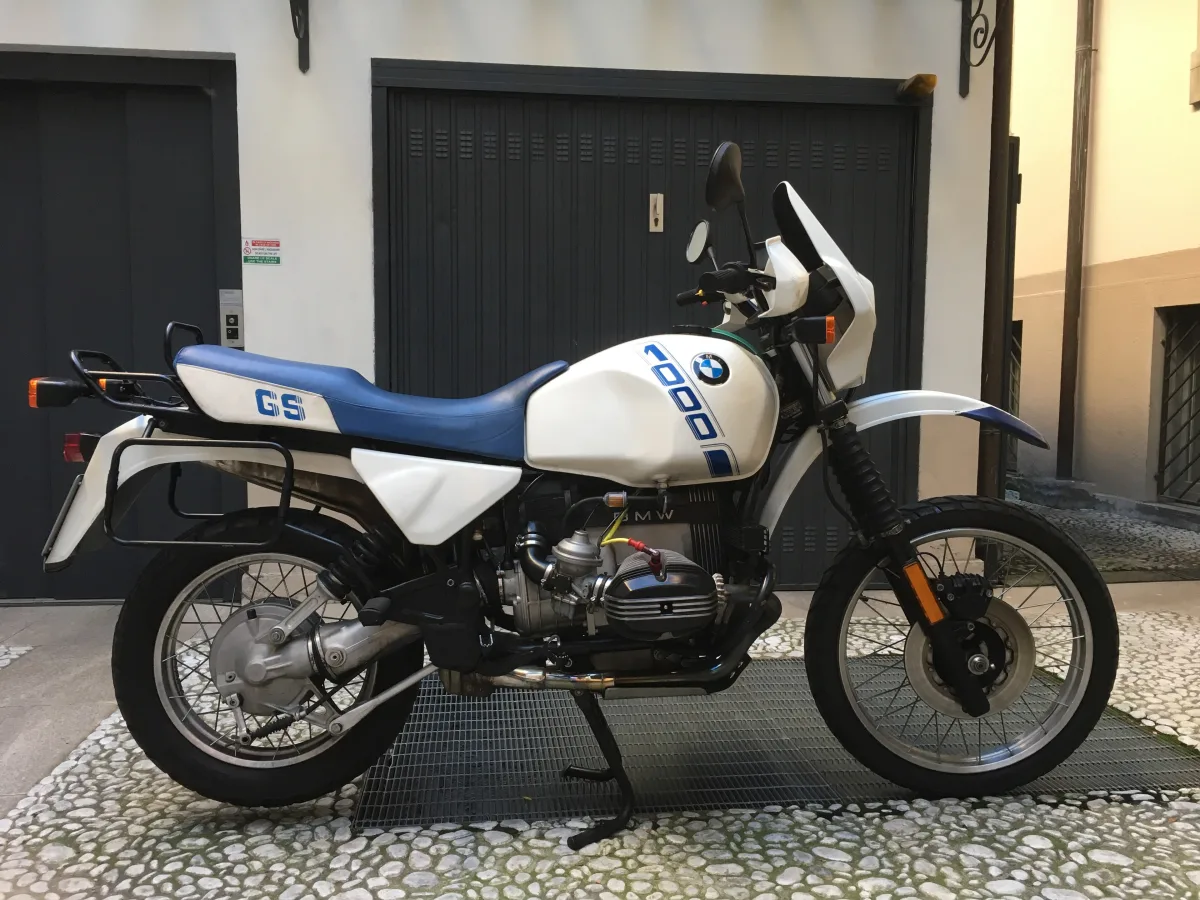
BMW R 100 GS: classic boxer, Paralever and what to check on a used one
BMW R 100 GS (1987–1996) — legendary adventure enduro with an air-cooled boxer engine and shaft drive. We look at the versions and what to check when buying an older motorcycle.






R 100 GS in brief
The R 100 GS is one of the most famous adventure enduros, built on the R 80 GS platform and produced between 1987 and 1996. It boasts a robust build, high seating position and is ideal for long journeys.
Today, it's a classic and collector's item, loved for its simple design and for those who enjoy maintaining their own machinery.
Versions — what's the difference
The base version is the R 100 GS, while the premium option is the R 100 GS Paris-Dakar with a larger fuel tank, designed for long trips. These motorcycles were produced with minor changes throughout the period.
Differences between years are minor, so when buying, focus on the specific motorcycle's condition, maintenance and whether it's been overly modified.
Engine and gearbox
The engine is an air- and oil-cooled twin-cylinder boxer (flat-twin), around 980 cc and approximately 60 hp. It's robust, simple in design and easy to service.
Power is transmitted via a shaft drive, with the rear suspension being the Paralever system. The gearbox is a five-speed manual. It's a smooth but sturdy motorcycle.
What to check when buying a used R 100 GS
Check that the engine starts easily, there's no oil leakage, and it runs smoothly at idle. Ask when the throttle play and synchronized carburetors were last checked.
Check the gearbox and cardan shaft: there shouldn't be any unusual noises or oil leakage. In these motorcycles, it's crucial that the final drive and chain sprocket are properly lubricated.
Inspect the tank, frame, brackets, and exhaust system for rust. Check the electrical installation, as it often causes issues in older versions.


Versions
Names and equipment vary by market and year; we list the versions most commonly found in Europe.
R 100 GS
1987–1996Base version.
- Approximately 60 HP boxer engine
- Cardan drive
- Paralever suspension
R 100 GS Paris-Dakar
Various yearsTouring version.
- Larger fuel tank
- Adapted for long journeys
- Often more expensive
R 100 GS su priedais
Various yearsIdeal for road trips.
- Often — luggage racks
- Often — roof rails
- Check that accessories are properly fitted
R 100 GS kolekcinė
Various yearsWell-maintained examples.
- Genuine parts
- Often low mileage
- Higher price
Comparing versions
| R 100 GS | Paris-Dakar | Kolekcinė | |
|---|---|---|---|
| Who it suits | For road trips and DIY repairs | For long journeys | For collectors |
| Fuel tank | Standard | Larger | Depends on the version |
| Engine | ~980 cm³ boxer | ~980 cm³ boxer | ~980 cm³ boxer |
| Price in the used market (relatively) | Mid-range | High-end | High-end |
For most, a standard R 100 GS in good condition will do. Paris-Dakar for long journeys, and collectible editions for collectors.
Pros
- Robust and straightforward design
- Cardan drive
- Legendary adventure enduro
- Easy to maintain
Cons
- Heavy and high seating position
- Older tech, less comfort
- Rust and electrical issues in older examples
Frequently asked questions
Is the R 100 GS suitable for a beginner?
No. It's big, heavy and tall, so it's better to choose it if you already have some experience.
How much horsepower does the R 100 GS have?
Around 60 horsepower, which is fine for relaxed driving but not for sport.
Is it worth buying the R 100 GS now?
If you love classics and are prepared for maintenance, then yes.
Updated 2026-10-21 · Trim levels and equipment vary by market and model year — check the equipment of the specific car. · Translated automatically


