 English
 Lietuvių
 Latviešu
 Eesti
 Polski
 Русский
 Українська
 Deutsch
 Nederlands
 Čeština
 Slovenčina
 Svenska
 Norsk
 Dansk
 Suomi


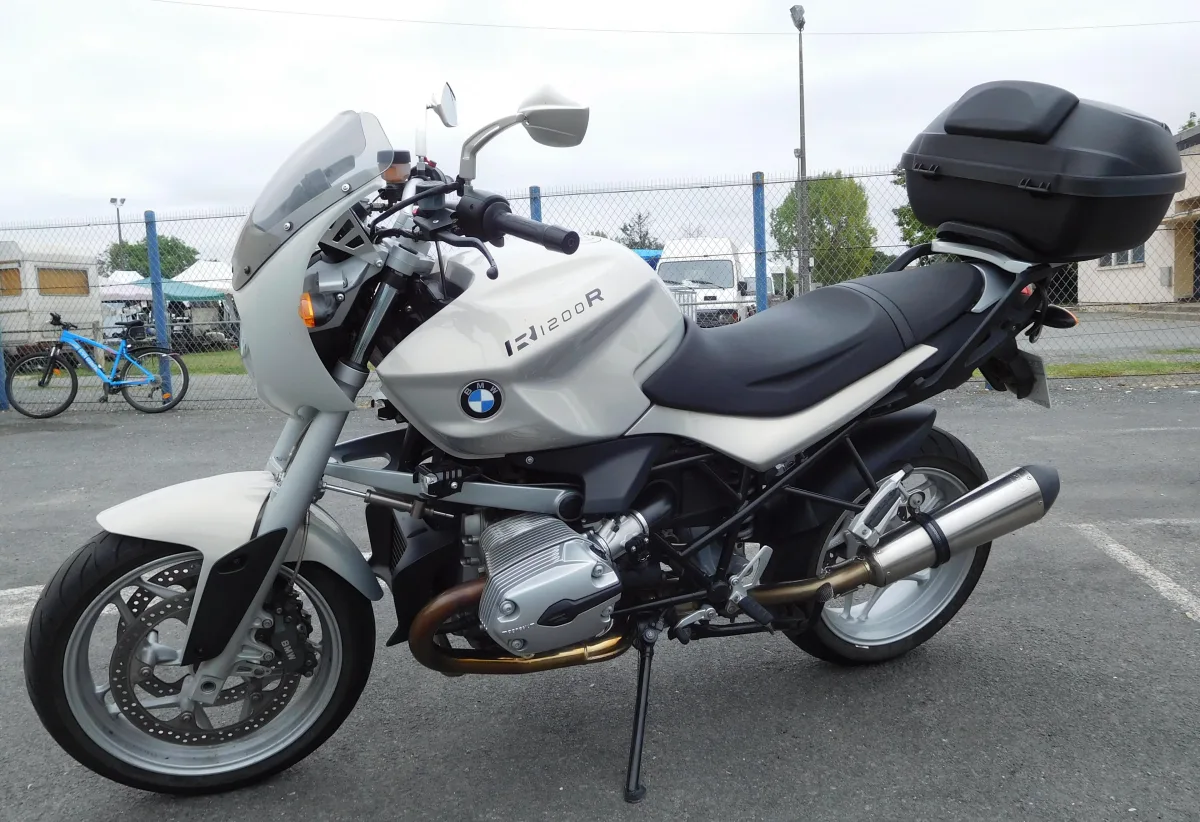
BMW R 1200 R: generations, engine and what to check when buying used
BMW R 1200 R — a naked motorcycle with a boxer engine, popular from 2006–2018 among those who want a powerful and comfortable daily ride. We look at the generations, tech and what to check when buying used.






R 1200 R in brief
R 1200 R — a naked motorcycle with a boxer engine, shaft drive and a relaxed seating position. It combines a sporty character with comfort for daily commuting and short trips.
The used market offers a wide range, especially for older models. The key is to find a well-maintained example with a service history.
Generations — what's the difference
The first generation (2006–2014) features an air and oil-cooled boxer, around 109 hp, and a classic style. It boasts simpler equipment and a lower price.
The second generation (2015–2018) comes with a liquid-cooled boxer, around 125 hp, more modern electronics, several riding modes and a refreshed style. It's pricier, but significantly more advanced.
Engine and gearbox
The first generation's engine — around 1170 cc boxer, around 109 hp, air and oil-cooled. The second generation — the same capacity, but liquid-cooled, around 125 hp.
The gearbox is a 6-speed manual, with the rear wheel driven by a shaft. ABS is usually included, and newer versions also feature riding modes and other electronic functions.
What to check when buying a used R 1200 R
Check the ABS and electronic systems, as well as any fault lights. Ask for a diagnostic report from a BMW service center. If there's an Electronic Damper Control (EDC) system, check that it's working.
Inspect for oil leaks around the engine and differential mounts, and ensure the propshaft operates smoothly. Ask about the service history and oil changes.
Look for signs of damage: mirrors, locks, exhaust system, fuel tank. Check that all lights, control buttons, and instrument cluster are functioning.


Trim levels and specifications
Names and equipment vary by market and year; we list the versions most commonly found in Europe.
R 1200 R (1 karta)
2006–2014First generation with an air- and oil-cooled engine.
- Around 109 hp roadster
- Limited-slip differential
- Often comes with ABS
R 1200 R (su ESA)
Various yearsWith Electronic Damper Control.
- Often comes with EDC dampers
- More comfortable ride
- Check the system's operation
R 1200 R LC
2015–2018The facelifted generation.
- Around 125 hp engine
- A few driving modes
- Refreshed styling
R 1200 R (su priedais)
Various yearsWith added extras.
- Often — boot space
- Often — wind protection
- Check that the kit is fitted properly
Generation comparison
| 1 karta | 1 karta su ESA | LC | |
|---|---|---|---|
| Who it suits | For the budget-conscious buyer | For those wanting more comfort | For those after the latest kit |
| Years | 2006–2014 | Various | 2015–2018 |
| Engine | Around 1170 cc, around 109 hp | Around 1170 cc, around 109 hp | Around 1170 cc, around 125 hp |
| Price in the used market (relatively) | Budget-friendly | Mid-range | Premium |
For many buyers, the first generation with ESA is a good balance of cost and features. If cutting-edge technology is important, go for the LC generation.
Pros
- Comfortable and versatile
- Rear-wheel drive — no need to worry about a drive chain
- Powerful boxer engine
- High-quality interior
Cons
- Large size
- Expensive maintenance and parts
- Little protection from the wind
Frequently asked questions
Which R 1200 R generation is the best?
For most, the LC (2015–2018) if the budget allows. The first generation is cheaper, but the tech is older.
Is the R 1200 R suitable for touring?
For short trips, yes; for longer ones, consider a screen or luggage. There's virtually no wind protection.
Is the R 1200 R suitable for beginners?
Not really. It's powerful and heavy, requiring an A category license and some experience.
Updated 2026-10-21 · Trim levels and equipment vary by market and model year — check the equipment of the specific car. · Translated automatically


