 English
 Lietuvių
 Latviešu
 Eesti
 Polski
 Русский
 Українська
 Deutsch
 Nederlands
 Čeština
 Slovenčina
 Svenska
 Norsk
 Dansk
 Suomi


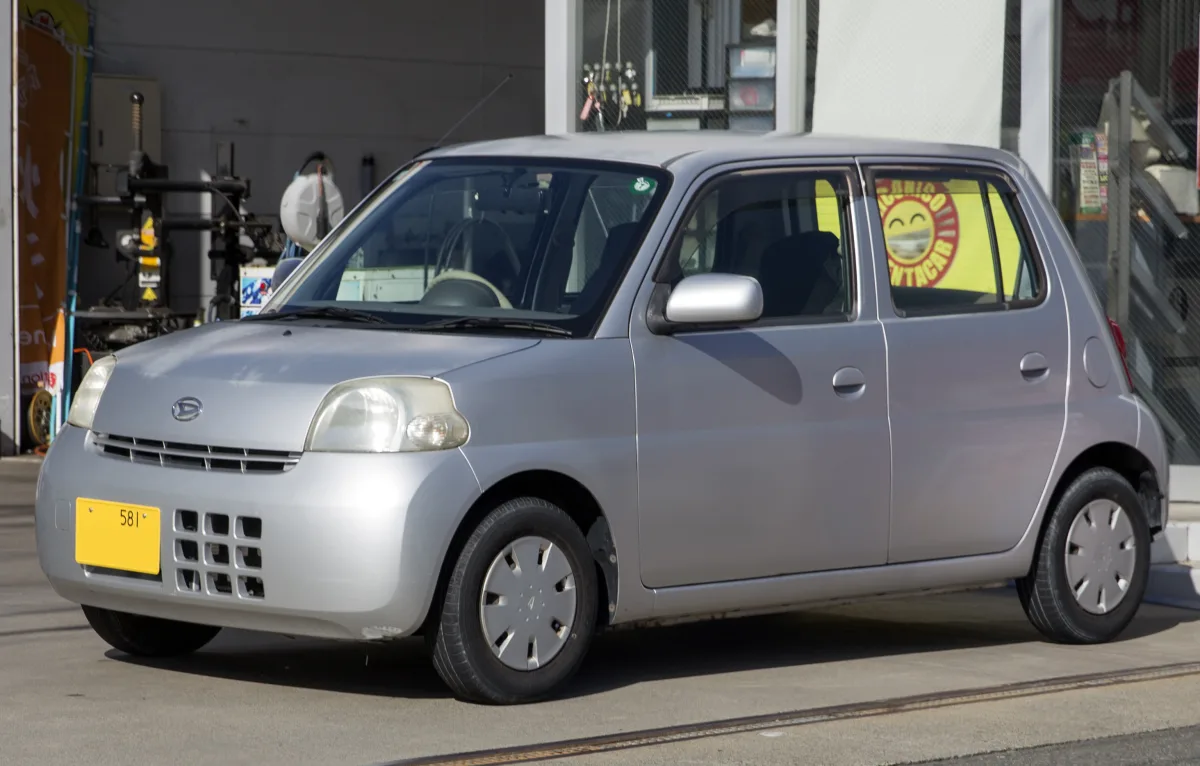
Daihatsu Esse: a Japanese microcar and what to check when buying
Daihatsu Esse — a five-door microcar (kei class) produced in Japan from 2005 to 2011, designed for affordable and economical city driving. It's quite rare in Lithuania and usually appears as an individual import. We'll look at its features, engine, trims, and what to check before buying.






Esse in brief
The Esse is a compact car with a high roofline, characterized by its light weight, short body, and spacious interior relative to its exterior dimensions. It was designed to meet Japan's 'kei' class requirements, so it has an approximately 660 cm³ engine and restricted dimensions.
Key advantages include low running costs, easy parking, and a surprisingly roomy interior. Downsides are modest power and comfort levels, especially on highways.
Which trim to choose
Most Esse models come with front-wheel drive, but all-wheel-drive versions are also available. All-wheel drive is beneficial in winter, but it's more expensive and consumes more fuel.
When choosing, pay attention to the condition and service history, as cars from Japan are often imported with low mileage, but this must be verified with documents.
Engine and transmission
The Esse had a 660 cm³ three-cylinder petrol engine with around 50–60 HP. The exact power should be checked in the specific car's documents.
The transmission is usually automatic (4-speed or CVT), with manual versions also available. The car is front-wheel drive, with some versions offering all-wheel drive.
What to check when buying a used Esse
Since this is a kei-class car, it's important to check if it meets registration requirements in Lithuania and if there are parts and service available. Finding parts can take time.
Inspect the body for rust, especially around the sills and wheel arches, and in the engine bay for oil leaks. Listen for smooth operation of the engine and any noise from the gearbox.
Check the condition of imported Japanese cars via auction sites and documents, and in the cabin for functioning electrical features.


Trim levels
Trim names vary by market and year; we list the most commonly mentioned versions.
Esse D
2005–2011The base model.
- 660 cm³ engine
- Front-wheel drive
- Basic interior trim
Esse X
2005–2011Enhanced comfort features.
- Often — electric windows
- Often — central locking
- Often — alloy wheels
Esse Custom
Later yearsSportier-looking version.
- Often — a sportier buffer
- Often — distinctive trim
- Often — extra kit
Esse 4WD
2005–2011Full four-wheel-drive version.
- Four-wheel drive
- Often — extra winter kit
- Higher fuel consumption
Comparing versions
| D | X | Custom | 4WD | |
|---|---|---|---|---|
| Who it's for | For everyday city driving | More comfort | Sporty looks | For winter |
| Most commonly sought-after | 13 col. | 13–14 col. | 14 col. | 13–14 col. |
| Interior | Basic | Upholstery | Upholstery | Upholstery |
| Engine | 0.66 l | 0.66 l | 0.66 l | 0.66 l |
| Price in the used market (relatively) | € | € | €€ | €€ |
If you need an affordable city car, the X version with an automatic gearbox is a good fit. Four-wheel drive is only necessary if you frequently drive on rough roads.
Pros
- Low running costs
- Easy to park
- Spacious interior for the size
- Economical engine
Cons
- Very rare in Lithuania, parts hard to find
- Low power and comfort on the motorway
- Kei class — limited boot space
Frequently asked questions
What is a kei class car?
This is a Japanese-specific class of small cars with restricted dimensions and around a 660 cm³ engine, benefiting from tax and insurance breaks.
Is the Esse suitable for long trips?
No — it's uncomfortable on the motorway due to low power and noise. Best suited to the city.
Is the Esse sold in Lithuania?
Officially no, but you can find the odd imported example. Before buying, check the availability of parts and servicing.
Updated 2026-10-21 · Trim levels and equipment vary by market and model year — check the equipment of the specific car. · Translated automatically


