 English
 Lietuvių
 Latviešu
 Eesti
 Polski
 Русский
 Українська
 Deutsch
 Nederlands
 Čeština
 Slovenčina
 Svenska
 Norsk
 Dansk
 Suomi


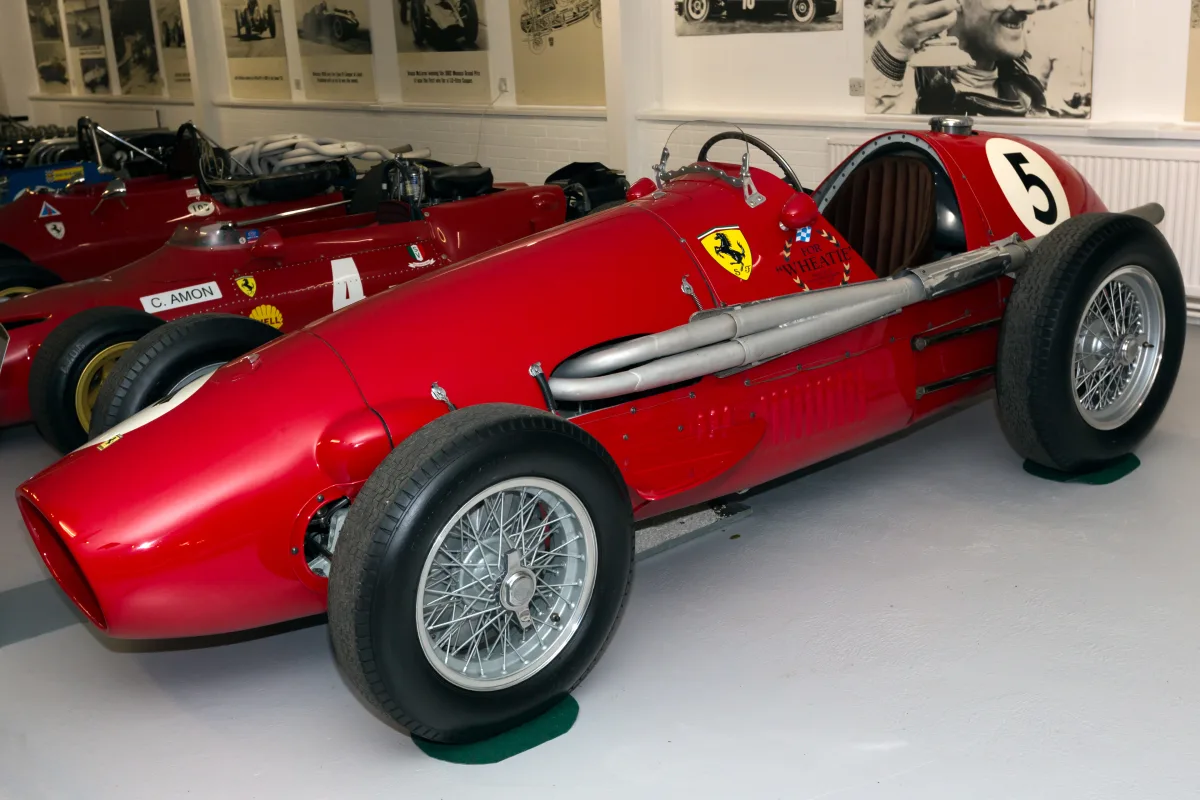
Ferrari Tipo 500: 1952–1953 Formula 2 car and Ascari championships
Ferrari Tipo 500 (also known as the 500 F2) — a single-seater racing car in the Formula 2 class that dominated the 1952–1953 seasons, becoming one of Ferrari's most successful creations. In this article, we look back at its history, technology, and what you need to know about such cars today.






Tipo 500 in brief
The Tipo 500 was created for the 1952 World Championship season, when the championship races were held under Formula 2 regulations. The car was designed by Aurelio Lampredi, and its driver, Alberto Ascari, became world champion in 1952 and 1953.
This isn't a road car: the Tipo 500 is purely a single-seater racer, so today it belongs in museums, collections, and historic racing events.
Versions and variants
The main car is often referred to as the 500 F2. Ferrari produced a small number of these cars in 1952–1953, and some were later modified, updated, or sold to private teams.
Due to this history, the provenance of each example is crucial: different cars have different racing histories, and that significantly affects their value.
Engine and technology
The Tipo 500 was powered by a Lampredi-designed 2.0-litre inline four-cylinder engine. Its output was around 170–185 hp, which was a lot for a lightweight, open-wheeled racing car.
The gearbox is manual, and the body is an open single-seater with exposed wheels. This is typical of early post-war racing cars: simple, yet effective and lightweight.
What to know before buying
These cars rarely appear on the market, and if they do, it's usually through prestigious auctions. The key question is authenticity: are the chassis, engine, and body original, or is it a restored or recreated car?
A well-documented racing history and expert certification are crucial. There are replicas and 'recreated' cars out there, so buying without a specialist's check is unwise.


Trim levels
Names and equipment vary by market and year; we list the versions most commonly found in Europe.
Originalus 500 F2
1952–1953Factory racing car with a full racing history.
- 2.0-litre four-cylinder engine
- Open single-seater body
- Highest collectible value
Restauruotas egzempliorius
Different yearsOriginal car after restoration or refurbishment.
- Often – replaced or refurbished upholstery
- Suitable for historic racing
- Value depends on provenance
Replika ar atkūrimas
Different yearsA car built to the original blueprints.
- Often — restored or modified parts
- More affordable price
- Collectible value lower than the original
Comparison of Type 500 variants
| Originalas | Restauruotas | Replika | |
|---|---|---|---|
| Who it's for | For prestigious collections | For enthusiasts of historic racing | For museums and hobbyists |
| Usage | Mostly for shows and events | Historic racing | Events |
| Price in the used market (relatively) | €€€ | €€€ | €€ |
The Tipo 500 is a collectible racing car whose value is determined by its provenance and authenticity. It's not advisable to buy one without expert appraisal.
Pros
- A unique piece of Ferrari and Formula history
- Linked to the Ascari championships
- Light and simple construction
- High collectible value
Cons
- Very rare and expensive
- Not a road car
- Many replicas and restorations
Frequently asked questions
Who won the championship with the Tipo 500?
With the Ferrari Tipo 500, Alberto Ascari became world champion in 1952 and 1953.
Can the Tipo 500 be used on public roads?
No. It's a single-seater race car, not suited for road use.
Why is it called the Tipo 500?
Ferrari traditionally designated models by the displacement of one cylinder: four cylinders of around 500 cm³ gave around 2.0 litres, hence the car is called the Tipo 500, and due to the class, also the 500 F2.
Updated 2026-10-21 · Trim levels and equipment vary by market and model year — check the equipment of the specific car. · Translated automatically


