 English
 Lietuvių
 Latviešu
 Eesti
 Polski
 Русский
 Українська
 Deutsch
 Nederlands
 Čeština
 Slovenčina
 Svenska
 Norsk
 Dansk
 Suomi


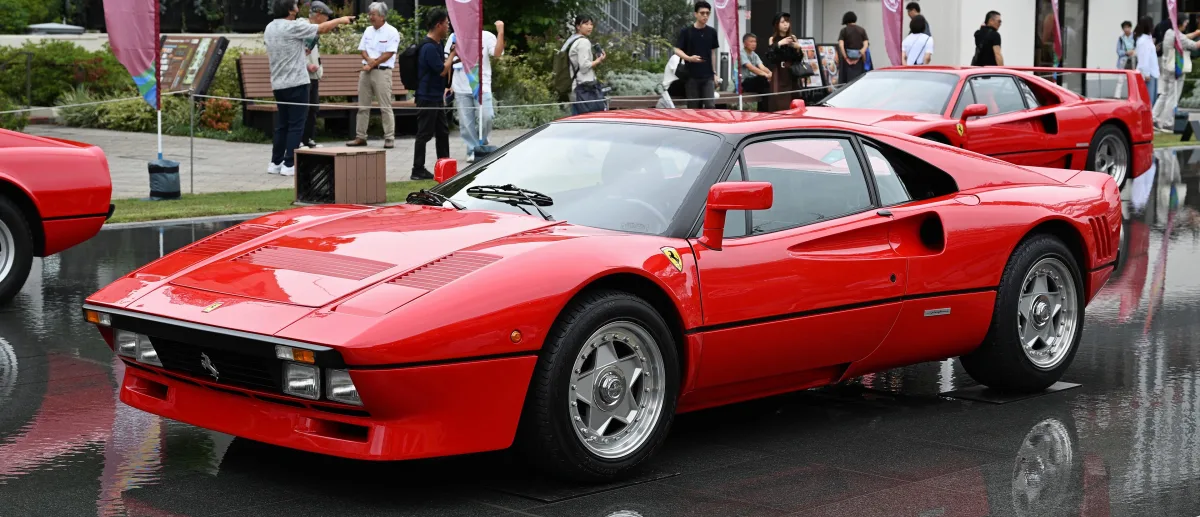
Ferrari 288 GTO: features, engine and what to know before buying
The Ferrari 288 GTO is a limited-edition V8 car produced from 1984 to 1985, designed for 'Group B' rally homologation and becoming one of the most valuable collectible Ferraris. In this article, we'll look at the technology and what you need to know about this collectible model.






The Ferrari 288 GTO in brief
The Ferrari 288 GTO was introduced in 1984 as a homologation model for 'Group B' racing. Although the Group B class was soon discontinued, the car became an icon and one of the most valuable Ferraris of the 1980s.
Around 272 units were produced. The design is outwardly similar to the 308 GTB, but the body is different—wider, with a different front end and aerodynamics. The 288 GTO is practically unheard of in Lithuania.
How it differs from the 308
While it looks similar to the 308 GTB, the 288 GTO has very different technology: a longitudinal engine (not transverse), twin turbochargers, a composite body, and a racing suspension.
This was Ferrari's standout step into the turbo era and the direct predecessor to the F40. The driving experience is far more sporty and faster than any 308 variant.
Engine and transmission
The car is powered by a 2.85-litre twin-turbocharged V8 petrol engine, producing around 400 hp. It's rear-wheel drive.
The transmission is a 5-speed manual. The car is very light and fast, with a top speed of roughly 300 km/h.
What to know when buying a 288 GTO
The main thing — documentation: factory records, service history, and proof of originality. The condition of the engine, turbochargers, and fuel system, as well as the age of rubber parts, are crucial.
A pre-purchase inspection by an independent Ferrari classic specialist is essential. Parts are expensive and hard to find.


Trim levels
Names and equipment vary by market and year; we list the most commonly found trim levels in Europe.
Ferrari 288 GTO
1984–1985The sole series production version, created for Group B rally homologation.
- 2.85-litre twin-turbo V8
- Around 400 hp
- 5-speed manual gearbox
288 GTO and F40
| 288 GTO | F40 | |
|---|---|---|
| Who it's for | Collectors seeking the start of Ferrari's turbo era | Collectors and drivers |
| Engine | 2.85-litre V8 with twin turbochargers | 2.9-litre V8 with twin turbochargers |
| Approximate power | 400 bhp | 478 bhp |
| Production years | 1984–1985 | 1987–1992 |
| Price in the used market (relatively) | €€€ | €€€ |
Both cars are collectible. The 288 GTO is the earlier, rarer and historically more significant, while the F40 is more powerful and better recognised.
Pros
- A clear start to Ferrari's supersport turbo era
- Limited production run and collectible value
- Light, fast, race-bred character
- Historical significance as the predecessor to the F40
Cons
- Practically unattainable in the market
- Extremely expensive maintenance and parts
- Experience is key when driving
Frequently asked questions
How many 288 GTOs were made?
Around 270 cars.
What does GTO mean?
"GTO" stands for Gran Turismo Omologato (Italian), meaning a car built for racing homologation. This name was also used for the 250 GTO.
How does the 288 GTO differ from the F40?
The F40 is the later, more powerful model with a different body, while the 288 GTO is the earlier, rarer one. Technically, both are related, as the F40 is considered the direct successor to the 288 GTO.
Updated 2026-10-19 · Trim levels and equipment vary by market and model year — check the equipment of the specific car. · Translated automatically


