 English
 Lietuvių
 Latviešu
 Eesti
 Polski
 Русский
 Українська
 Deutsch
 Nederlands
 Čeština
 Slovenčina
 Svenska
 Norsk
 Dansk
 Suomi


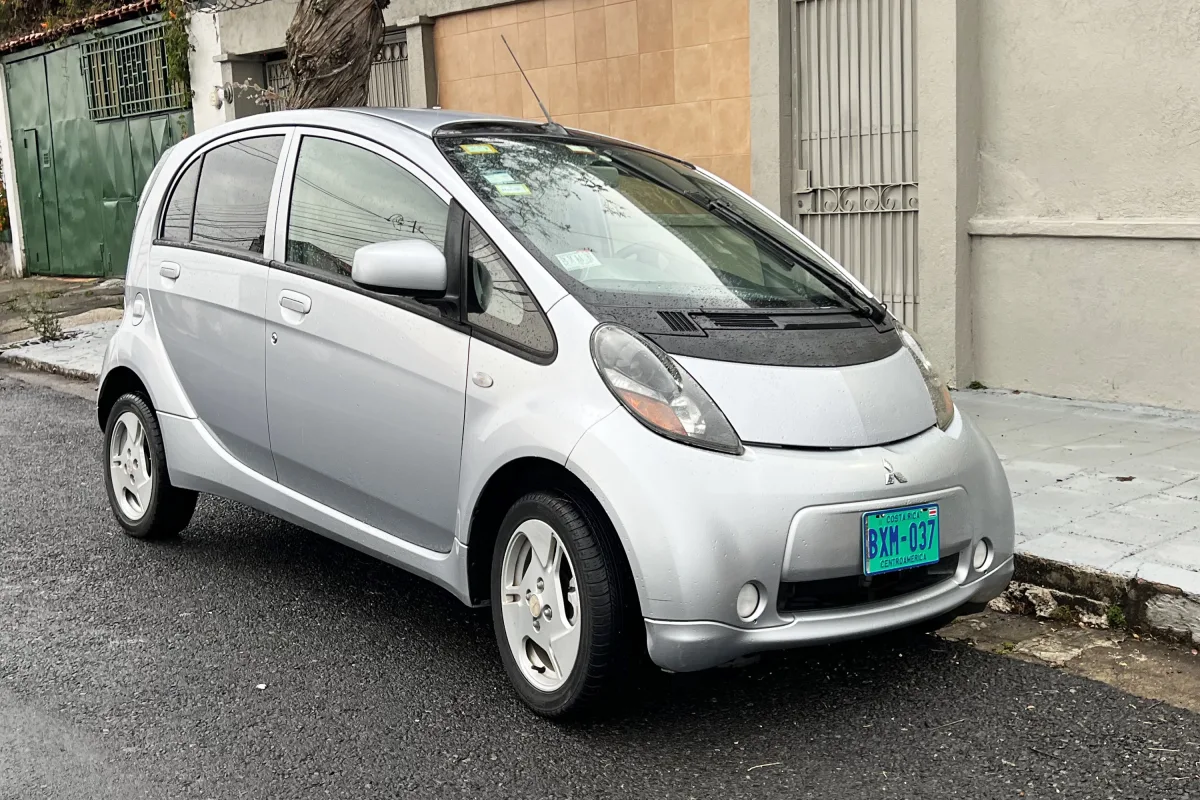
Mitsubishi i and i-MiEV: kei class city car and electric version
The Mitsubishi i is a tiny city car introduced in Japan in 2006 with an engine behind the rear seats. The electric version, i-MiEV, debuted in 2009-2010 and was also sold as the Peugeot iOn and Citroën C-Zero. We look at what you need to know before buying.






i in brief
The Mitsubishi i belongs to the Japanese 'kei' class: very small, but differs from other similar models with its engine placement (behind the rear seats) and compact exterior dimensions. The original i used a 660 cm³ three-cylinder engine, mostly sold in Japan.
In Europe, the electric version i-MiEV was the most significant, later becoming one of the first mass-produced electric cars.
Which version to choose
The petrol i is virtually non-existent in Lithuania, so discussions usually revolve around the i-MiEV. It's an affordable city electric car, but its range is limited.
If you're after a cheap city car for short distances, the i-MiEV could be a smart choice. It's not suitable for long journeys, though.
Battery, power and charging
The i-MiEV has around a 16 kWh battery and a 49 kW (67 hp) electric motor. According to the NEDC cycle, the claimed range was around 150 km, but in reality, it's mostly around 100 km.
The car can be charged from a standard socket (AC) or via a CHAdeMO fast-charging connection. Early models often have a Type 1 AC connector, so check if it's compatible with your charging station or cable.
What to check when buying a used i-MiEV
The key thing – battery condition: ask for a report and the real-world range. Older cars can have significantly reduced capacity, and replacing the battery is expensive.
Check that both charging methods, heating, and air conditioning work (they use a lot of energy), as well as the suspension and brakes. For cars imported from Japan, check the documents and compliance with European regulations.


Trim levels
Trim level names depend on the market; in Japan, M, G, and X were offered, while there were fewer trim levels in European markets.
M
i-MiEVBase trim level.
- Often – simpler equipment
- Often – smaller battery
- Basic interior
G
i-MiEVFully equipped version.
- Often – air conditioning
- Often – additional comfort features
- Often – larger battery
X
i-MiEVTop-of-the-range trim level.
- Often – additional safety systems
- Often — improved interior trim
- Often – additional comfort features
Comparing trims
| M | G | X | |
|---|---|---|---|
| Who it's for | For the daily commute | More comfort | Maxed-out spec |
| Wheels (most often) | 14–15 inch | 15 inch | 15 inch |
| Interior | Basic | Enhanced | Comfortable |
| Battery | Often — smaller (around 10.5 kWh) | Around 16 kWh | Around 16 kWh |
| Price in the used market (relatively) | € | € | €€ |
The i-MiEV is worth considering only if you commute short distances daily. The battery condition is more important than the trim level.
Pros
- Compact size and easy parking
- Quiet and economical city driving
- Not expensive to buy
- Ability to charge from a standard socket
Cons
- Limited driving range
- Aging battery
- Parts and specialists may be hard to find
Frequently asked questions
Are the Mitsubishi i-MiEV and Peugeot iOn the same?
Technically, yes. The Peugeot iOn and Citroën C-Zero are versions of the same car with different badges.
How far does the i-MiEV go?
Around 150 km according to NEDC claims, but realistically more like 100 km. It's significantly less in winter.
Is it worth buying a used i-MiEV?
Only if the battery is in good condition and you're happy with short distances. Before buying, ask for a battery report.
Updated 2026-10-14 · Trim levels and equipment vary by market and model year — check the equipment of the specific car. · Translated automatically


