 English
 Lietuvių
 Latviešu
 Eesti
 Polski
 Русский
 Українська
 Deutsch
 Nederlands
 Čeština
 Slovenčina
 Svenska
 Norsk
 Dansk
 Suomi


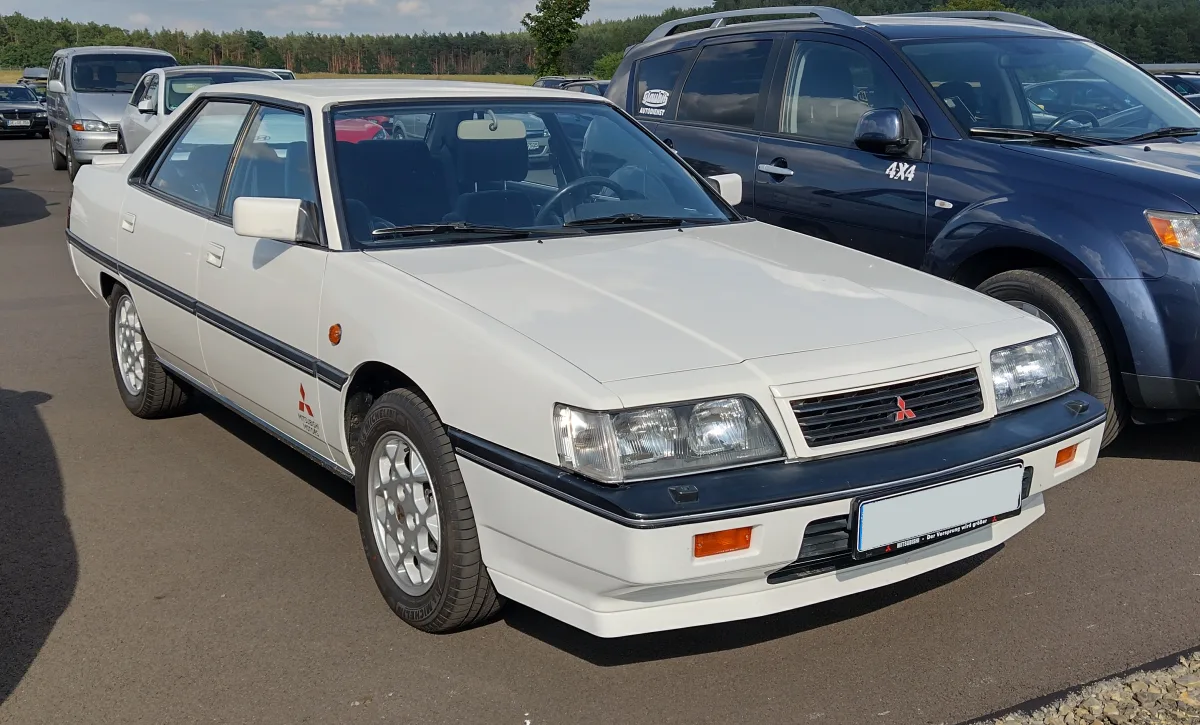
Mitsubishi Sapporo: two generations, engines, and what to know when buying a rare classic
The Mitsubishi Sapporo name was used in Europe for two distinct Galant-based cars: a rear-wheel-drive hardtop coupe and later a front-wheel-drive hardtop sedan. We explain how they differ and what to know if you encounter one in the used market.






Sapporo in brief
The Sapporo is the more upscale branch of the Mitsubishi Galant family. The first generation (circa 1978–1984) was a rear-wheel-drive hardtop coupe, based on the third-generation Galant; in Japan, it was known as the Galant Lambda, while for European and South American export markets, it was named Sapporo.
The second generation (1987–1990) was a hardtop sedan sold in Europe, based on the front-wheel-drive fifth-generation Galant. These cars are very rare in Lithuania and usually appear as collector items or individual imports.
Which generation to choose
The first generation appeals to classic car enthusiasts: rear-wheel drive, a long hood, and a 1970s coupe silhouette. These cars are often imported from other countries, and their condition heavily depends on previous maintenance.
The second generation is more practical: a four-door body, front-wheel drive, and newer technology. It looks quite different — a boxy, late-1980s-style sedan that was marketed in Europe as the more upscale alternative to the base Galant.
Engines and transmissions
First-generation Sapporos most often came with 2.0-litre or 2.6-litre four-cylinder petrol engines, paired with a manual or automatic gearbox. Exact power outputs and engine names are best checked against the specific car's documents.
Second-generation models typically feature 2.0–2.4-litre four-cylinder petrol engines. The gearbox is manual or automatic; we don't have data on later generations, so we're speaking generally.
What to check when buying a Sapporo
These cars are old, so the body condition is key: check for rust on the sills, arches, floor, and boot floor. A hardtop body without a central B-pillar requires particular attention to door seals and window mechanisms.
Parts, especially body and interior, are almost non-existent in Lithuania, so check availability before buying. Inspect the engine, electricals, brakes, and suspension, and look into previous maintenance.


Trim levels
Trim names and equipment vary by market and year; first-generation models may have GL and GSL badges.
Standartinė versija
I and II generationsThe more upmarket Galant is considered to be the coupé or saloon with comfort equipment.
- More comfort than the standard Galant
- Often — electric windows and air conditioning
- Equipment varies by market and year
A comparison of the two Sapporo generations
| I karta (apie 1978–1984) | II karta (1987–1990) | |
|---|---|---|
| Body | 2-door hardtop coupé | 4-door hardtop sedan |
| Transmission | Rear-wheel drive | Front-wheel drive |
| Who it's for | Classic car enthusiasts | Those needing a more practical retro sedan |
| The basics | Third-generation Galant | Fifth-generation Galant |
| Price in the used market (relatively) | €€ | €€ |
The first generation is more for collectors, while the second is for those seeking a rarer but more practical sedan. In both cases, the condition of the body and the availability of parts are crucial.
Pros
- A rare and unique automobile
- Hardtop body without a central pillar
- The Galant is a reliable base model
- More comfortable than the standard Galant
Cons
- Finding parts in Lithuania is quite challenging
- Risk of corrosion due to age
- Rare, so it's hard to assess the price
Frequently asked questions
Are the Sapporo and Galant Lambda the same car?
The first-generation Sapporo is the same car as the Galant Lambda sold in Japan. In Europe and South America, it was called the Sapporo.
Were all Sapporo generations rear-wheel drive?
No. The first generation was rear-wheel drive, while the second (1987–1990) was a front-wheel drive hardtop sedan.
Is the Sapporo suitable for daily use?
The second-generation model is more practical, but both are old, and parts are hard to find. They're only suitable for daily use if you have a very good example and the ability to source parts.
Updated 2026-10-21 · Trim levels and equipment vary by market and model year — check the equipment of the specific car. · Translated automatically


