 English
 Lietuvių
 Latviešu
 Eesti
 Polski
 Русский
 Українська
 Deutsch
 Nederlands
 Čeština
 Slovenčina
 Svenska
 Norsk
 Dansk
 Suomi


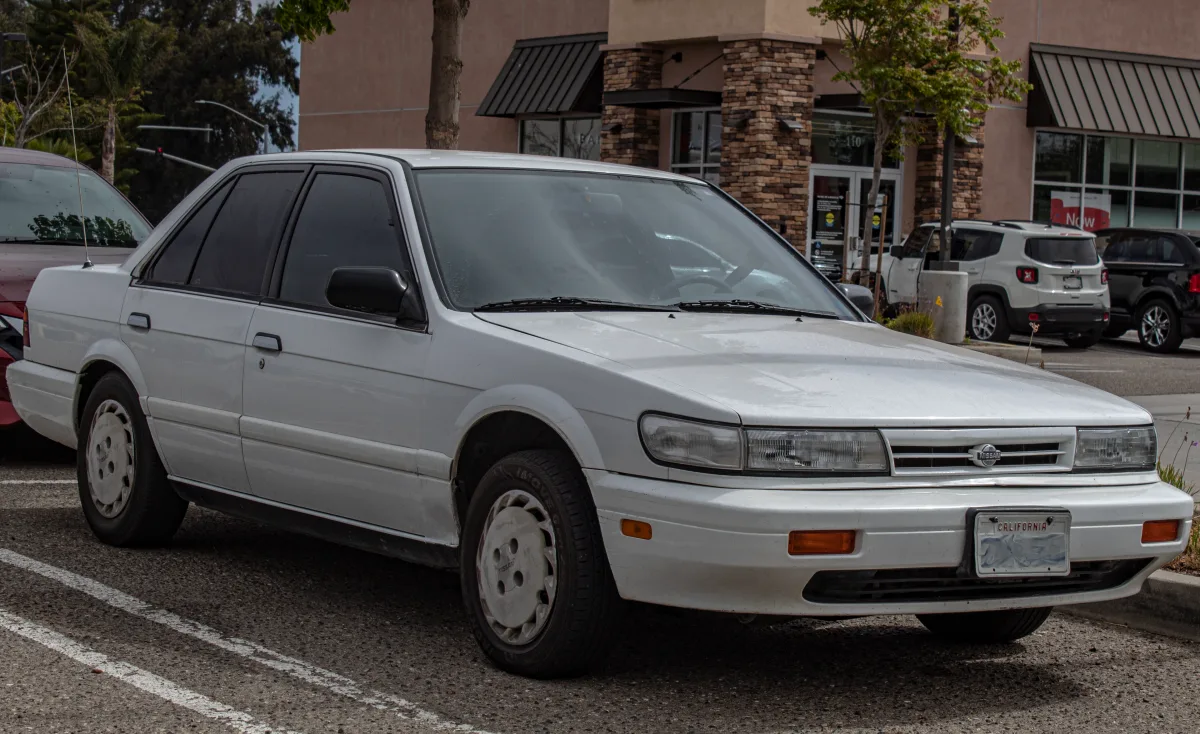
Nissan Stanza: A mid-size car from Datsun origins and what to know when buying
The Nissan Stanza is a mid-size Nissan model sold between 1977 and 1992 in several markets, initially as a Datsun, later as a Nissan. We explain the differences between the generations, what to say about the engines, and what to check if you come across such a car in the used market.






The Stanza in brief
The Stanza name appeared in 1977 in Japan when the second-generation Nissan Violet was split into Violet, Auster, and Stanza. The Stanza was sold in special Nissan Satio Store dealerships as a larger Sunny companion.
In export markets, the car was initially called the Datsun 140J or 160J depending on the engine, and later gradually renamed to Nissan Stanza. In Europe, it was briefly known as the Datsun-Nissan Stanza until 1984 when the Datsun name was completely dropped.
Generations — what sets them apart
In 1981, the third-generation Stanza (T11) debuted with front-wheel drive — the first mid-size Datsun model with such a layout. It was a practical liftback that followed European trends. In the UK, it was sold until 1986.
Later Stanza versions were variants of the Nissan Bluebird (U12) for certain markets. The model was discontinued in 1992: in Europe, it was replaced by the Primera, in Japan by the Bluebird, and in North America by the Altima.
Engines and transmissions
First-generation Stanza and Datsun 140J / 160J models came with small-capacity petrol engines — the name indicated the engine size. In later generations, engine options varied depending on the market. We don't have exact details for all versions, so we'll cover them generally.
The gearbox could be manual or automatic. Specific details varied greatly by country and year, so check the exact details for the car you're interested in via its documents.
What to check when buying a Stanza
These cars are old, so the body condition is key: check for rust on the sills, arches, floor, and boot floor. Older Japanese cars often suffer from rust.
Parts, especially body and interior ones, are almost non-existent in Lithuania, so check availability before buying. Inspect the engine, gearbox, electricals, and suspension.


Trim levels
Trim names and equipment varied by market and year; we won't list European market trims here.
Standartinė versija
1977–1992 modelsA straightforward mid-size car with a petrol engine.
- Depending on the generation — rear-wheel or front-wheel drive
- Basic interior trim
- Equipment varied by market and year
Generation comparison
| A10 (1977) | T11 (1981) | |
|---|---|---|
| Drivetrain | Rear-wheel drive | Front wheels |
| Who it's for | For classic car enthusiasts | For those needing a more practical hatchback |
| Body | Sedan and other variants | Hatchback |
| Price in the used market (relatively) | € | € |
Generations vary greatly: the first is for classic car enthusiasts, while the front-wheel-drive T11 is more practical. In both cases, the condition of the body is crucial.
Pros
- Simple and inexpensive technical construction
- Practical front-wheel-drive liftback
- Rare classic car
- Nissan build quality
Cons
- Finding parts in Lithuania is very challenging
- Risk of corrosion due to age
- Specifications and trim levels vary greatly by country
Frequently asked questions
How does the Stanza differ from the Violet?
They're all part of the same family: since 1977, the Violet was split into the Violet, Auster, and Stanza, which differed in design and dealers in Japan.
What's the connection between the Datsun 160J and the Stanza?
The Datsun 140J and 160J were early export names; they were gradually replaced by the Nissan Stanza.
What's changed in the Stanza?
In Europe, it was replaced by the Primera, in Japan by the Bluebird, and in North America by the Altima.
Updated 2026-10-21 · Trim levels and equipment vary by market and model year — check the equipment of the specific car. · Translated automatically


