 English
 Lietuvių
 Latviešu
 Eesti
 Polski
 Русский
 Українська
 Deutsch
 Nederlands
 Čeština
 Slovenčina
 Svenska
 Norsk
 Dansk
 Suomi


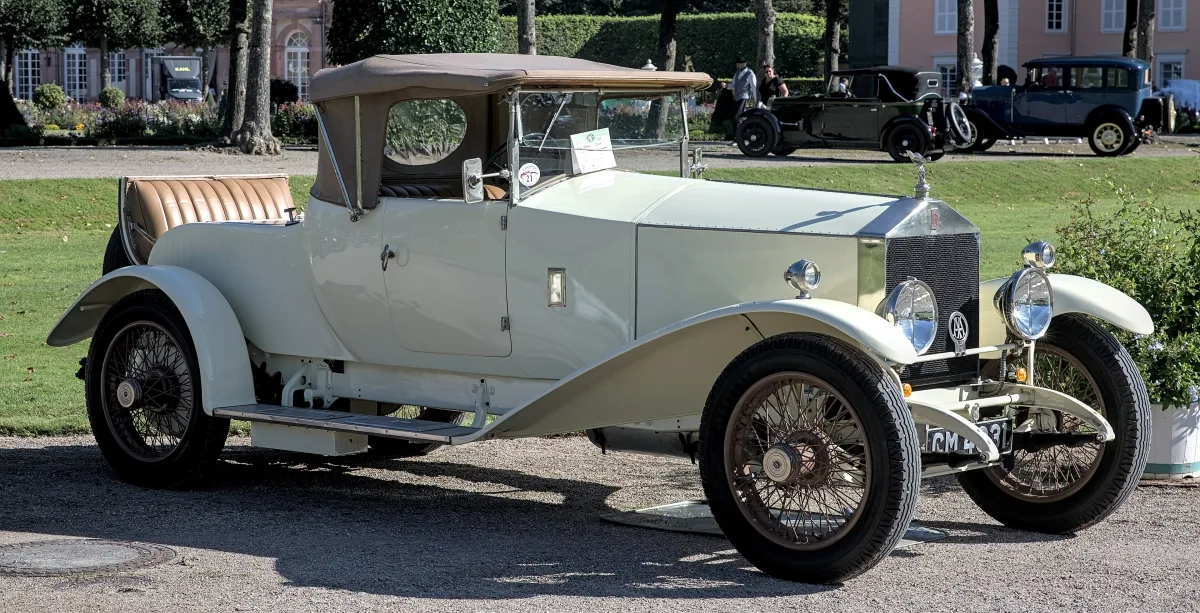
Rolls-Royce Twenty: 1922–1929 smaller Rolls-Royce for the collector
Rolls-Royce Twenty — the smaller, more economical Rolls-Royce produced from 1922–1929, designed for owners who drive themselves. We look at its history, body styles, technology, and what to check when buying this classic car.






Twenty in brief
The Twenty debuted in 1922 as a smaller, more affordable Rolls-Royce to complement the larger Silver Ghost. It was designed not just for chauffeur-driven use, but also for owners to drive themselves.
Around 2,900 cars were produced in total. They were sold as a chassis with engine, and bodies were made by separate coachbuilders, so each car can look different.
Bodies and versions
The Twenty can be found with a variety of bodies: from closed limousines and sedans to open tourers and cabriolets. Well-known coachbuilder names like Barker or Park Ward can add to the car's value.
From a collector's perspective, it's important whether the body is original or has been replaced later. Some Twenties were refurbished in later decades, so provenance is key.
Engine and gearbox
The engine is a 3.1-litre inline six-cylinder. Rolls-Royce aimed for smooth, quiet operation rather than record-breaking power, so driving was serene, not sporty.
The gearbox is manual. Early models had brakes on the rear wheels only, while later models got brakes on all four. This is important if the car is to be used.
What to check when buying a Twenty
First and foremost — authenticity: does the engine, chassis, and body match the documents, and has the car been tampered with? The wooden body frame can deteriorate over time due to moisture, so it needs to be thoroughly inspected.
Assess the condition of the engine, gearbox, transmission, brakes, and steering mechanism. Parts selection is limited, so it's beneficial to choose a car with a good history and active club support.


Trim levels
Names and equipment vary by market and year; we list the versions most commonly found in Europe.
Twenty (uždaras kėbulas)
1922–1929A limousine or sedan — the most comfortable for daily collecting.
- Approximately a 3.1-litre six-cylinder engine
- Often — a closed saloon with a partition between the driver and passengers
- Manual transmission
Twenty (atviras kėbulas)
1922–1929A tourer or cabriolet — more sought-after and rarer.
- Approximately a 3.1-litre six-cylinder engine
- An open or detachable roof body
- Manual transmission
Twenty (kupė)
1922–1929A smaller body, tailored for the owners themselves.
- Approximately a 3.1-litre six-cylinder engine
- Often — a two-door body
- Manual transmission
Twenty body comparisons
| Uždaras | Atviras | Kupė | |
|---|---|---|---|
| Who it suits | For more enjoyable collection driving | For open-top driving and events | For a smaller, elegantly curated collection |
| Body | Uždaras | Atviras | Two-door |
| Price in the used market (relatively) | €€€ | €€€ | €€€ |
The Twenty is a more accessible pre-war Rolls-Royce, but still a collectible car. Choose based on the body's originality, condition, and documented history.
Pros
- A true example of pre-war Rolls-Royce classics
- Various body styles and designs
- A quiet and high-quality engine for its time
- An active enthusiast community
Cons
- Rare, with specialized maintenance and parts
- Many restored cars
- Pre-war technology (brakes, steering) requires familiarity
Frequently asked questions
When was the Rolls-Royce Twenty produced?
The Rolls-Royce Twenty was produced between 1922 and 1929.
How many Twentys were made?
Approximately 2,900 cars were produced in total.
Is the Twenty suitable for daily use?
Today, it is most often used for collector events and leisurely drives, rather than daily commuting.
Updated 2026-10-21 · Trim levels and equipment vary by market and model year — check the equipment of the specific car. · Translated automatically


