 English
 Lietuvių
 Latviešu
 Eesti
 Polski
 Русский
 Українська
 Deutsch
 Nederlands
 Čeština
 Slovenčina
 Svenska
 Norsk
 Dansk
 Suomi


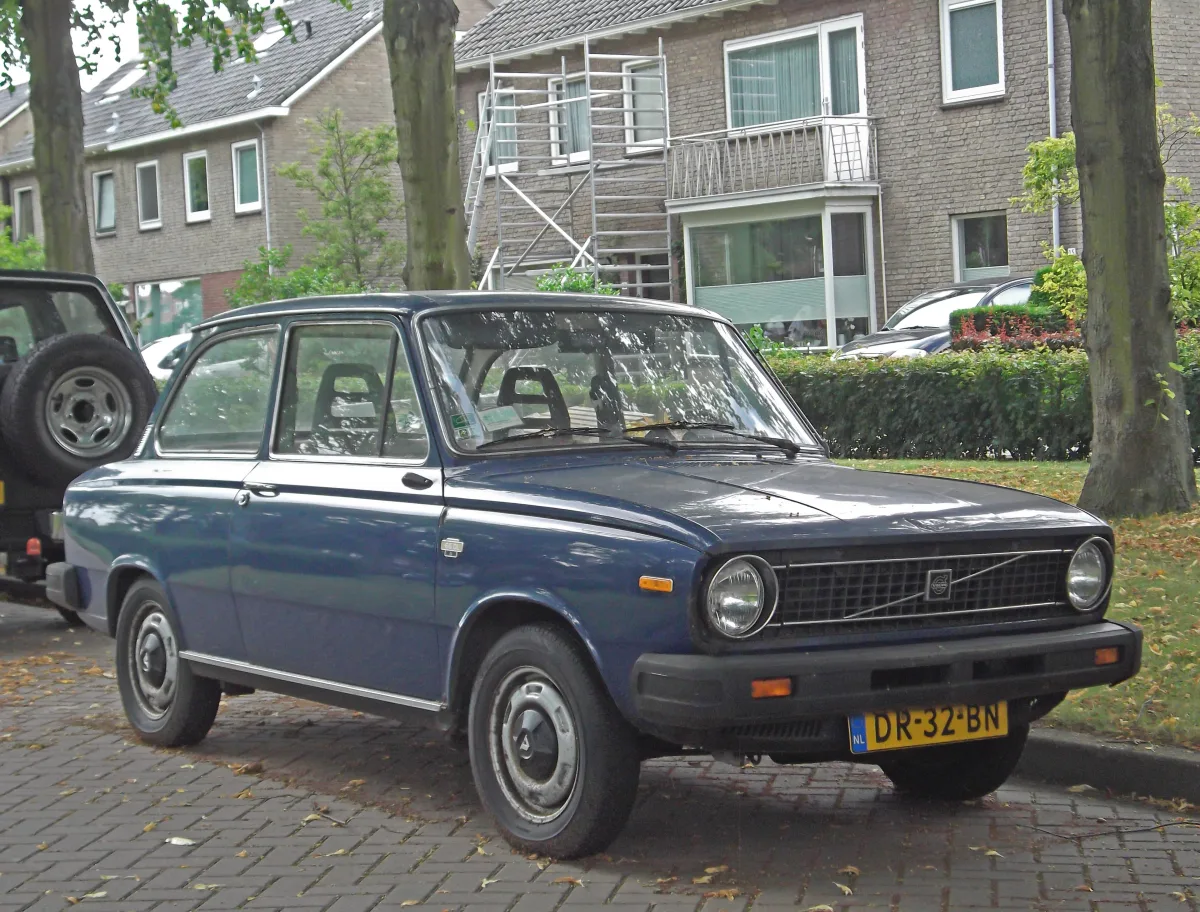
Volvo 66: a rare small Volvo and what to know when buying used
Volvo 66 — a small Volvo, produced 1975–1980 in the Netherlands and based on the DAF 66 design. In this article, we look at its features, variants, and what to check if you're considering buying this classic car.






Volvo 66 in brief
The Volvo 66 came about when Volvo took over DAF car production — it's an improved DAF 66, so it has an unusual design. Produced in the Netherlands, at the Born factory.
This is a small, simple, and light car, designed for city use. Today, it's very rare — it's a classic for those who appreciate unusual and less common models.
What sets the Volvo 66 apart
The standout feature is the continuously variable transmission 'Variomatic' with rubber belts, which operates without conventional gears. It aids smooth driving, but the belts wear out over time.
The rear axle uses a de Dion design. Due to these choices, the car has a unique driving feel and requires specific maintenance.
Engine and body
The Volvo 66 has a four-cylinder petrol engine, initially around 1.1 litres, later around 1.3 litres. The engines are Renault-derived, so they're simple and uncomplicated.
The body was offered as a two-door saloon, as well as an estate (Combi). The car's power is modest, but its light weight makes it suitable for city driving.
What to check when buying a used Volvo 66
The most important thing is the condition of the Variomatic belts and transmission. Test if the car moves smoothly and drives without juddering or vibration. Spare parts for belts and gears can be hard to find.
Check the body for corrosion, especially the sills, floor, and wheel arches. Inspect the engine to ensure it's not leaking oil and that it's clean.
Since this is a rare car, look into the availability of parts and clubs that help with parts and knowledge. A clear vehicle history is very important.


Trim levels
Names and equipment vary by market and year; we list the main versions.
Volvo 66 DL
1975–1980Base model.
- Approximately a 1.1-litre or 1.3-litre four-cylinder engine
- Variomatic automatic transmission
- Simpler interior trim
Volvo 66 GL
1975–1980Better-equipped version.
- Often comes with more interior trim
- Often features a larger engine
- Variomatic automatic transmission
Volvo 66 Combi
Varies by yearEstate body with a larger boot.
- Universal body
- Larger boot
- Same tech as the sedan
Comparing versions
| DL | GL | Combi | |
|---|---|---|---|
| Who it suits | For everyday use | For comfort | For more practical use |
| Body | Sedan | Sedan | Estate |
| Price in the used market (relatively) | € | € | € |
Opt for the example that's best maintained and has a clear history. Versions are technically similar, so the key is the condition of the powertrain and body.
Pros
- A rare and unusual classic Volvo
- Simple construction
- Light and economical
- Smooth driving thanks to Variomatic
Cons
- Variomatic belt wear
- Hard to find parts
- Plucky performance
Frequently asked questions
How does the Volvo 66 differ from the DAF 66?
The Volvo 66 is a model based on the DAF 66, acquired by Volvo and produced under the Volvo badge.
What is Variomatic?
It's a continuously variable transmission with rubber belts that operates without conventional gears. It's smooth, but the belts wear out.
Is the Volvo 66 suitable for daily use?
It can be, if the car is in good condition. The lack of parts and age often mean it's best used as a classic car.
Updated 2026-10-21 · Trim levels and equipment vary by market and model year — check the equipment of the specific car. · Translated automatically


