 English
 Lietuvių
 Latviešu
 Eesti
 Polski
 Русский
 Українська
 Deutsch
 Nederlands
 Čeština
 Slovenčina
 Svenska
 Norsk
 Dansk
 Suomi


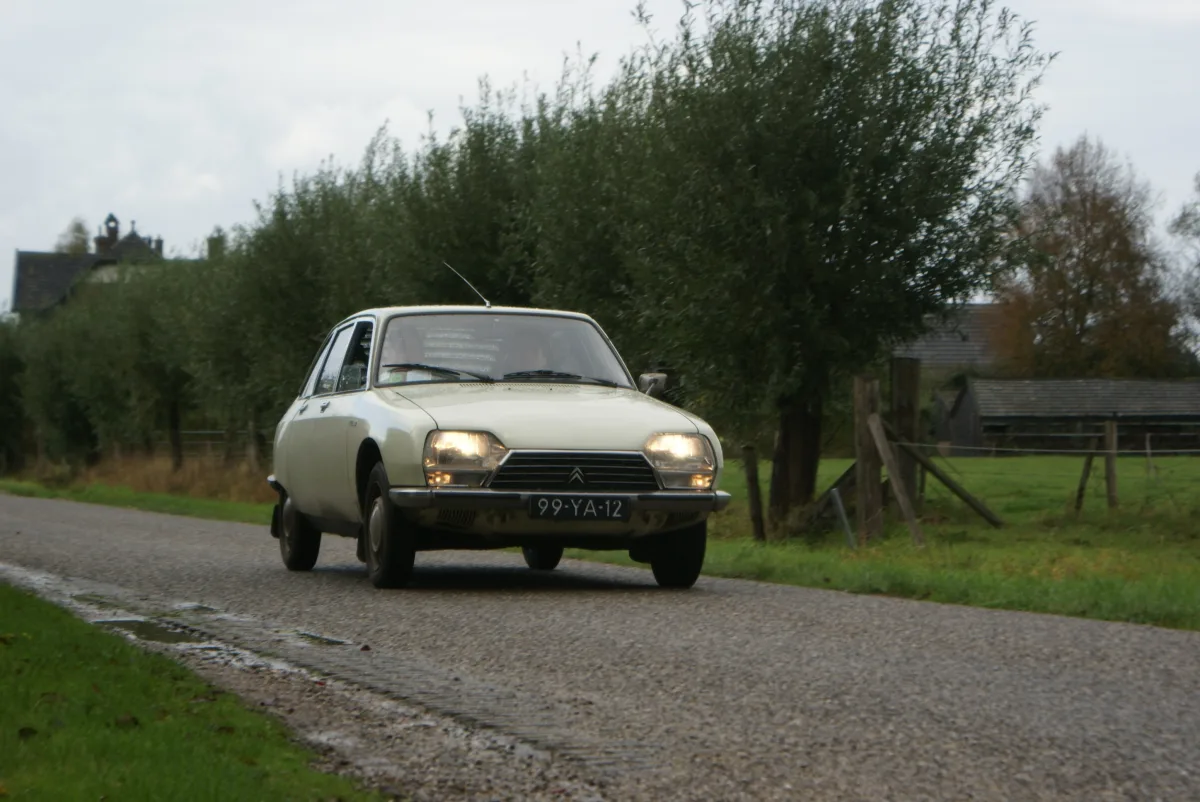
Citroën GS: features, engines and what to know before buying
The Citroën GS is a mid-size car introduced in 1970 with a hydropneumatic suspension and an air-cooled flat-four engine. In this article, we look at its versions, engines, and what you need to know when buying a used GS.






GS in brief
The Citroën GS was introduced as an aerodynamic, comfortable, and technologically advanced car. In 1971, it was named European Car of the Year. Its standout feature is the hydropneumatic suspension, previously only used in more luxurious Citroën models.
Available as a sedan (with a sloping rear) and estate (Break), and from 1979, the refreshed GSA with a five-door hatchback body. Production continued until 1986.
Which version to choose
The first series (GS) has a purer design and a simpler interior. It's a collector's favourite, but finding one in good condition is tricky.
The GSA (from 1979) is more practical thanks to its hatchback body and larger boot. It features a more modern interior. The rarer and particularly collectible GS Birotor comes with a Wankel rotary engine, produced in very small numbers.
Engines and gearboxes
The most common engine is the air-cooled flat-four, with a capacity that increased over time from around 1.0 to about 1.3 litres, and power from roughly 55 to around 65 hp. The engine is known for its distinctive sound and durability, provided it's regularly maintained.
Gearbox — manual, four or five speeds. An automatic option (C-Matic) was available, but it's rarely found. The rotary version had a Wankel engine, which requires special maintenance.
What to check when buying a used GS
Most importantly — the hydropneumatic system: check if the car lifts properly after starting, if there are no fluid leaks, and if the spheres aren't worn out. This is often an expensive repair.
Inspect the bodywork — panels, wheel arches, floor, and front. Check the engine for oil leaks and unusual noises, the braking system, and electrical equipment. Parts can be hard to find, so it's worth reaching out to Citroën clubs.


Trim levels
Names and equipment vary by market and year; we list the most commonly found trim levels in Europe.
GS Club
From 1970The base, widely available version.
- Air-cooled flat-four engine
- Hydropneumatic suspension
- More basic interior trim
GS Pallas
From the 1970sA more comfortable version with better interior trim.
- Higher-quality cabin trim
- Additional comfort features
- Often — additional extras
GS Break
from 1971Versatile body with a larger boot.
- More space for luggage
- The same hydropneumatic suspension
- Practical for daily use
GS Birotor
1973–1975Rare variant with a Wankel rotary engine.
- Twin-rotor Wankel engine
- Very limited numbers
- Collector’s value
GSA
from 1979Updated version with a hatchback body.
- Five-door hatchback
- More modern interior
- More practical version
GSA X3
GSASportier GSA version
- Sporty trim
- Often — sportier looks
- Rarer version
Comparison of GS models
| GS Club | GS Break | GS Birotor | GSA | |
|---|---|---|---|---|
| Who it's for | For classic car enthusiasts | For practical use | For collectors | For the everyday classic |
| Body style | Saloon | Estate | Saloon | Hatchback |
| Engine | Flat 4 cylinder | Flat 4 cylinder | Wankel rotary | Flat 4 cylinder |
| Ease of maintenance | Average | Difficult | Very difficult | Average |
| Price in the used market (relatively) | € | € | €€€ | € |
For most buyers, the best choice is a well-maintained GS or GSA with checked hydraulics. The birotor is for collectors.
Pros
- Comfortable hydropneumatic suspension
- Aerodynamic, unique design
- Air-cooled engine with a distinctive sound
- Practical body styles
Cons
- Hydraulic systems require maintenance
- Susceptible to rust
- Parts can be hard to find
Frequently asked questions
What makes the Citroën GS special?
This is a mid-size car with a hydropneumatic suspension and an air-cooled flat engine. It was named European Car of the Year in 1971.
What is the GS Birotor?
This is a rare variant with a Wankel rotary engine, produced in very limited numbers from 1973 to 1975. Due to its rarity and unique technology, it is highly prized by collectors.
Is the GS suitable for daily use?
A well-maintained example can work, especially the GSA. You need to consider its age, hydraulic maintenance, and parts availability.
Updated 2026-10-19 · Trim levels and equipment vary by market and model year — check the equipment of the specific car. · Translated automatically


