 English
 Lietuvių
 Latviešu
 Eesti
 Polski
 Русский
 Українська
 Deutsch
 Nederlands
 Čeština
 Slovenčina
 Svenska
 Norsk
 Dansk
 Suomi


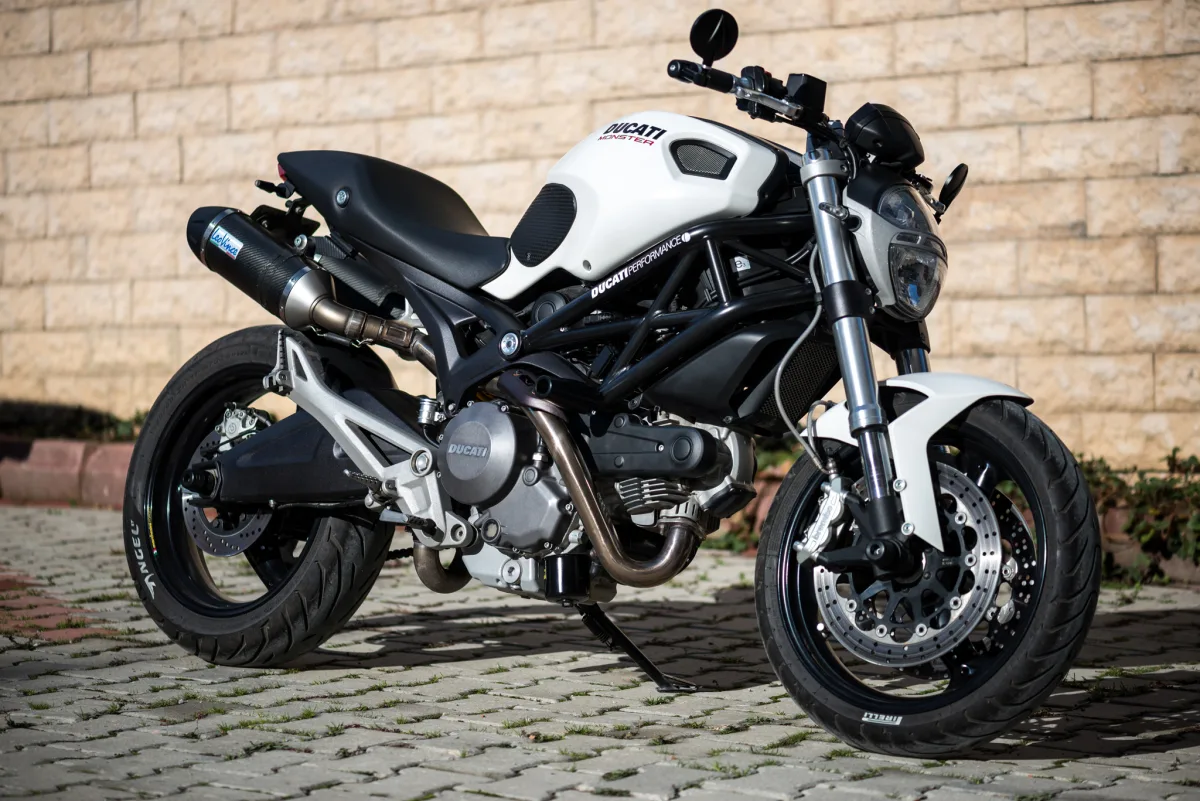
Ducati Monster 696: engine, trims and what to check on a used one
Ducati Monster 696 (2008–2014) — a lightweight and affordable Ducati 'naked' bike with an air-cooled L-shaped engine. We look at the trims and what to check before buying a used one.






Monster 696 in brief
The Monster 696 is a Ducati 'naked' bike that was introduced in 2008 as a more affordable and lighter alternative to the larger Monsters. It features Ducati's signature L-shaped engine, a low seat height (around 770 mm) and easy handling.
It's suitable for both beginners and experienced riders: it's light, sturdy and doesn't require any special skills. It's praised for its looks and the fact that Ducati prestige is quite accessible here.
Trims — what's the difference
The base trim is called Monster 696, while the Monster 696+ comes with a windscreen and a passenger seat cowl. During this period, versions with ABS and special paint jobs also appeared.
Technically, the trims are very similar, so the choice depends on the equipment and condition. It shares a common platform with the later Monster 796 and other models.
Engine and gearbox
The engine is an air-cooled, two-valve L-shaped 'Desmodue' with around 696 cc and approximately 80 hp. Power is transmitted via a six-speed gearbox, and the clutch is dry.
The Desmodromic valve system requires special maintenance according to the manufacturer's intervals. The dry clutch produces a characteristic chatter — this is normal.
What to check when buying a used Monster 696
The most important thing is the service history. Check if the timing belt and valve adjustments have been done on schedule according to the manufacturer's intervals. Without records, these costs can be high.
Check the clutch, its operation and noise, and gear shifting. Inspect the brakes, front axle, frame, and exhaust system. Look for oil leaks.
Ducatis don't like long periods of inactivity — check the battery, electrical system, and lighting. Look for signs of a drop on the tank, side panels, and fairings.


Versions
Names and equipment vary by market and year; we list the versions most commonly found in Europe.
Monster 696
2008–2014The base version.
- Approximately 80 hp engine
- Dry clutch
- Low seating position
Monster 696+
2008–2014With a windscreen and passenger seat cowl.
- Windscreen
- Seat cowl
- A more practical version
Monster 696 ABS
Various yearsWith ABS system.
- ABS
- Braking assistance
- Essentially the same engine
Specialios serijos
Various yearsWith special trim.
- Different colour
- Often additional extras
- Check the specification
Comparison of versions
| 696 | 696+ | 696 ABS | |
|---|---|---|---|
| Who it suits | City and commuting | For long journeys and the city | For safer braking |
| Engine | ~696 cc, around 80 hp | ~696 cc, around 80 hp | ~696 cc, around 80 hp |
| Equipment | Standard | Windscreen | ABS |
| Price in the used market (relatively) | €€ | €€ | €€€ |
For most, the basic Monster 696 will do the trick, but the ABS version is the way to go if you value extra safety. The key thing is the service history.
Pros
- Low seat height, easy to handle
- Ducati looks and character
- Light and agile
- Affordable price in the Ducati world
Cons
- Maintenance is pricier than Japanese bikes
- Dry clutch is noisy
- Some parts are more expensive
Frequently asked questions
Is the Monster 696 suitable for a beginner?
Yes, it's light and low, but it's also powerful, so it demands a responsible approach.
How often should you change the timing belt?
According to the manufacturer's intervals (based on time and mileage). When buying, ask for proof that this has been done.
How does the 696 differ from the 796?
The 796 is the later model, with a more powerful engine and updates, while the 696 is the original, simpler version.
Updated 2026-10-21 · Trim levels and equipment vary by market and model year — check the equipment of the specific car. · Translated automatically


