 English
 Lietuvių
 Latviešu
 Eesti
 Polski
 Русский
 Українська
 Deutsch
 Nederlands
 Čeština
 Slovenčina
 Svenska
 Norsk
 Dansk
 Suomi


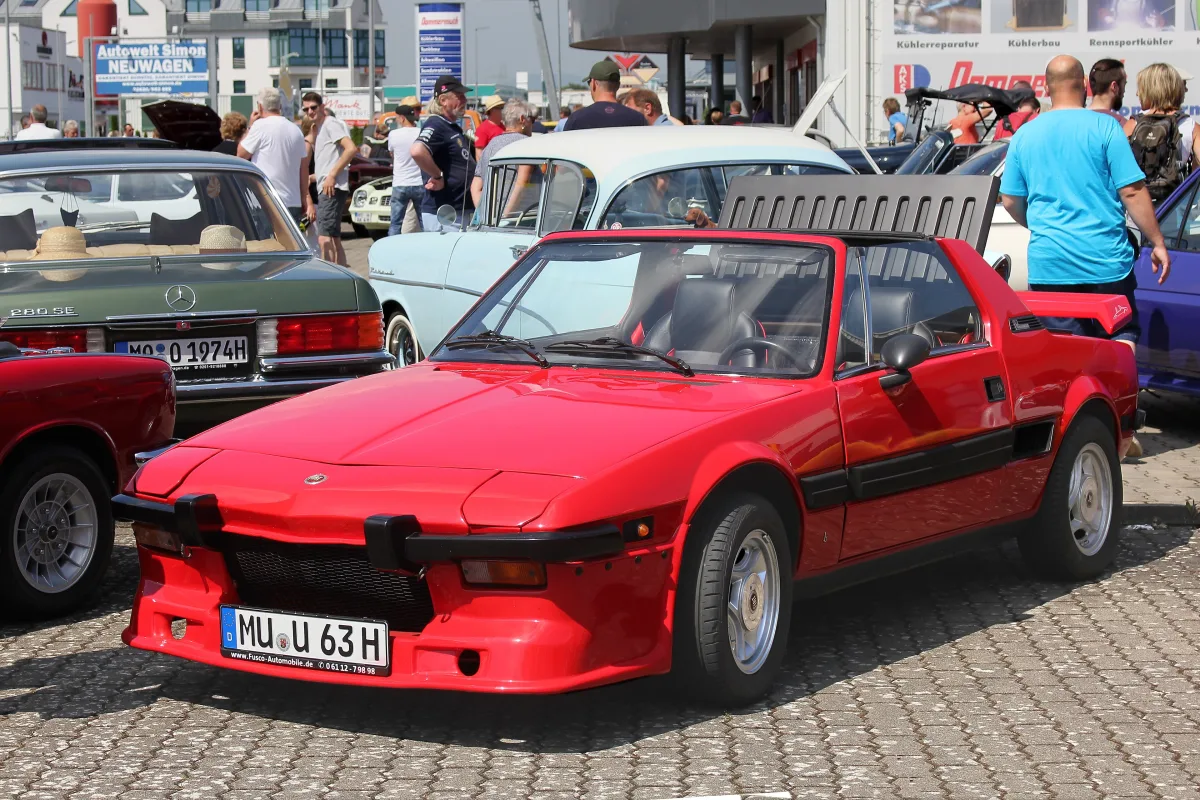
Fiat X1/9: generations, engines and what to know when buying a classic roadster
The Fiat X1/9 is a compact two-seater with a mid-engine layout and a removable roof, produced from 1972 to 1989. We discuss the early and late generations, engines, and what to check when buying a used X1/9.






X1/9 at a glance
The X1/9 is a compact two-seater with a removable targa-style roof and an engine behind the driver's seat. Its body design was created by the Italian studio Bertone.
The car is light and well-balanced, making it a joy to drive even with a small engine. Today, it's a popular classic, beloved by enthusiasts.
Which generation to choose
Early cars (around 1972–1978) have a 1.3-litre engine and thinner bumpers, while later models (from 1978) have a 1.5-litre engine and larger bumpers, which changed the look.
From around 1982, production was moved to Bertone, and the car is often referred to as the Bertone X1/9. Most buyers opt for the 1.5-litre version as it's more powerful and has more gears.
Engines and gearboxes
The X1/9 has a four-cylinder petrol engine: around 1.3 litres in early versions, and around 1.5 litres in later ones. The engine is mounted transversely behind the seats, and the gearbox is at the rear wheels.
The gearbox is manual — four-speed in early cars, and five-speed in later ones.
What to check when buying a used X1/9
Corrosion is the main issue. Check the sills, floors, front and rear body sections, boot lids, and wings. These cars are notorious for rust, so condition is more important than mileage.
Check the condition of the engine and gearbox, and the cooling system, as the cooling pipes run the length of the car. Test the removable roof mechanism and seals.
Parts are easier to find than for many classics, thanks to an active community, but body parts can be pricey. Ensure all documentation is in order and the car hasn't been cut and shut.


Trim levels
Names and equipment vary by market and year; we list the most commonly found versions and trims in Europe.
X1/9 1300
1972–1978Early version with a 1.3-litre engine.
- The 1.3-litre engine
- Thinner bumpers
- Four-speed gearbox
X1/9 1500
1978–1989Later version with a 1.5-litre engine.
- The 1.5-litre engine
- Thicker bumpers
- Usually a five-speed gearbox
Bertone X1/9
1982–1989Trim, built at the Bertone factory.
- 1.5-litre engine
- Often — additional trim details
- Built by Bertone
Comparison of trims
| 1300 | 1500 | Bertone | |
|---|---|---|---|
| Who it's for | For classic car enthusiasts | For more dynamic driving | For enthusiasts of later models |
| Engine | Around 1.3 litres | Around 1.5 litres | Around 1.5 litres |
| Styling | Thinner bumpers | Thicker bumpers | Thicker bumpers |
| Price in the used market (relatively) | €€ | €€ | €€ |
Most buyers opt for the 1.5-litre version for better dynamics, while the earlier 1.3-litre models are praised for their unique styling. The most important thing is the condition of the body.
Pros
- Light and easy to drive
- Mid-engine layout
- Distinctive Bertone-designed styling
- Simple construction
Cons
- Prone to rust
- Small boot and cramped interior
- Modest power
Frequently asked questions
Who designed the X1/9?
The body design was created by the Italian studio Bertone.
Where is the X1/9 engine located?
The engine is mounted behind the seats, transversely, with the gearbox at the rear wheels.
Does the X1/9 have a removable roof?
Yes, the roof panel can be removed and stored in the boot.
Updated 2026-10-19 · Trim levels and equipment vary by market and model year — check the equipment of the specific car. · Translated automatically


