 English
 Lietuvių
 Latviešu
 Eesti
 Polski
 Русский
 Українська
 Deutsch
 Nederlands
 Čeština
 Slovenčina
 Svenska
 Norsk
 Dansk
 Suomi


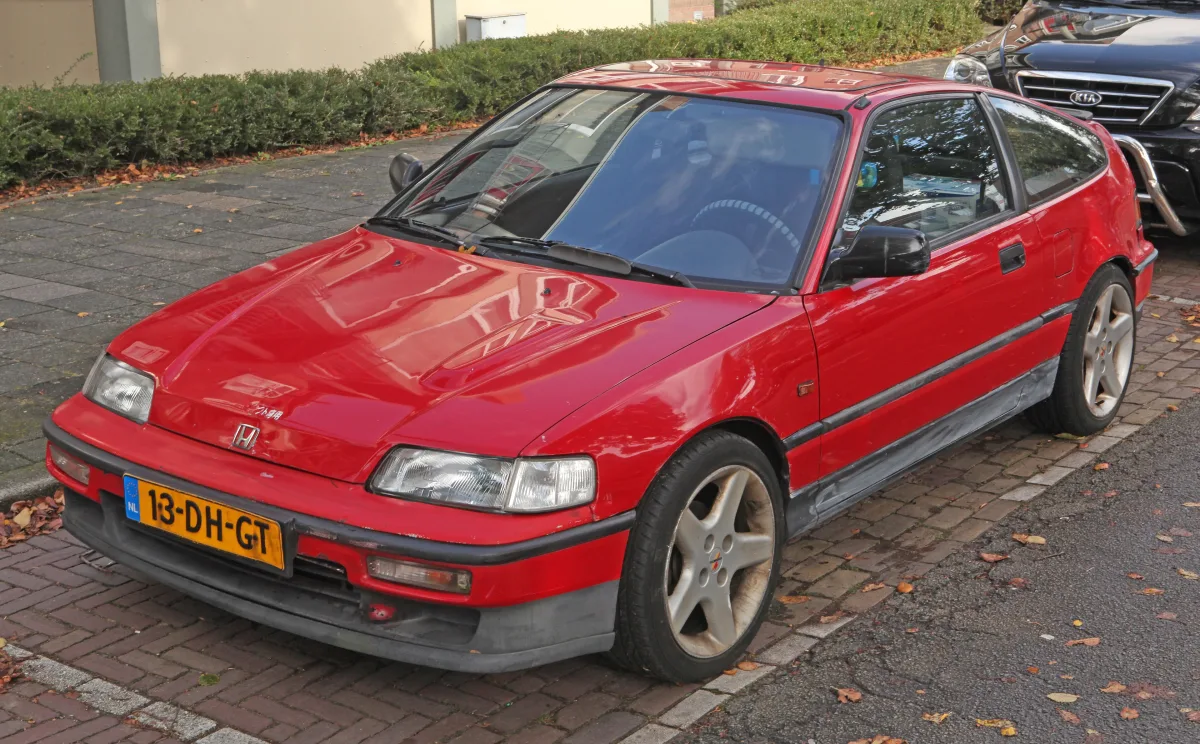
Honda CRX: first and second generations, engines and what to check
The Honda CRX is a lightweight, compact two-seater coupe produced from 1983 to 1991. We look at both generations, engines, and what to check if you're after a used CRX.






CRX in brief
The CRX was built on the Civic platform as a lightweight two-seater sports hatchback with front-wheel drive. Its small size, compact dimensions, and direct handling made it a favourite among driving enthusiasts.
Due to its age and popularity among tuning enthusiasts, a well-preserved original CRX is becoming a rare find today. Many have been modified, damaged, or worn out.
What sets the generations apart
The first generation (1983–1987) stands out with its angular design and smaller engines. It's the simplest, lightest CRX, prized for its direct, 'pure' driving experience.
The second generation (1987–1991) features a more rounded body, improved suspension, and more powerful engines, including 1.6-litre 16-valve versions. It's the more popular and easier-to-find generation. Later, the CRX name was replaced by the CR-X del Sol with a different body — that's a different car altogether.
Engines and gearboxes
The first generation is dominated by 1.3 and 1.5-litre petrol engines, with a 1.6-litre version in some markets. In the second generation, the 1.5 and 1.6-litre engines are the most popular, while the sportiest are the 16-valve 1.6-litre units, producing around 130hp.
The gearbox is usually a manual (5-speed), with some automatic versions available. Thanks to its light weight, even less powerful engines provide lively driving.
What to check when buying a used CRX
First off — corrosion. Check the sills, wheel arches, rear roof edge, and wings. Also, inspect whether the body has been repaired after an accident.
Due to the popularity of tuning, many cars have had their suspension, exhaust system, or engine modified. Ask what's been done and if any original parts remain.
Check the engine, timing belt, clutch, and gearbox. Test all the electrical equipment.


Trim levels
Names and equipment vary by market and year; we list the versions most commonly found in Europe.
1,3 / 1,5
first generationThe simplest and most basic CRX.
- Smaller engine
- Very light body
- Often — basic trim
1,5
second generationThe main second-gen version.
- Economical engine
- More spacious body
- Often — simpler equipment
1.6i-16
second generationA sportier version with a 16-valve engine.
- 1.6-litre 16-valve engine
- Around 130 hp
- Often — lightweight alloy wheels
Comparing versions
| Pirmoji karta | 1,5 (II karta) | 1.6i-16 (II karta) | |
|---|---|---|---|
| Who it's for | For purists who love a clean drive | For everyday use | For sporty driving |
| Engine | 1.3–1.5-litre | 1.5-litre | 1.6-litre, 16-valve |
| Body | Hatchback | Compact | Compact |
| Price in the used market (relatively) | €€ | €€ | €€€ |
Most buyers should look for an unmodified second-generation CRX. The 1.6i-16 version is particularly prized, but the key is to find an unrusted, unmodified, and well-maintained example.
Pros
- Very light and lively driving
- Economical engines
- Simple and reliable Honda engineering
- Increasingly valued as a classic
Cons
- Rust and plenty of tuning and accident history
- Two-seater cabin and small boot
- Good condition examples are becoming rarer
Frequently asked questions
Is the Honda CRX suitable for daily use?
Yes, if the condition is good. However, the two-seater cabin and age limit practicality.
How does the CRX differ from the CR-X del Sol?
The CRX (1983–1991) is a lightweight coupe with a solid roof, while the CR-X del Sol is a later model with a removable top and a different construction.
How to spot a good-condition CRX?
The key is an unrusted body, original interior, and a clear service history record.
Updated 2026-10-21 · Trim levels and equipment vary by market and model year — check the equipment of the specific car. · Translated automatically


