 English
 Lietuvių
 Latviešu
 Eesti
 Polski
 Русский
 Українська
 Deutsch
 Nederlands
 Čeština
 Slovenčina
 Svenska
 Norsk
 Dansk
 Suomi


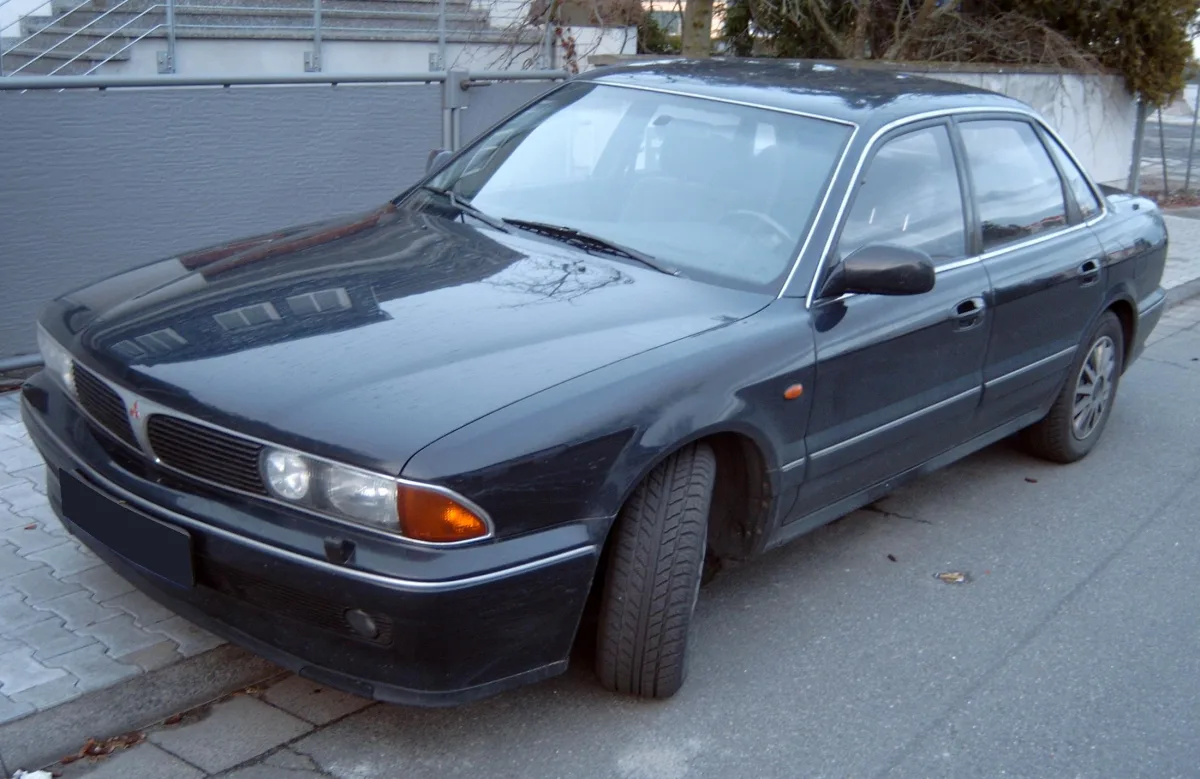
Mitsubishi Sigma: from Galant Sigma to Diamante-based saloon
Mitsubishi Sigma is the name given to various Mitsubishi models sold between 1976 and 1996. This article focuses mainly on the Sigma saloon and estate sold in Europe and Japan from 1991 to 1996, with a brief look at the earlier Galant Sigma.






Sigma in a nutshell
Up until the 1990s, the Sigma was a Galant-based version: known as the Galant Σ in Japan, Sigma (previously Chrysler Sigma) in Australia, and Galant Σ and later Sigma in North America.
From 1991 to 1996, the Sigma became an entirely different car—a larger Diamante-based saloon and estate sold in Japan and Europe. It was this model that was sold in Europe.
Generations — what’s the difference
Early Galant Sigmas (1976–1987) are classic Galant-based cars, of which there are virtually none in Lithuania.
The 1991–1996 Sigma features front-wheel drive, a V6 engine, and a comfortable interior. This car was also the basis for the Mitsubishi Magna produced in Australia.
Engines and gearboxes
The 1991–1996 Sigma most commonly has a 3.0-litre V6 petrol engine, with both 12- and 24-valve versions available. The most powerful 24-valve version produced around 200 hp.
Gearboxes come in manual or 4-speed automatic. Drive is to the front wheels.
What to check when buying a used Sigma
This is an old car, so the body condition is key: check for rust, wheel arches, door sills, and the boot floor.
In the case of a V6 engine, check if the timing belt has been changed on time, if there are no oil leaks, and if the engine runs smoothly. The automatic gearbox should shift without any jolts.
Look for used parts and mechanics in advance, as some components — body and interior — can be hard to find.


Trim levels
Trim names vary by market; we list versions by body style and engine.
Sigma sedanas 3,0 V6
1991–1996The base version with a V6 engine.
- 3.0-litre V6 engine
- Front-wheel drive
- Often — automatic gearbox
Sigma 24 vožtuvų
1991–1996The more powerful version.
- Around 200 hp
- Often — more luxurious equipment
- More engaging drive
Sigma universalas
1991–1996A more practical body for the family (in Europe).
- Estate body style
- Larger boot
- Same V6 underpinnings
Galant Sigma
1976–1987Early model based on the Galant.
- Classic construction
- Different engines depending on the market
- Rare in Lithuania
Comparing versions
| Sedanas V6 | 24 vožtuvų | Universalas | |
|---|---|---|---|
| Who it suits | For comfortable driving | For spirited driving | For families and cargo |
| Engine | 3.0-litre V6 | 3.0-litre V6, around 200hp | 3.0-litre V6 |
| Price in the used market (relatively) | € | € | € |
Most buyers will find a well-maintained V6 sedan to be just fine. The estate is more practical, while the 24-valve version is livelier.
Pros
- Comfortable, spacious interior
- Smoothness of the V6 engine
- Lots of kit for the time
- A rare, distinctive car
Cons
- Age and risk of corrosion
- High fuel consumption
- Finding parts can be tricky
Frequently asked questions
How does the Sigma differ from the Galant?
Until the 1990s, the Sigma was a Galant-based version, and from 1991–1996, it was a larger sedan and estate based on the Diamante.
Was the Sigma estate sold in Europe?
Yes, from 1991–1996, both the sedan and estate were offered in Europe.
What engine does the Sigma have?
Most commonly, the 3.0-litre V6 with 12 or 24 valves.
Updated 2026-10-21 · Trim levels and equipment vary by market and model year — check the equipment of the specific car. · Translated automatically


