 English
 Lietuvių
 Latviešu
 Eesti
 Polski
 Русский
 Українська
 Deutsch
 Nederlands
 Čeština
 Slovenčina
 Svenska
 Norsk
 Dansk
 Suomi


Buick Special: generations, engines, and what to know when buying
Buick Special — the most affordable Buick model, produced from 1936 with breaks until the end of the 1970s. We look at its key generations, engines, and what to check when buying this classic car in Lithuania.






The Special in brief
From 1936, the Special was Buick's most affordable model. Until 1958, it was a large car, and in 1961, after a two-year hiatus, it returned as a compact model, becoming a mid-sized car from 1964. During this time, it offered coupe, sedan, and station wagon bodies, and for some years, even a convertible.
In 1959, General Motors renamed the Special to LeSabre. After 1970, the Special was no longer sold as a separate model, but its name was used for the base Century trim (1975–1979 and 1991–1996).
Which generation to choose
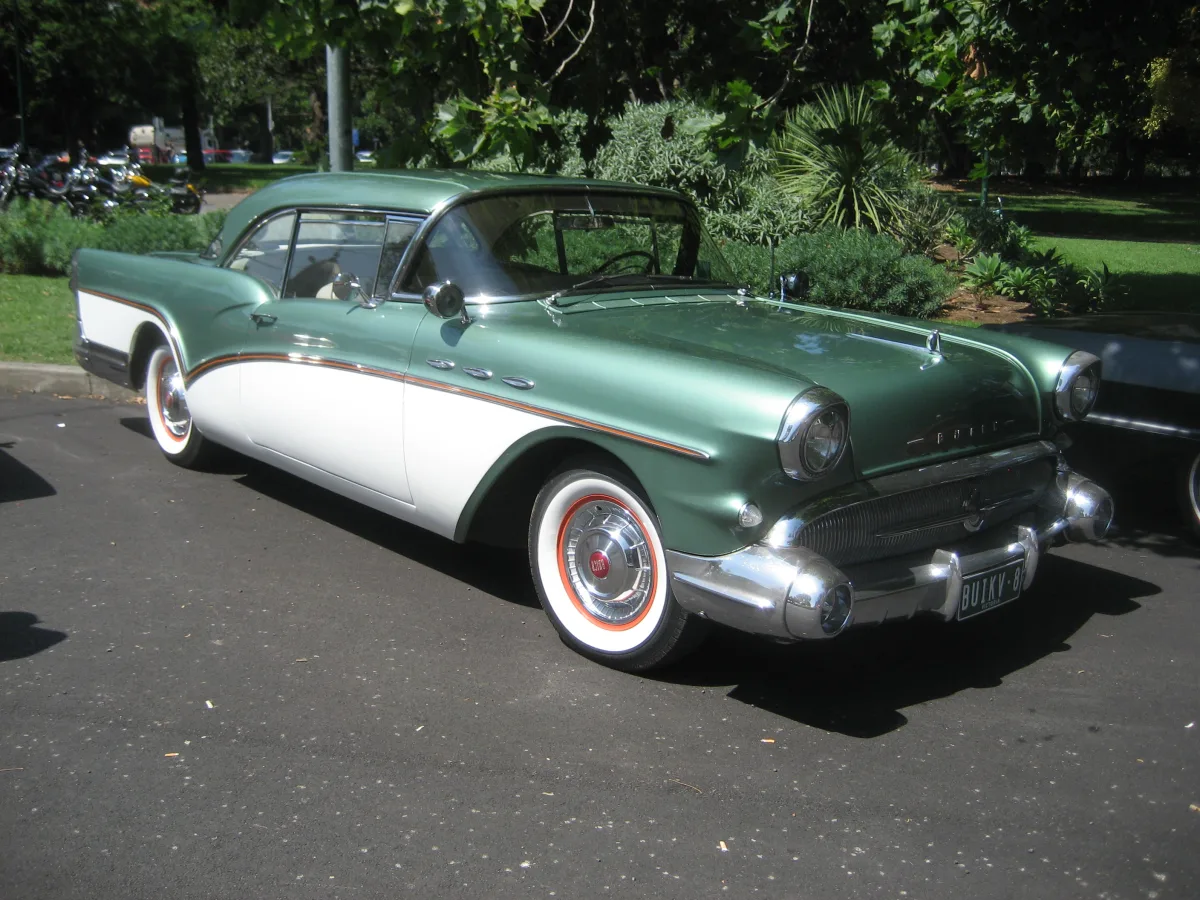
From 1949 to 1958, the Special was a large, low, and wide car with a separate frame. Models from this era are easily recognisable by the three VentiPort vents on each fender (older Buick models had four). In mid-1955, the four-door Special Riviera appeared — one of the first production four-door hardtops without a pillar between the doors.
From 1961 to 1963, the Special became a compact car with a unibody construction. In 1962, it was the first car in America to be mass-produced with a V6 engine and was named Motor Trend Car of the Year that year. From 1962, the Skylark became a separate series.
The 1964–1967 Special and Skylark were redesigned — a separate frame returned, the car became mid-sized, and the Special and Special Deluxe trims were introduced. The Special nameplate was used for more affordable models from 1968–1969.
Engines and transmissions
Early Specials came with inline eight-cylinder engines: from 1937, around 4.1 litres, and in 1951, the larger 'Fireball' inline eight-cylinder engine arrived. A completely new 'Fireball' V8 was introduced in 1954, and a 5.3-litre V8 in 1956. In 1957, a 364 cubic inch (around 6.0 litres) V8 with approximately 250 hp was fitted.
The compact 1961–1963 Special featured a new aluminium-block 215 cubic inch (3.5 litres) V8 (155 hp) and, from 1962, an iron-block 198 cubic inch (3.2 litres) V6. In 1963, buyers could choose a three-speed manual gearbox, a floor-mounted four-speed 'Borg-Warner T-10', or a two-speed 'Dual Path Turbine Drive' automatic.
From 1964, the V6 was enlarged to 225 cubic inches (3.7 litres), and the aluminium V8 was replaced by a 300 cubic inch (4.9 litres) V8 with an iron block. Initially, it had aluminium heads, but these were swapped for iron ones in 1965 due to issues.
What to check when buying a used Special
These cars are at least 55 years old, so the body condition is key. Check the sills, floors, boot floor, lower wing sections, and frame (for 1961–1963 models without a separate frame, the condition of the sills and body supporting parts is especially important). Determine if the car is original or restored, and who did the work.
Assess the engine condition by checking the cooling system and oil leaks. The aluminium 215 V8 is particularly sensitive to the correct coolant, and for the 1964–1965 300 V8, check if the cylinder heads are original and haven't been replaced. This engine's successor was produced for a long time by Rover (it was used in the Land Rover and MGB GT V8), so finding some mechanical parts is easier.
Brakes on these era cars are usually drums, so check their condition and the hydraulics. Finding body and trim parts (chrome, glass, interior details) can be tricky, so it's better to choose a more complete, less restored car. Check the documents in advance — most of these cars are imported from the USA.


Special eras and versions
Names and equipment vary by year and market; we list the main Special versions.
Special
1949–1958The cheapest big Buick with a separate frame.
- Two- or four-door body
- Three VentiPort vents on each wing (1949–1957)
- From 1954 — Fireball V8 engine
Special Riviera
from mid-1955Four-door hardtop without a pillar between the doors.
- Body without a centre pillar
- V8 engine
- Often — more chrome trim
Special
1961–1963Compact Special with a self-supporting body.
- 3.2-litre V6 or 3.5-litre V8
- Body styles: coupe, sedan, convertible, station wagon
- Optional — four-speed gearbox mounted in the floor
Special Skylark
From mid-1961Special with special trim; from 1962, Skylark became a separate series.
- Special trim package
- Optional — separate ('bucket') seats
- Four-barrel carburettor 215 V8 (around 185 hp)
Special ir Special Deluxe
1964–1967Mid-size version with a separate frame.
- 3.7-litre V6 or 4.9-litre V8
- Two- and four-door body styles
- Deluxe — a touch better trim
Comparing eras
| 1949–1958 | 1961–1963 | 1964–1967 | |
|---|---|---|---|
| Who it's for | For fans of classic 'chrome' styling | A compact classic car | A mid-sized everyday classic |
| Body construction | Separate chassis | Self-supporting body | Separate chassis |
| Engine | In-line eight-cylinder, later V8 | 3.2-litre V6, 3.5-litre V8 | 3.7-litre V6, 4.9-litre V8 |
| Size | Large | Compact | Mid-sized |
| Price in the used market (relatively) | €€€ | €€ | €€ |
A compact 1961–1963 Special is fascinating as a piece of automotive history, while the 1964–1967 version is simpler and often easier to find. The 'chromed-out' era Special is for those who prioritise style.
Pros
- Classic American styling
- Simple and well-known mechanics
- The 1962 V6 — a significant step in General Motors technology
- Several generations and body styles to suit different needs
Cons
- Rust and hard-to-find body and trim parts
- High fuel consumption by today's standards
- Old safety systems, drum brakes
Frequently asked questions
How does the Special differ from the Skylark?
The 1961 mid-sized Skylark was a Special with better trim and optional individual seats, and from 1962 it became a separate, more luxurious series.
Is the Special suitable for daily driving?
Technically yes, but it's a car from the sixties or older. It's usually used seasonally and for shows, not daily.
Why is the 1961–1963 Special considered special?
It boasted an aluminium V8 and in 1962 became the first American car to be mass-produced with a V6, earning it the title of Motor Trend Car of the Year that year.
Updated 2026-10-21 · Trim levels and equipment vary by market and model year — check the equipment of the specific car. · Translated automatically


