 English
 Lietuvių
 Latviešu
 Eesti
 Polski
 Русский
 Українська
 Deutsch
 Nederlands
 Čeština
 Slovenčina
 Svenska
 Norsk
 Dansk
 Suomi


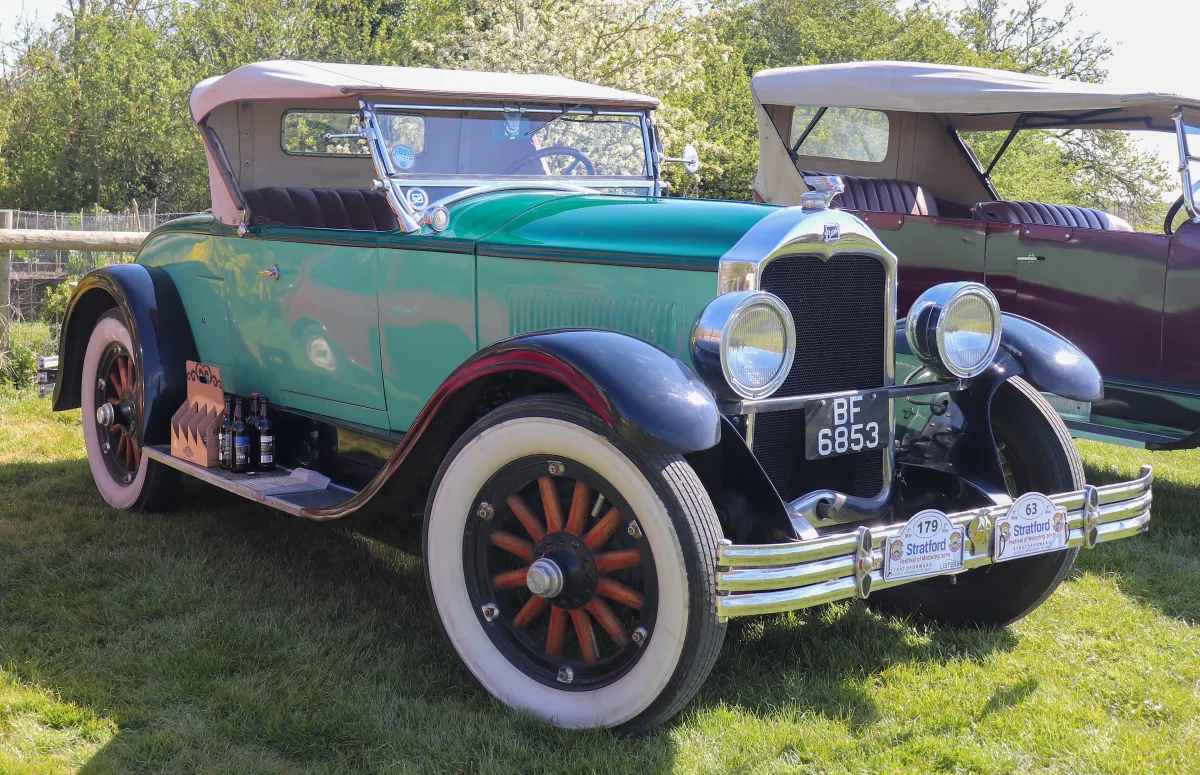
Buick Standard Six: the most popular Buick of the 1920s
The Buick Standard Six was a six-cylinder Buick produced from 1925 to 1928, becoming the most popular Buick model of its time. We look at what makes it special and what collectors should know.






Standard Six in brief
The Standard Six was the junior model to the Buick Master Six, introduced after Buick ditched its four-cylinder engines. It replaced the earlier Buick Six, and was later succeeded by the Series 50.
Built in Flint, Michigan. According to available data, it was the most popular Buick of its era, a step up from the Oldsmobile Six.
What sets it apart
Bodies were supplied by Fisher Body, with paintwork in quick-drying Duco lacquer. A wide range of body styles was offered: coach, sedan, roadster, touring, and coupe.
Period features included a toolkit, speedometer, electric horn, spare wheel with detachable rim, and a rear-view mirror.
Engine and tech
The engine was a six-cylinder unit with overhead valves; according to 1926 specs, the bore was 3 inches, stroke 4.5 inches (around 3.1 litres). The gearbox was a three-speed manual.
Brakes were mechanical on all four wheels, wheels were wooden, and tyres were low-pressure 'balloon' type. The wheelbase on the 1926 version was 114.5 inches.
What to check when buying
This is a collectible car, so first check the provenance, engine and body numbers, and the quality of any restoration. You'll need the opinion of an expert familiar with period Buicks.
Check the wooden body frame, chassis, brakes, engine, and electrical system. Parts are rare and sought after in classic car communities.


Trim levels
The Standard Six was offered in several body styles; below are the main ones.
Roadster
1925–1928Two-seater open body.
- Two-seater saloon
- Often — folding roof
- Six-cylinder engine
Touring
1925–1928Five-seater open body.
- Five-seater saloon
- Often — folding roof
- The same engine
Coach ir sedanas
1925–1928Closed body styles.
- Closed body
- Often — five-seater saloon
- The same engine
Standard Six body comparison
| Roadster | Touring | Coach / sedanas | |
|---|---|---|---|
| Who's it for? | For a sportier look | For drivers with friends | For practical use |
| Space | 2 | 5 | 5 |
| Price in the used market (relatively) | €€ | €€ | €€ |
The Standard Six is for classic car enthusiasts; when choosing a body, authenticity and condition are key.
Pros
- A popular and often well-preserved model
- A reliable six-cylinder engine
- A few body variants
- A wide range of body styles
Cons
- An outdated level of safety and comfort
- Parts are rare and expensive
- Requires specialist maintenance
Frequently asked questions
When was the Standard Six made?
1925–1928
What engine does the Standard Six have?
Six-cylinder with overhead valves, around 3.1 L according to 1926 data
Is it suitable for daily driving?
No — it's a classic car, meant for shows and events
Updated 2026-10-21 · Trim levels and equipment vary by market and model year — check the equipment of the specific car. · Translated automatically


