 English
 Lietuvių
 Latviešu
 Eesti
 Polski
 Русский
 Українська
 Deutsch
 Nederlands
 Čeština
 Slovenčina
 Svenska
 Norsk
 Dansk
 Suomi


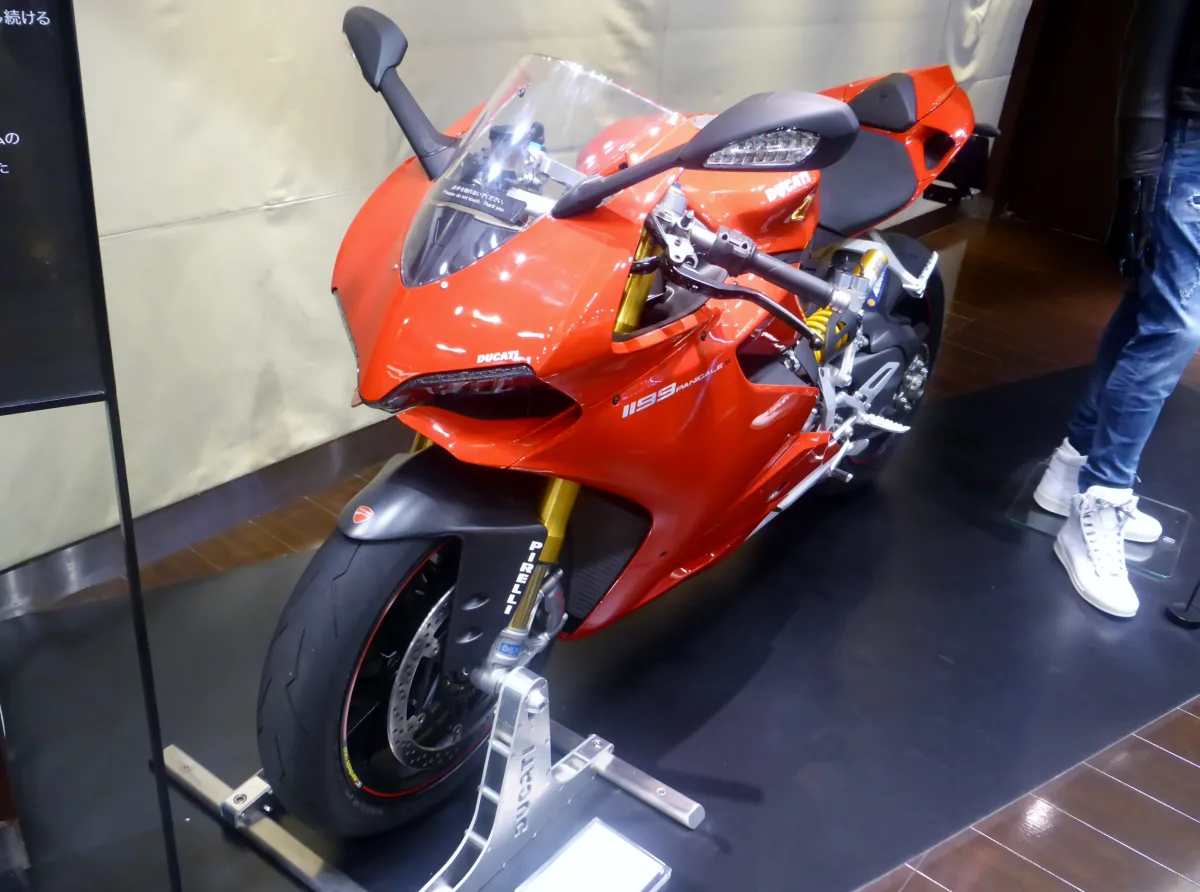
Ducati 1199 Panigale: 2012–2014 superbike, engine and what to check
Ducati 1199 Panigale — the first-generation Panigale superbike, produced from 2012–2014 with an 1198 cm³ twin-cylinder engine. We look at the versions, engine and what to check when buying used.






1199 Panigale in brief
The 1199 Panigale replaced the 1198 model and brought radical changes: an aluminium monocoque frame instead of a tubular one and a new „Superquadro“ engine. It was one of the most advanced superbikes of its time.
It’s sought after in the used market for its power, design and unique character.
Versions and choice
The main versions are the 1199 Panigale and 1199 Panigale S (with electronically controlled Öhlins suspension). There was also a „Tricolore“ colour scheme version, the 2013 1199 Panigale R with racing components, and the 2014 limited „Superleggera“ series.
The S version suits most buyers, while the R and Superleggera are pricier, more collectible options.
Engine and gearbox
The engine is an 1198 cm³ „Superquadro“ twin-cylinder, producing around 195 hp. It’s a very powerful and lively engine that requires experience to handle.
The gearbox is a 6-speed manual, with drive to the rear wheel via a chain. Standard equipment includes ABS, traction control and multiple riding modes.
What to check when buying a used 1199 Panigale
Request a full service history: oil changes, valve adjustments and timing belts must be done on time. The systems are expensive, so missed servicing can lead to bigger costs.
Check the VIN to ensure all manufacturer recall or update work has been carried out — early series cars sometimes had issues.
Inspect the plastics, frame, and suspension for signs of damage, and in the S version — the electronically controlled suspension. Many bikes have been ridden on tracks or modified.


Trim levels
Names and equipment vary by market and year; we list the versions most commonly found in Europe.
1199 Panigale
2012–2014Base version with standard electronics.
- ABS and traction control
- Driving modes
- Standard suspension
1199 Panigale S
2012–2014Popular version with a higher-spec suspension.
- Electronically controlled Öhlins suspension
- Additional equipment and components
- Often — lighter wheels
1199 Panigale R
2013–2014Race-oriented version with higher-spec components.
- Racing components
- More powerful tech for the track
- Pricier than the S version
Comparing 1199 Panigale versions
| 1199 | 1199 S | 1199 R | |
|---|---|---|---|
| Who it's for | For spirited road driving | For keen buyers | For track enthusiasts and collectors |
| Engine | 1198 cm³, around 195 hp | 1198 cm³, around 195 hp | 1198 cm³, racing components |
| Suspension | Standard | Electronically controlled | Top-tier components |
| Price in the used market (relatively) | Mid-range | High-end | High-end |
For most buyers, the best balance of price and features is the 1199 S with a full history. The R version is more suited to collectors and track enthusiasts.
Pros
- Very high power
- Advanced frame and design
- Modern (for its time) electronics
- Distinctive Ducati character
Cons
- High power demands experience
- Maintenance and parts are expensive
- Sporty seating isn't comfortable for daily use
Frequently asked questions
How does the 1199 differ from the 899?
The 1199 has a larger engine and more power, while the 899 is smaller, easier to handle, and usually cheaper.
Is the 1199 suitable for daily use?
Due to its sporty seating and power, it's more suited to sporty riding; naked or touring bikes are more comfortable for daily use.
Is the S trim worth the extra cost?
If you value better suspension and electronics — yes. For most daily driving, the base trim is sufficient.
Updated 2026-10-21 · Trim levels and equipment vary by market and model year — check the equipment of the specific car. · Translated automatically


