 English
 Lietuvių
 Latviešu
 Eesti
 Polski
 Русский
 Українська
 Deutsch
 Nederlands
 Čeština
 Slovenčina
 Svenska
 Norsk
 Dansk
 Suomi


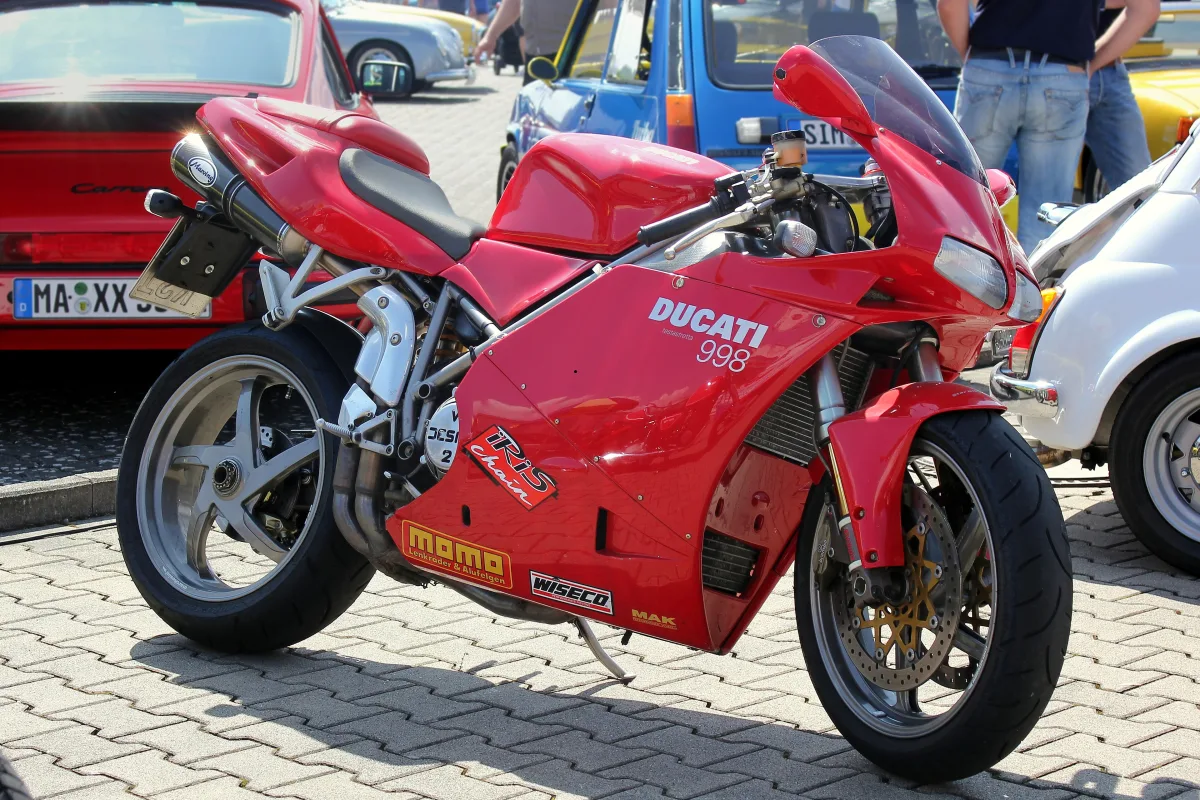
Ducati 998: Testastretta engine, versions and what to check on a used one
Ducati 998 (2002–2004) — the final generation of the 916 line superbike, featuring the Testastretta engine. We look at the versions and what to check when buying a used one.






998 in brief
The Ducati 998 debuted in 2002 as the successor to the 996. It retained the classic Tamburini design with a single-sided rear swingarm and trellis frame, but boasted a larger displacement and refined engine. Now, it's valued as a classic and collector's item.
This is a sports bike aimed at riders who appreciate speed and character. The riding position is sporty, so it's not the most comfortable for long journeys.
Versions — what's the difference
The base version was sold as the 998 Biposto or Monoposto. Higher-spec models include the 998 S with better suspension, and the 998 R — a limited track-focused version with a more powerful engine and top-tier equipment.
The differences between versions are significant, especially in price, so when buying, check which version you're getting. This can be determined by the frame number and documentation.
Engine and gearbox
The engine is a liquid-cooled L-twin 8-valve 'Testastretta', around 998 cc and around 120 hp (base version; R is more powerful). It features desmodromic valve control.
The gearbox is a six-speed, dry clutch. Maintenance according to manufacturer intervals includes changing the belt and adjusting the valves, making the bike more expensive to run than Japanese models.
What to check when buying a used 998
Check the service history, especially for clutch replacements and throttle adjustments. Without records, these costs can be substantial. Start the engine cold and listen for any unusual noises.
Inspect the frame, single-sided rear swingarm, and suspension for signs of a drop. Check if the original tank, plastics, and exhaust system are present, as these parts can be expensive.
Check the electrical system, fuel pump, brakes, and battery. Since this is a collectible, verify the documents, frame, and engine numbers.


Versions
Names and equipment vary by market and year; we list the versions most commonly found in Europe.
998 Biposto / Monoposto
2002–2004Base version.
- Around 120 HP
- Two-seater or single-seater
- Standard suspension
998 S
2002–2004Higher-class version.
- Often — better suspension
- More robust equipment
- Higher collectible value
998 R
2002–2004Limited track-type version.
- More powerful engine
- Sport trim
- Rare and expensive
Specialios serijos
various yearsWith special paintwork.
- Different colour
- Often additional extras
- Check the spec
Version comparison
| Biposto | S | R | |
|---|---|---|---|
| Who it suits | For daily driving and collecting | For buyers wanting better trim | For collectors and the track |
| Engine | Around 120 HP | Similar or more powerful | More robust |
| Suspension | Standard | Higher-class | Sporty |
| Price in the used market (relatively) | €€ | €€€ | €€€ |
Most will be happy with a 998 in good condition. S and R versions are for collectors, but they command a higher price.
Pros
- Classic Tamburini styling
- Characterful Testastretta engine
- Collector's item
- Sporty ride
Cons
- Expensive maintenance
- Uncomfortable seating position for long journeys
- Parts can be expensive or hard to find
Frequently asked questions
Is the 998 suitable for a beginner?
No. It's a powerful sports bike that requires experience.
How does the 998 differ from the 996?
The 998 has a Testastretta engine and updated technology, while the 996 has the older Desmoquattro engine.
How much does maintenance cost?
More than a Japanese bike, as you need to change belts and adjust valves. Check with your service for the exact price.
Updated 2026-10-21 · Trim levels and equipment vary by market and model year — check the equipment of the specific car. · Translated automatically


