 English
 Lietuvių
 Latviešu
 Eesti
 Polski
 Русский
 Українська
 Deutsch
 Nederlands
 Čeština
 Slovenčina
 Svenska
 Norsk
 Dansk
 Suomi


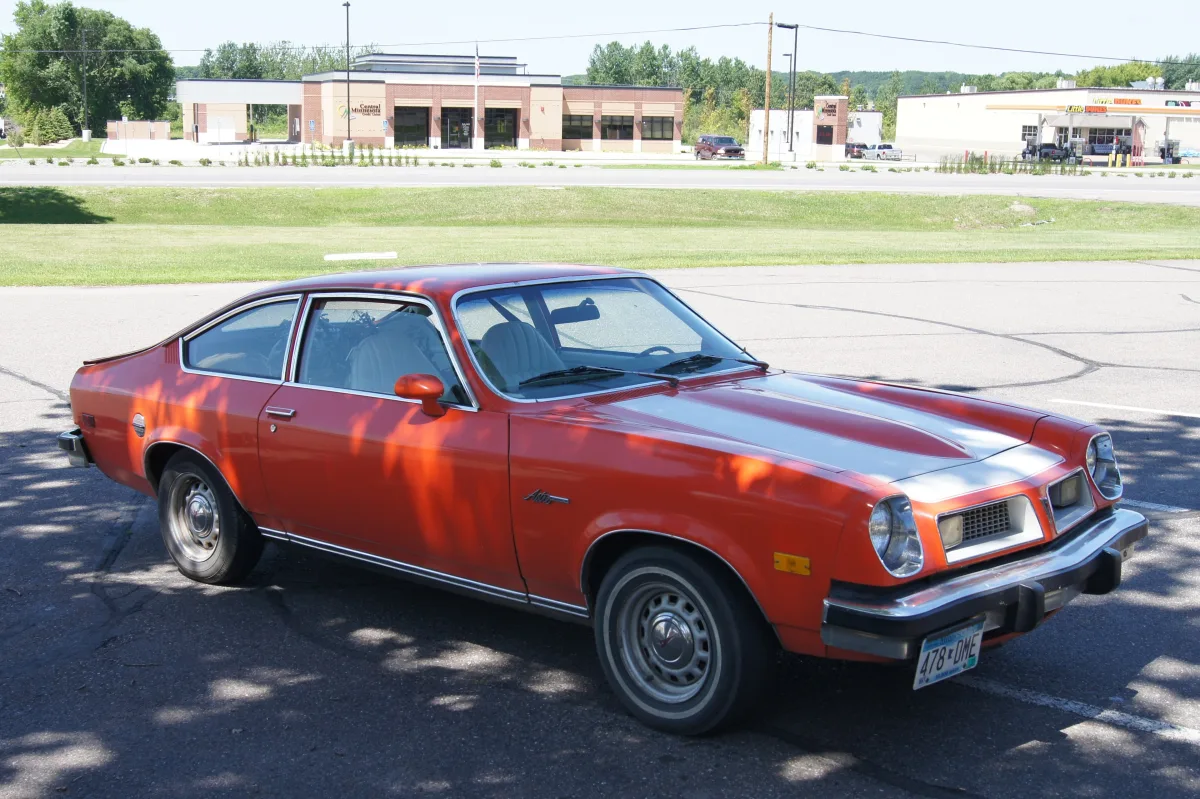
Pontiac Astre: bodies, engines and what to know when buying
The Pontiac Astre was a compact car built on the Chevrolet Vega platform but sold under the Pontiac badge: in Canada from 1973–1974, and in the US from 1975–1977. We look at the bodies, engines and what to check when buying this rare classic.






Astre in brief
The Pontiac Astre was a rebadged Chevrolet Vega, built on the same H-body platform. It was sold in Canada from 1973–1974, and debuted in the US in the 1975 model year. The name Astre means star in Catalan — just like Vega.
Several bodies were offered: a hatchback, a notchback sedan, the Safari estate and a panel van (up to 1975). The Astre differed from the Vega with Pontiac’s grille, emblems, steering wheel and more luxurious interior trim. From 1974–1977, the cars had tail lights similar to the first-generation Firebird.
Years and changes
The only major body change occurred in 1974: due to new 5 mph bumpers regulations, the front grille changed and a larger front bumper was introduced.
In 1976, the four-leaf-spring rear suspension was replaced by a system with a torque arm spring. Production of the Vega and Astre ended in late 1977, while the estate car lived on as a Pontiac Sunbird family member from 1978–1979.
Engines and transmissions
All Astres up to 1977 came with a 2.3-litre (140 cubic inch) inline four-cylinder Vega engine with an aluminium block, cast-iron head, and a single overhead camshaft. In 1977, a 2.5-litre (151 cubic inch) Pontiac engine with a cast-iron block and head was offered as an option.
Transmissions: three- and four-speed manual, five-speed manual with overdrive from 1976-1977, and a three-speed automatic. The car has rear-wheel drive, with front disc and rear drum brakes.
What to check when buying a used Astre
Vegas and Astres were notorious for body corrosion, so be sure to inspect the wings, wheel arches, sills, and floor. Also, ask how the car was stored and if any quality bodywork was done.
The 2.3-litre aluminium-block engine was known for overheating issues and high oil consumption, so check the cooling system, oil level, and whether the engine has been rebuilt. Ask what type of engine the car has, as parts selection depends on it.
Spare parts in Lithuania are almost non-existent, but many mechanical parts are shared with the Chevrolet Vega, so you'll often need to order them from the US. There are fewer interior and trim parts, so opt for the most complete car you can find.


Body styles and trims
Names vary by year and market; we list the main Astre versions.
Astre hečbekas
1973-1977Lower roofline and reclining rear seats.
- Hatchback body style
- Often — 2.3-litre engine
- Pontiac-style grille
Astre sedanas („notchback“)
1973-1977The cheapest version with a separate boot.
- The only body style with a closed boot
- The most affordable option
- The more basic trim
Astre Safari
1973-1977Estate with a fixed rear quarter window.
- Rear-hinged tailgate
- More load space
- Often — the SJ or GT package
Astre SJ
as an additional versionThe more luxurious, sporty version.
- Soft nylon upholstery and carpets
- A „Rally“-style instrument cluster
- The more powerful twin-chamber carburettor engine version
Astre GT paketas
as an additional packageThe more basic trim with SJ suspension and engine characteristics.
- Hatchback and 'Safari' on offer
- SJ driving and engine characteristics
- Radial tyres
Body comparison
| Hečbekas | Sedanas | Safari universalas | |
|---|---|---|---|
| Who it's for | For the sporty, compact classic car | For the budget-conscious, basic Astra | For the practical classic with more boot space |
| Body features | Lower roofline, reclining rear seats | Separate enclosed boot | Fixed rear side window, rear-hinged doors |
| Engine | 2.3 l, 1977 — and 2.5 l | 2.3 l, 1977 — and 2.5 l | 2.3 l, 1977 — and 2.5 l |
| Boot | Non-adjustable rear seats | Separate enclosed boot | The largest cargo space |
| Price in the used market (relatively) | €€ | € | €€ |
Most buyers will find the hatchback the most appealing – it stands out with its style, and it offers the widest range. If practicality is key, go for the 'Safari', but most importantly – find a body with minimal rust.
Pros
- A rare and intriguing classic 'Pontiac'
- Simple mechanics and rear-wheel drive
- Many mechanical parts are shared with the 'Chevrolet Vega'
- Several body styles: hatchback, sedan, estate
Cons
- The body is prone to rusting
- Aluminium engine reputation: overheating and oil consumption
- Some parts need to be ordered from the USA
Frequently asked questions
How does the Astre differ from the 'Chevrolet Vega'?
The technology is the same, but the Astre features 'Pontiac' styled grilles, emblems, steering wheel, and a more luxurious interior, and from 1974–1977 – 'Firebird' style rear lights.
When was the Astre produced?
In Canada 1973–1974, in the USA from 1975 until 1977. The Universal was sold for a while as the 'Sunbird'.
Is the Astre suitable for daily driving?
This is a car that's nearly half a century old, so it's mostly suited to seasonal use. Before buying, make sure to thoroughly check the bodywork and the engine cooling system.
Updated 2026-10-21 · Trim levels and equipment vary by market and model year — check the equipment of the specific car. · Translated automatically


