 English
 Lietuvių
 Latviešu
 Eesti
 Polski
 Русский
 Українська
 Deutsch
 Nederlands
 Čeština
 Slovenčina
 Svenska
 Norsk
 Dansk
 Suomi


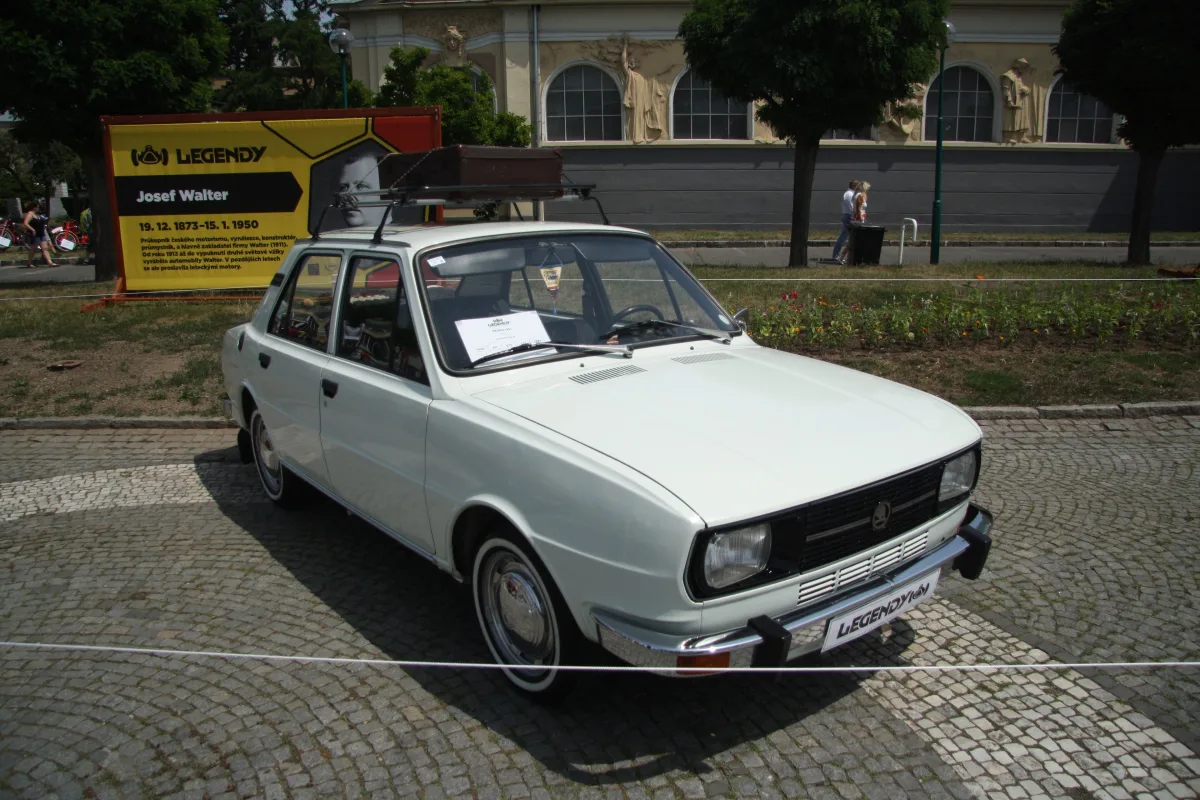
Škoda 105: rear-engine classic, engines, and what to know when buying
The Škoda 105 is a compact rear-engine, rear-wheel-drive sedan produced in Mladá Boleslav since 1976. We explain how it differs from the 120 model, which engines are available, and what to check if you come across one in the used market.






Škoda 105 in brief
The Škoda 105 is the first model of the 105/120 family (Type 742), production of which began in August 1976. It evolved from the earlier S100/110 sedans: the body and overall layout remained similar, but a radiator with a thermostatic fan was added at the front, and the heater was moved to the dashboard.
The car stands out with its rear engine, rear-wheel drive, and front-hinged boot lid that opens to the side like a piano lid. It was also sold under different names—for example, as the Estelle in the UK, and as the Škoda 1050 in France (due to Peugeot trademark rights).
Versions and facelift generations
The main versions were the 105 S and 105 L, and from March 1981, the 105 GL with 120 GLS-level equipment joined the lineup. The 105 S was very basic: for instance, the rear windows didn't wind down, and the front seat backs were fixed.
In September 1983, the model was refreshed (M series): rectangular headlights, rubber bumpers, and a column-mounted gear shift were introduced. The 105 L was produced until January 1989, and the estate 105 SP until 1988.
Engines and gearboxes
105 model engine — 1.05-litre four-cylinder petrol, initially producing around 46 hp (34 kW). After the 1983 update, power slightly decreased to around 45 hp. The engine is rear-mounted, giving it a characteristic rear-engine feel.
Four-speed manual gearbox. The car isn't fast, but it's simple and mechanically uncomplicated.
What to check when buying a Škoda 105
The most important thing is the body condition: check for rust on the sills, arches, floor, and boot floor. These cars are known for cooling system issues that can cause overheating; check for signs of overheating.
Check the rear suspension, brakes, steering, and electrical equipment. Parts, especially for the body and interior, are scarce in Lithuania, but there are enthusiast clubs and specialist suppliers, so check part availability before buying.


Trim levels
Trim level names depend on the market and year of production; here we list the main 105 versions.
105 S
From 1976The most basic version with minimal equipment.
- Very basic interior trim
- Often — fixed rear windows
- Lowest price
105 L
From 1976A more popular version with better equipment.
- More comfortable interior trim than the 105 S
- Often — one headlight per side
- Most commonly found in the used market
105 GL
from 1981Version with 120 GLS level equipment.
- Black bumpers and horizontal rear lights
- More comfortable interior
- Equipment similar to 120 GLS
Comparison of 105 versions
| 105 S | 105 L | 105 GL | |
|---|---|---|---|
| Who it suits | Even the most basic version | For everyday classic use | Those seeking better equipment |
| Interior | Basic | More comfortable | Best equipped |
| Engine | 1.05 L | 1.05 L | 1.05 L |
| Price in the used market (relatively) | Budget-friendly | Budget-friendly | Mid-range |
For most classic car enthusiasts, the 105 L or GL will do just fine, but what really matters is the condition of the body and the paperwork, not the trim level.
Pros
- Simple and affordable engineering
- A clear Eastern European classic look
- Enthusiast community and parts suppliers
- Not as robust as a classic
Cons
- Weak power and modest comfort
- Risk of corrosion due to age
- Sensitivity of the cooling system
Frequently asked questions
How does the Škoda 105 differ from the Škoda 120?
It's the same body and basic layout, but the 105 has a 1.05 L engine, while the 120 has a 1.2 L. The trim levels also differ.
Is the Škoda 105 rear-engined?
Yes. The engine and gearbox are at the rear, driving the back wheels.
When did production of the 105 end?
Production of the 105 L ceased in January 1989, while the estate version, the 105 SP, was discontinued in 1988.
Updated 2026-10-21 · Trim levels and equipment vary by market and model year — check the equipment of the specific car. · Translated automatically


