 English
 Lietuvių
 Latviešu
 Eesti
 Polski
 Русский
 Українська
 Deutsch
 Nederlands
 Čeština
 Slovenčina
 Svenska
 Norsk
 Dansk
 Suomi


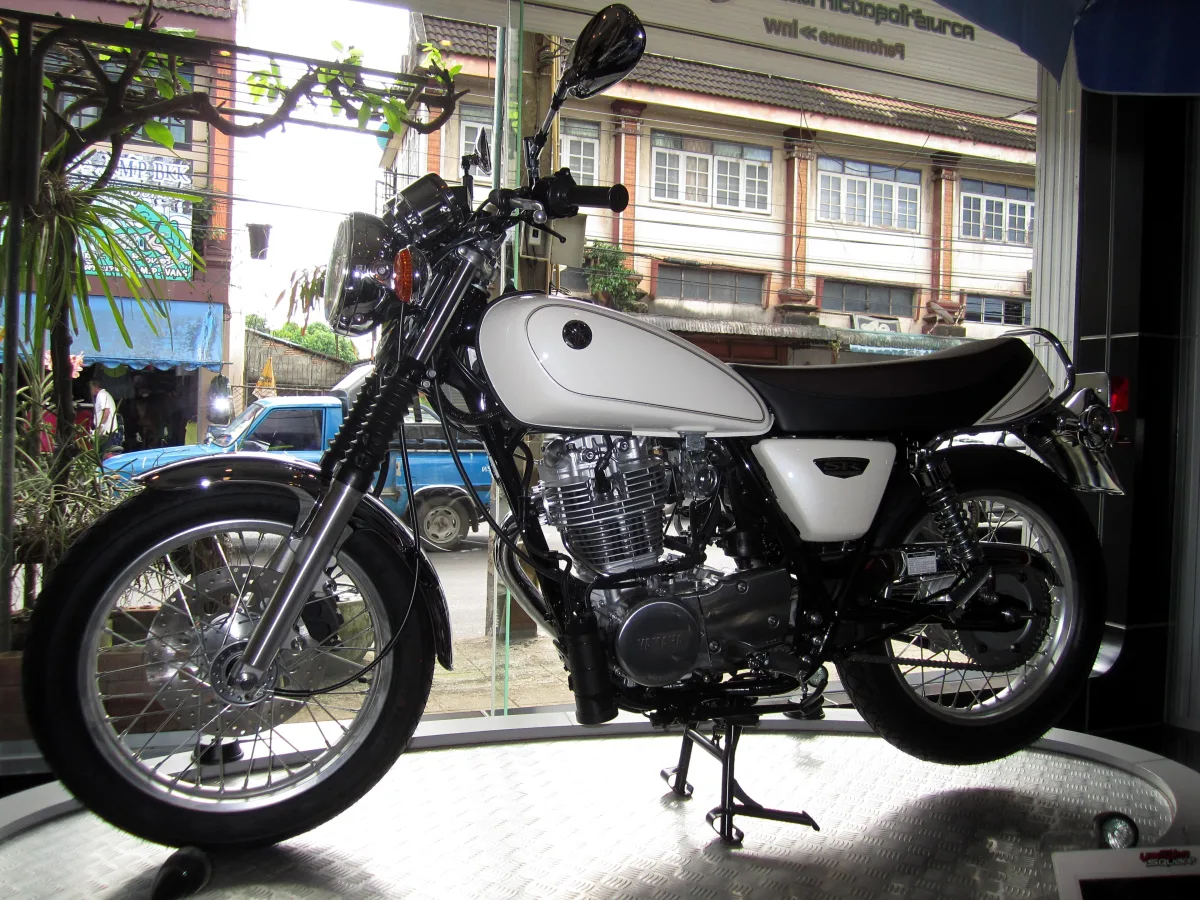
Yamaha SR 400: classic single-cylinder, long history and what to check
Yamaha SR 400 — classic single-cylinder motorcycle, produced from 1978 to 2021. We look at what makes it special, how it evolved over the decades and what to check when buying used.






SR 400 in brief
SR 400 — one of Yamaha's longest-running motorcycles. Its concept has barely changed: a simple, air-cooled single-cylinder engine, classic styling and minimalist equipment.
It's loved for its simplicity, easy daily handling and the fact it's perfect for both city riding and custom “cafe racer” or “scrambler” projects.
Generations — what sets them apart
Early (1978 and later) models had a carburettor and simpler equipment. Later versions featured fuel injection (in Japan from around 2010), making starting more reliable.
Many SR 400s were imported into Europe unofficially, so it's crucial to check documents and ensure the motorcycle meets Lithuanian registration requirements.
Engine and gearbox
The engine is an air-cooled single-cylinder, around 400 cm³. It's known for being kick-started without electric start, so starting requires a certain skill.
The gearbox is manual, with power delivered by chain. Power is modest, so the SR 400 often suits A2 category — check documents.
What to check when buying a used SR 400
Try the kickstart: the engine should fire up easily with the kickstarter without much resistance. Check for oil leaks around the engine and ensure the smoke isn't blue.
Inspect the reinforced wheels, forks, brakes, chain, and electrical components. Since many SR 400s have been modified, it's worth checking if the motorcycle has been structurally altered and if the paperwork is in order.


Trim levels
No specific trims; we provide general descriptions of the variants.
SR 400 (karbiuratorinis)
1978 – circa 2009Classic version with a carburettor.
- Simple design
- Kickstart
- Retro styling
SR 400 (su įpurškimu)
circa 2010 onwardsVersion with fuel injection.
- Often — easier starting
- More stable performance
- More modern electronics
SR 400 pertvarkytas
general descriptionTailored to the owner's taste.
- Often — cafe racer or scrambler style
- Often — modified equipment
- Check the paperwork
Compare variants
| Karbiuratorinis | Su įpurškimu | Pertvarkytas | |
|---|---|---|---|
| Who it's for | For classic enthusiasts | For more comfortable daily use | For individual projects |
| Engine | ~400 cm³, 1 cylinder | ~400 cm³, 1 cylinder | As per the project |
| Run-in | Kickstart | Kickstart | Kickstart |
| Price in the used market (relatively) | €€ | €€ | €€€ |
Many buyers will find the standard SR 400 in good condition to be a solid choice. Opt for modified motorcycles only if you know exactly what has been changed and how.
Pros
- Simple, reliable construction
- Classic design with a timeless style
- Easy to handle and maintain
- Great for modifications
Cons
- The kickstart might be inconvenient for beginners
- Not much power for long journeys
- Many examples are modified or imported unofficially
Frequently asked questions
Is the SR 400 suitable for beginners?
It's lightweight and straightforward, but the kickstart requires some skill. Most beginners master it within a few days.
Why doesn't the SR 400 have an electric starter?
That was the manufacturer's concept—a minimalist, lightweight, and simple motorcycle. It's part of its character.
Is the SR 400 suitable for the A2 category?
Often this is the case, as the power output is modest, but double-check the exact match against the specific motorcycle's documents.
Updated 2026-10-21 · Trim levels and equipment vary by market and model year — check the equipment of the specific car. · Translated automatically


