 English
 Lietuvių
 Latviešu
 Eesti
 Polski
 Русский
 Українська
 Deutsch
 Nederlands
 Čeština
 Slovenčina
 Svenska
 Norsk
 Dansk
 Suomi


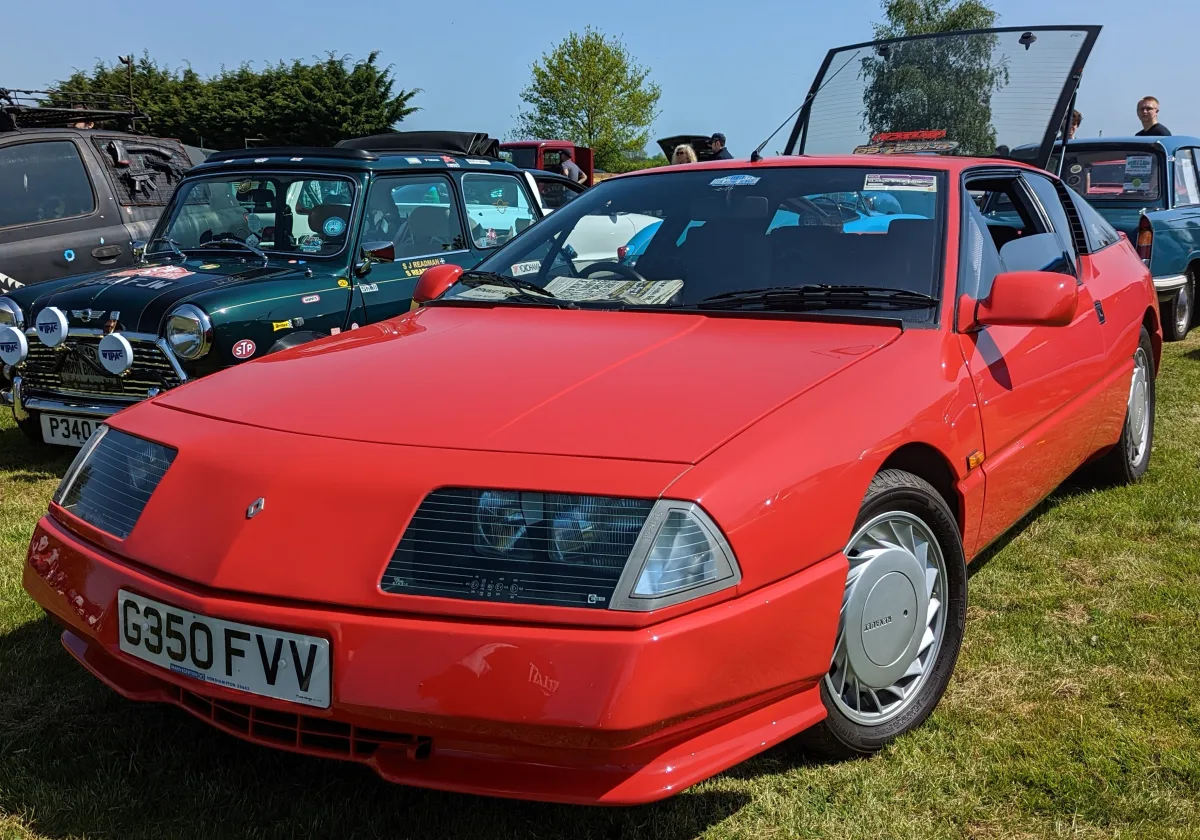
Alpine GTA: 1984–1991 French sports coupe, versions and what to know
The Alpine GTA is a French sports coupe produced from 1984 to 1991 with a rear-mounted V6 engine and a lightweight glass-fibre body. In this article, we'll look at its versions, engines, limited-edition models, and what to check when hunting for such a classic car.






GTA in brief
The Alpine GTA (named 'Grand Tourisme Alpine') was introduced in 1984 as the successor to the 'Alpine A310' and the first 'Alpine' to be fully manufactured by 'Renault'. In many European markets, it was sold as the 'Alpine V6 GT' and 'V6 Turbo', while in the UK, it was simply the 'Renault GTA', as the 'Alpine' name was already in use by another brand.
This is a rear-engine sports coupe with a central steel frame and plastic body panels. Compared to the A310, it's longer, wider, has more interior space, and features more modern aerodynamics—the naturally aspirated version achieved a drag coefficient of 0.28, which was then considered a record for its class.
Versions – what's the difference
The V6 GT (D 500) was the base, naturally aspirated version launched in November 1984. Sales were slow, so in September 1985, the more powerful V6 Turbo (D 501) arrived—it significantly boosted demand, and in 1986, a right-hand drive version was introduced for the UK.
In early 1987, a catalytic converter-equipped version appeared — it had around 15 HP less power, but it could be sold in Switzerland, and later in other countries with stricter regulations. In 1988, ABS was introduced. In 1989, the limited-edition 'Mille Miles' (100 units) debuted with a special red metallic paint and 'Alpine' badges instead of 'Renault'.
In February 1990, the limited-edition 'Le Mans' version was unveiled with a more aggressive body kit, and a total of 325 such cars were produced. Production of the standard V6 GT and V6 Turbo ended in 1990, and the 'Le Mans' in February 1991. Later, the GTA was replaced by the 'Alpine A610'.
Engines and transmissions
The naturally aspirated version featured a 2.85-litre V6 PRV engine with around 160 HP — the same one used in the 'Renault 25'. The V6 Turbo had a smaller, 2.5-litre turbo engine with around 200 HP and 290 Nm of torque; according to an 'Autocar' test, this car accelerated to 97 km/h (60 mph) in 6.3 seconds and reached around 240 km/h.
Catalytic converter-equipped versions had slightly less power. The engine is mounted at the rear, and the transmission is a 5-speed manual, inherited from the A310 with slightly longer 4th and 5th gears.
What to check when buying an Alpine GTA
The most important thing is the body and chassis. Although plastic panels don't rust, corrosion can damage the central steel frame, so it's essential to inspect the frame and suspension mounts. Check the glass fibre panels for cracks and poorly executed repairs.
The V6 PRV engine, especially the turbo version, should be maintained according to the manufacturer's schedule. Check the service history and what work has been done. Since the engine and gearbox are mounted on a separate subframe, it's important to know if the engine has been rebuilt.
Due to the limited production run, parts supply is restricted, so consult with the Alpine club before buying. It's particularly worth verifying the authenticity of limited-edition versions.


Trim levels
Names and equipment vary by market and year; we list the versions most commonly found in Europe.
V6 GT
1984–1990The naturally aspirated base version.
- 2.85-litre V6 engine, around 160 hp
- Central steel roll cage and plastic body
- At the time, a record-breaking drag coefficient (0.28)
V6 Turbo
1985–1990The more powerful turbo version.
- 2.5-litre turbo engine, around 200 hp
- Larger rear spoiler and cooling vents
- Right-hand drive version (Renault GTA) from 1986
Mille Miles
1989Limited edition "Alpine" version.
- 100 cars produced
- Special dark red metallic paint
- "Alpine" badges instead of "Renault"
Le Mans
1990–1991Limited edition with a more aggressive look.
- 325 cars produced
- Wider wheel arches and a unified front end
- Special alloy wheels
Europa Cup
1985–1987A small series dedicated to racing.
- 69 cars produced
- Designed for a single-make championship
- Some cars remained in civilian guise
Comparison of versions
| V6 GT | V6 Turbo | Le Mans | |
|---|---|---|---|
| Who it suits | For those who enjoy a smooth ride | For the dynamic and the collectors | For the collector |
| Engine | 2.85 l V6, around 160 hp | 2.5 l turbo V6, around 200 hp | 2.5 l turbo V6, with catalytic converter — around 185 hp |
| Body kit | Standard | Standard with a larger spoiler | More aggressive with flared arches |
| Price in the used market (relatively) | €€ | €€€ | €€€ |
Many buyers will find the V6 Turbo the best choice — it's significantly more lively than the naturally aspirated version. The Le Mans is a collector's item, while the V6 GT is suited to more relaxed driving.
Pros
- The French design is quirky and intriguing
- Lightweight body and strong dynamics
- Unique central backbone construction
- The turbo version was quick by the standards of the time
Cons
- Low production numbers and limited parts availability
- Rear-engine layout means more complex maintenance
- Risk of corrosion for the steel frame
Frequently asked questions
How does the GTA differ from the Alpine A310?
The GTA is the successor to the A310: longer, wider, more aerodynamic, with a more modern interior and a body made from multiple separate panels, rather than one single piece.
What is the Alpine V6 Turbo?
It's a more powerful version of the GTA with a 2.5-litre turbo engine and around 200 hp, introduced in September 1985.
How many Alpine GTAs were produced?
Average production was just over 1000 cars per year. Limited edition models were produced in smaller numbers: 100 of the “Mille Miles”, 325 of the “Le Mans”, and 69 of the “Europa Cup”.
Updated 2026-10-21 · Trim levels and equipment vary by market and model year — check the equipment of the specific car. · Translated automatically


