 English
 Lietuvių
 Latviešu
 Eesti
 Polski
 Русский
 Українська
 Deutsch
 Nederlands
 Čeština
 Slovenčina
 Svenska
 Norsk
 Dansk
 Suomi


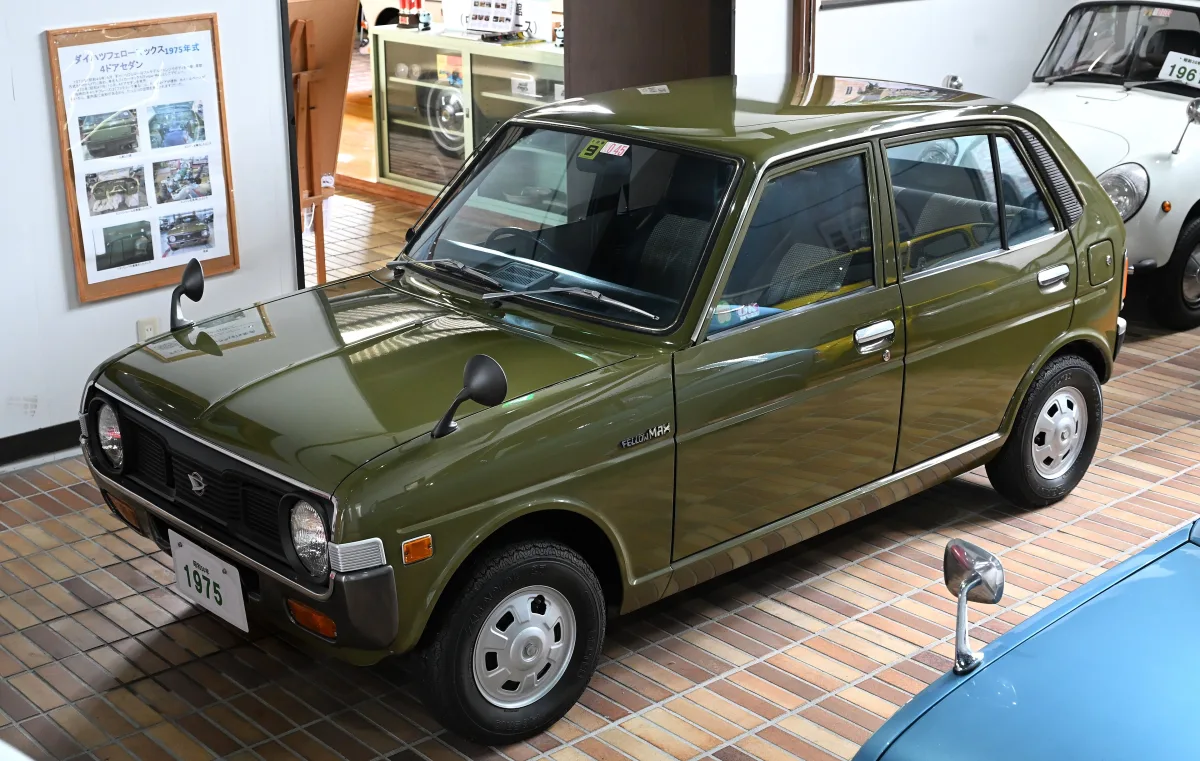
Daihatsu Fellow Max: a classic kei class car from the 1970s
The Daihatsu Fellow Max is a kei class car produced in Japan from 1970 to 1976, now valued as a classic. In this article, we look at what sets it apart, its engines, and what to know if one catches your eye.






Fellow Max in brief
The Fellow Max debuted in 1970 as an update to the previous Daihatsu Fellow model. It's a very small, lightweight car with a front-mounted engine and rear-wheel drive, offered in two- and four-door body styles and a van variant.
According to the kei class rules of the time, it had restricted dimensions and power, so all its specs are tailored for city driving and short distances.
Who's it for?
Today, the Fellow Max is prized by collectors and enthusiasts of classic Japanese cars. It's not practical for daily use, but it's a charming and rare find.
Buyers often hunt for well-preserved examples for shows, celebrations, and outings.
Engine and transmission
The Fellow Max has a tiny two-cylinder petrol engine (around 360 cm³ in the first iteration), sending power through a four-speed manual gearbox to the rear wheels.
It's straightforward old-school mechanics: easy to fix, but some parts are no longer made, so you'll need to hunt down certain components with collectors.
What to check when buying this classic
First off, rust: inspect the floors, sills, wings, and main structural parts. Check the engine operation, gearbox, brakes, and suspension condition.
Ensure you check the documents and that the car is properly registered. Finding spare parts and mechanics can take time, so get involved with classic Japanese car communities in advance.


Trim levels
Trim levels vary by year and market; below is a general overview.
Fellow Max (4 durų)
1970–1976Four-door body, often with 'Custom' trim.
- Base trim
- Four doors
- Approximately 360 cc two-cylinder engine
Fellow Max buying scenarios
| Restauruotas | Geros būklės originalas | Reikalingas remontas | |
|---|---|---|---|
| Who it's for | Show and tell, and for the collection | Occasional use | For the project |
| Main risk | High price | Rust and parts | Repair costs |
| Price in the used market (relatively) | Mid-range | Mid-range | Budget |
Opt for a less rusted example with clear documentation, not the cheapest one.
Pros
- A rare and unique classic
- Simple mechanics
- Very small and light
- Charming retro design
Cons
- Very low power
- Shortage of parts and mechanics
- Uncomfortable for daily use
Frequently asked questions
What is the Daihatsu Fellow Max power?
Very low — this is a kei class car with around a 360 cm³ engine, designed for city driving, not speed.
When was the Fellow Max made?
From 1970 to 1976. It replaced the previous Daihatsu Fellow.
Is the Fellow Max worth collecting?
Yes, if you're into rare classic Japanese cars. The key is a good body condition and a clear history.
Updated 2026-10-21 · Trim levels and equipment vary by market and model year — check the equipment of the specific car. · Translated automatically


