 English
 Lietuvių
 Latviešu
 Eesti
 Polski
 Русский
 Українська
 Deutsch
 Nederlands
 Čeština
 Slovenčina
 Svenska
 Norsk
 Dansk
 Suomi


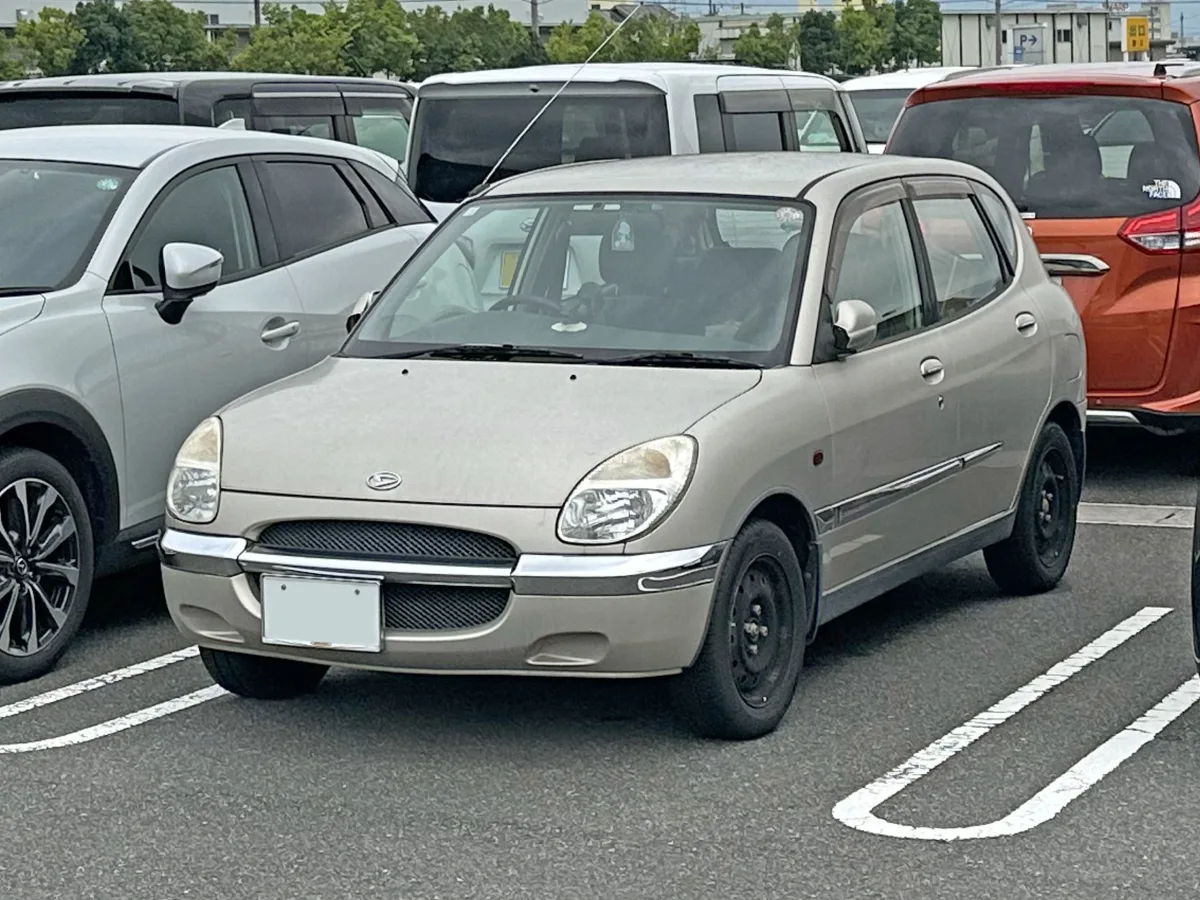
Daihatsu Storia: a compact city hatchback and what to check
Daihatsu Storia — a compact Japanese city hatchback produced from 1998 to 2004. In Europe, it was sold as the Sirion. We look at what makes it special, its mechanics, and what to check before buying a used one.






Storia at a glance
Storia — a compact five-door hatchback with a high roof and rounded design. In Japan, it was called Storia, in Europe — Sirion, and in some markets, it was sold as the Toyota Duet.
It's a simple, budget-friendly city car with an aging design. In Lithuania, the Sirion is more common, while cars badged as Storia are usually imported from Japan.
What sets it apart
The Storia stands out with its compact exterior dimensions and surprisingly spacious interior. The high roof allows for comfortable seating, and the short wheelbase makes it easy to park in the city.
The construction is simple — there's not much complex electronics, so maintenance is straightforward. However, the safety features are dated, reflecting the end-of-the-last-century standards, so there aren't many.
Engines and transmissions
The Storia is typically equipped with a 1.0-litre three-cylinder petrol engine, producing around 55–60 hp. In some markets, larger displacement or turbocharged variants are available.
The transmission is either manual or automatic. Drive is to the front wheels, with some versions offering all-wheel drive.
What to check when buying a Storia
For a used car over twenty years old, the most important thing is corrosion. Check the sills, wings, floor, and boot floor.
Check the timing belt or chain (depending on the engine type), cooling system, and engine condition. Test the clutch and automatic gearbox — it should shift smoothly.
Parts availability in Lithuania is better for Sirion versions, while Storia parts sometimes need to be ordered from abroad.


Trim levels
Storia trim names and equipment vary by market and year, so we provide a general overview.
Storia
1998–2004 model yearsThe base version with basic equipment.
- Mostly a 1.0-litre petrol engine
- Often — a manual gearbox
- Simple interior trim
Buying tips
| Mechaninė dėžė | Automatinė dėžė | |
|---|---|---|
| Who it suits | Not flashy and easy to maintain | Ideal for city driving |
| Note | You need to check the clutch | You need to check the smooth shifting |
| Price in the used market (relatively) | € | € |
For most buyers, the basic version with a manual gearbox is suitable. An automatic is only worth considering if it shifts smoothly.
Pros
- Very compact and easy to park
- Simple and inexpensive maintenance
- Low fuel consumption
- Inexpensive to buy
Cons
- Old design, risk of corrosion
- Low power and basic safety features
- Finding parts might take time
Frequently asked questions
How does the Storia differ from the Sirion?
These are different names for the same model in different markets. Storia is the Japanese name, Sirion is the European one.
Is the Storia economical?
Yes, due to the small engine and light weight, fuel consumption is low. Real-world fuel economy depends on the car's condition and driving style.
Is the Storia suitable for long journeys?
It's primarily designed for city driving, so it's not well-suited for long highway trips due to its modest power and basic comfort.
Updated 2026-10-21 · Trim levels and equipment vary by market and model year — check the equipment of the specific car. · Translated automatically


