 English
 Lietuvių
 Latviešu
 Eesti
 Polski
 Русский
 Українська
 Deutsch
 Nederlands
 Čeština
 Slovenčina
 Svenska
 Norsk
 Dansk
 Suomi


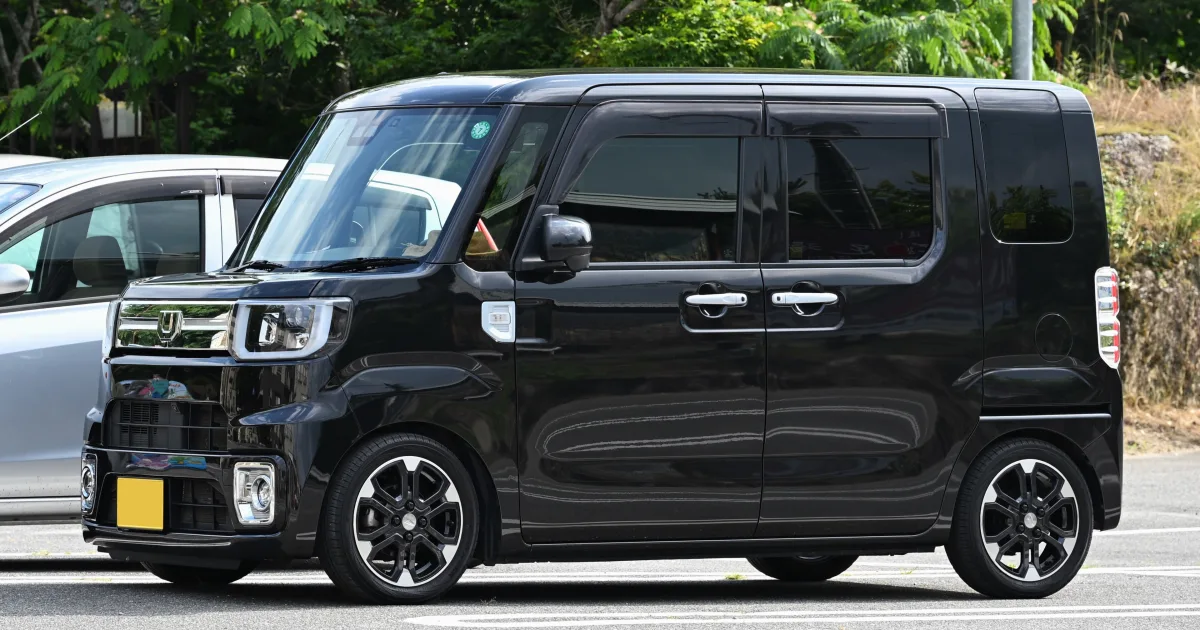
Daihatsu Wake: a tall kei-class car with sliding doors
Daihatsu Wake — a kei-class microvan with sliding rear doors, sold from 2014 to 2022. We look at what makes it special, which versions were available, what engines it came with, and what to know if you're importing one from Japan.






Wake in brief
Wake — a very tall kei-class car. Its interior height reaches 1,455 mm, making it the tallest in the kei segment. The car was previewed by the Deca Deca concept cars shown at the 2009 and 2013 Tokyo Motor Shows.
The Wake was produced from November 2014 to August 2022. It wasn't officially sold in many countries, so in Lithuania, you'll only find Japanese imports.
Versions — what's the difference
The Wake came in one generation. It was also sold as the Toyota Pixis Mega (2015–2022) and the commercial version was called the Hijet Caddie (2016–2021).
Cars differed in trim and equipment, with both naturally aspirated and turbocharged engine options.
Engines and transmissions
Like other kei-class cars, the Wake's engine is a 660 cm³ three-cylinder. Both naturally aspirated and turbo versions were offered.
The transmission is a CVT. Front-wheel drive and all-wheel drive versions were available.
Kei-class cars are restricted in size and power, so the Wake is best suited to city driving rather than long motorway journeys.
What to check when buying a Wake
Check that the car was imported legally and that all documents, including the Japanese export certificate, are in order. It's worth inspecting the bodywork according to the auction sheet.
Check the sliding doors to ensure they operate smoothly, and the CVT gearbox: it should not hesitate or jerk. In the turbo version, it's important to change the oil on time.
The selection of spare parts is limited, but some of them are compatible with other Daihatsu and Toyota models. Check if there are mechanics who work on kei class cars.


Trim levels
Trim names vary by market, so we describe the versions by transmission and body type.
Atmosferinis variklis
2014–2022 model yearsBase version.
- 660 cm³ three-cylinder engine
- CVT gearbox
- Often — simpler equipment
Turbo
2014–2022 model yearsVersion with turbo engine.
- Turbo 660 cm³ engine
- More spirited acceleration
- Often — more equipment
4WD
2014–2022 model yearsVersion with all-wheel drive.
- Better grip in winter
- Higher running costs
- Often — a slightly heavier car
Toyota Pixis Mega
2015–2022 model yearsThe Toyota-badged version.
- The same technology
- Different badge and trim
- Often — similar prices
Comparing the versions
| Atmosferinis | Turbo | 4WD | |
|---|---|---|---|
| Who it suits | For city driving | For spirited driving | For winter conditions |
| Engine | 660 cm³ | 660 cm³ turbo | 660 cm³ |
| Transmission | CVT | CVT | CVT |
| Price in the used market (relatively) | € | €€ | €€ |
Most buyers find the naturally aspirated version sufficient for city driving. Turbo is worth considering if you frequently drive on the highway.
Pros
- Spacious interior for a small car
- Hatchback
- Economical kei class technology
- Compact size, easy to park
Cons
- Low-power kei class engine
- Limited availability and parts selection in Lithuania
- Less suitable for the highway
Frequently asked questions
What is a kei class car?
This is the Japanese class of small cars with restricted dimensions and a 660 cm³ engine. The Wake is a tall and spacious car in this class.
Is the Wake available in Lithuania?
Officially, no. You'll only find individually imported cars from Japan.
How does the Wake differ from the Toyota Pixis Mega?
It's the same car with a different badge. The Pixis Mega was sold through Toyota's network from 2015 to 2022.
Updated 2026-10-21 · Trim levels and equipment vary by market and model year — check the equipment of the specific car. · Translated automatically


