 English
 Lietuvių
 Latviešu
 Eesti
 Polski
 Русский
 Українська
 Deutsch
 Nederlands
 Čeština
 Slovenčina
 Svenska
 Norsk
 Dansk
 Suomi


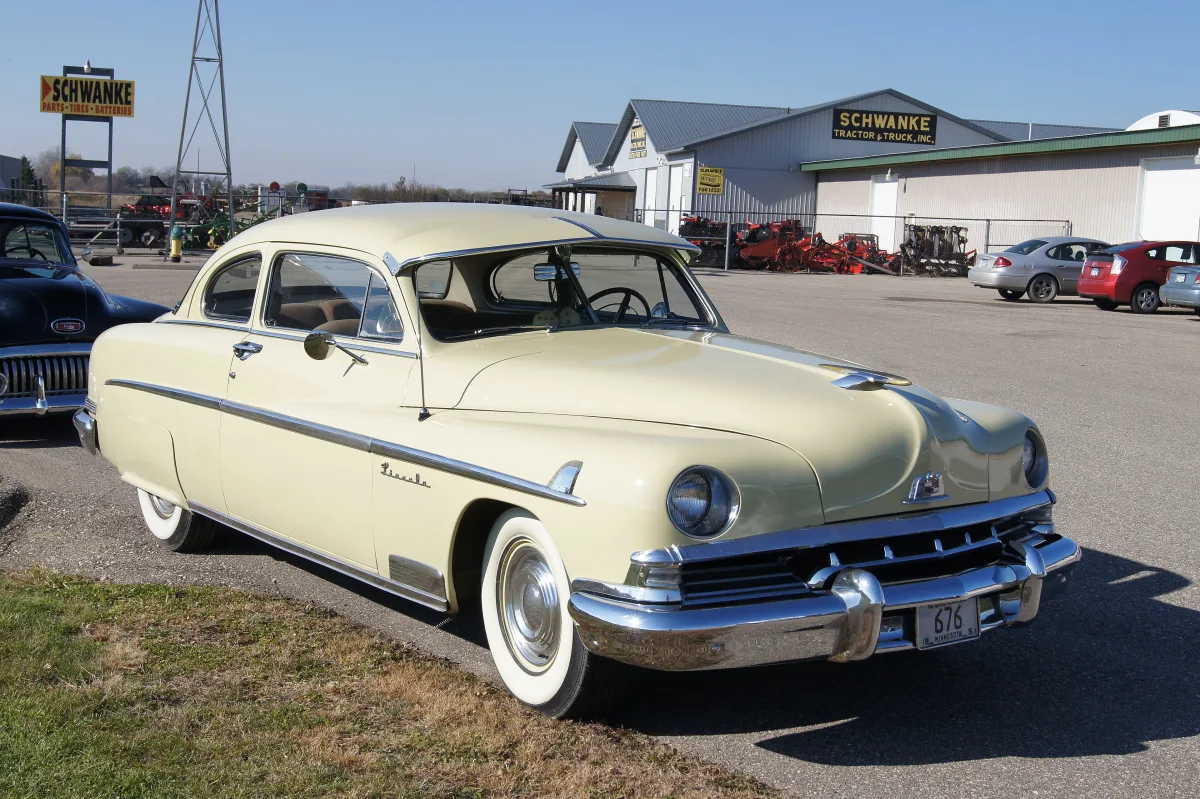
Lincoln EL-series: 1949–1951 Lincoln, engine and what to know when buying
Lincoln EL-series — the 1949–1951 Lincoln luxury car, the first all-new post-war Lincoln. We look at its history, engine and what you need to know when buying such a classic car in Lithuania.






EL-series briefly
The Lincoln EL-series was a large luxury car sold from 1949 to 1951. It replaced the H-series Lincoln, and was the first all-new Lincoln sedan model since 1936. This model used only the Lincoln name without a separate model name; it was positioned below the Cosmopolitan.
This was the first Lincoln created under the unified Lincoln-Mercury division. Its body was largely shared with the 1949 Mercury Eight, but stretched to a 121-inch (about 3.1 m) wheelbase. It was produced at the Lincoln Assembly (Dearborn, Michigan) and Maywood Assembly (California) plants. In 1952, it was replaced by the redesigned Cosmopolitan.
Years and changes
The 1949 model was introduced on April 22, 1948. It featured a ponton-style body — sleeker than previous Lincoln models. From a distance, it was hard to tell apart from the Mercury, but its distinctive headlights and more gleaming front end gave it a unique look.
In 1950, a new horizontal grille system was introduced, and the convertible was dropped from the lineup as the nearly identical 'Mercury' convertible sold better. The grilles were revised in 1951. That year also saw the return of the 'Lido' coupé with a cloth or vinyl roof.
The 'Lincoln Lido' debuted on July 5, 1950 — Lincoln's answer to 'General Motors'' hardtops. It was offered as both a coupé and a sedan.
Engine and transmission
This was the first 'Lincoln' with a V8 instead of a V12 since 1933. The engine was a 337 cubic inch (5.5L) 'flathead' V8, which was also used in 'Ford F-Series' trucks during the same period; it produced 152 hp at 3600 rpm.
Towards the end of 1950, the engine was improved due to complaints about vibration and oil consumption: the number of piston rings was reduced, balancing was improved, and the cooling system was enhanced. As a result, power increased slightly, and the engine became smoother. Since 1949, 'Lincoln' had been purchasing 'Hydra-Matic' automatic transmissions from 'General Motors'.
What to check when buying a used EL-series Lincoln
First, inspect the body and frame: look for rust, the floor, under the fenders, and the trunk pan. This car is over 70 years old, so it's important to know if it's original or restored and who did the work.
In the case of the engine, check if it's an earlier or later (improved) version, the cooling system, and oil leaks. Also, check the operation of the 'Hydra-Matic' transmission and brakes.
The body is largely shared with the Mercury Eight, so some body parts can be found among Mercury parts. Specific Lincoln trim and chrome details are hard to find, so opt for the most complete car possible. Most of these cars are imported from the USA.


Versions and bodies
Names and equipment vary by year; we list the main versions.
Lincoln (standartinis)
1949–1951The main EL-series model.
- Bodies: sedan and coupe
- 337 cubic inch V8, 152 HP
- Often — Hydra-Matic automatic transmission
Lincoln Lido
1950–1951The more luxurious version, a response to GM hardtops.
- Coupe and sedan
- 1951 — coupe with cloth or vinyl roof
- Often — more luxurious interior trim
Kabrioletas
only 1949Convertible option.
- Convertible
- 337 cubic inch V8
- Discontinued in 1950
Year-by-year model comparison
| 1949 | 1950 | 1951 | |
|---|---|---|---|
| Who it's for | For fans of classic 'pontoon' styling | For those seeking an upgraded engine | For those who value the Lido coupe |
| Front | Inset headlights and a more prominent front end | New horizontal grille system | Redesigned grille |
| Bodies | Sedan, coupe, convertible | Sedan, coupe, Lido | Sedan, coupe, Lido |
| Price in the used market (relatively) | €€ | €€ | €€ |
For most buyers, the best choice is the 1950–1951 model with the improved engine and better condition. The convertible is for collectors only, as it was produced in 1949.
Pros
- Classic post-war American style
- A large post-war Lincoln with a 121-inch wheelbase
- Some body parts are shared with the Mercury
- One of the first all-new post-war Lincolns
Cons
- Hard to find specific trim and chrome details
- The earlier 'flathead' V8 had a reputation for vibration and oil consumption
- Rust and outdated safety systems
Frequently asked questions
How does the EL-series differ from the 'Cosmopolitan'?
The EL-series was positioned below the 'Cosmopolitan', had just the 'Lincoln' badge without a model name and a longer wheelbase than the 'Mercury'.
What engine does the EL-series have?
337 cubic inches (5.5 L) 'flathead' V8, around 152 HP, shared with 'Ford F-Series' trucks.
Does the EL-series share parts with the 'Mercury'?
Yes, the body is largely shared with the 1949 'Mercury Eight', but the 'Lincoln' boasts a longer wheelbase and a unique front end.
Updated 2026-10-21 · Trim levels and equipment vary by market and model year — check the equipment of the specific car. · Translated automatically


