 English
 Lietuvių
 Latviešu
 Eesti
 Polski
 Русский
 Українська
 Deutsch
 Nederlands
 Čeština
 Slovenčina
 Svenska
 Norsk
 Dansk
 Suomi


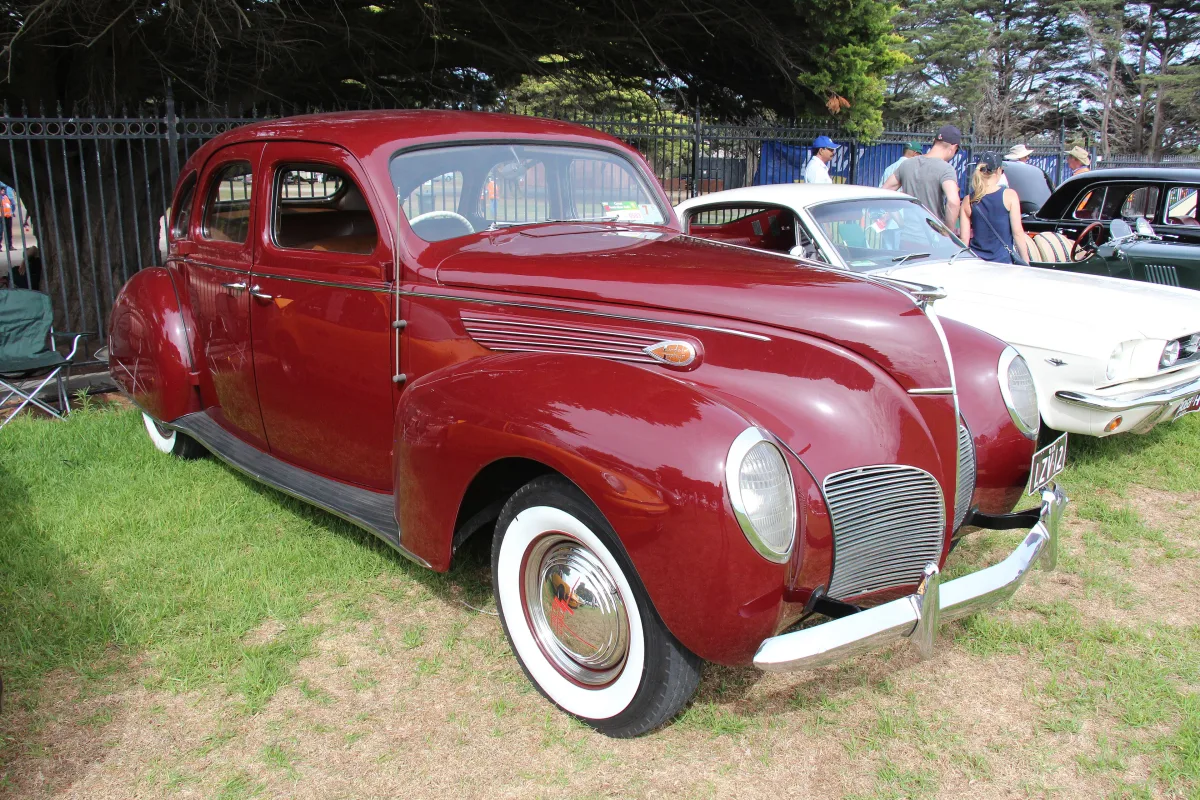
Lincoln Zephyr: 1936–1942 V12 classic, bodies and what the buyer should know
Lincoln-Zephyr — the 1936–1942 streamlined 'Lincoln' marque car with a V12 engine, which also served as the basis for the first 'Lincoln Continental'. In this article, we review its bodies, engines, later use of the name, and what's important to know when looking to buy such a classic car.






Zephyr in brief
The Lincoln-Zephyr debuted on November 2, 1935, as the 1936 model. It slotted in between the 'Ford V8 DeLuxe' and the larger 'Lincoln Model K' — smaller and more affordable than the traditional 'Lincoln', but with a streamlined, very modern design for the time. The name comes from Zephyrus, the Greek god of the west wind.
The car was a huge success: in its first year, around 15,000 units were sold, accounting for about 80% of all 'Lincoln' sales. From 1941, all 'Lincoln' models were based on the Zephyr, and the name itself disappeared after 1942.
Years, bodies, and name history
The Zephyr was produced in one generation. In 1936, there were two- and four-door sedans; in 1937, a coupe-sedan, a three-window coupe, and a formal 'Town Limousine' were added, and in 1938, convertibles. In 1940, the coupe-sedan was replaced by the 'Club Coupe', and the four-door convertible was discontinued.
In 1940, the 'Lincoln-Zephyr Continental' also appeared — the first car with this name. Initially, it was mostly hand-assembled: a total of 350 convertibles and 54 'Club Coupes' were produced. In 1941–1942, 'Lincoln Zephyr' sedans, coupes, 'Club Coupes', and convertibles were offered.
Later, the "Zephyr" name was revived in 2006 (later renamed to "MKZ") and in 2022 for a sedan sold in China — these are entirely different cars, not successors to this classic model.
Engine and technology
The Zephyr features a 75° V12 engine with side valves. From 1936 to 1939, its displacement is 267 cubic inches (around 4.4 litres), from 1940 to 1941 it's 292 cubic inches (around 4.8 litres), and in 1942 it's 306 cubic inches (around 5.0 litres). Initial power output is around 110 hp, with a top speed of around 145 km/h.
The construction features a unibody chassis, which was innovative at the time. The Zephyr was the first "Ford" product with a fully metal roof. The gearbox is a 3-speed manual: synchronisers were introduced in 1939, and from 1940 the gear lever was moved to the steering column. Brakes were cable-operated from 1936 to 1938, and hydraulic from 1939 onwards.
This V12 engine's weakness is that, following the "Ford" V8 example of the time, the exhaust channels run through the block, leading to localised overheating; early cars also had oil pressure issues, which were later resolved with a new oil pump.
What to check when buying a Lincoln Zephyr
Cooling system — this is the key area: check that the radiator and cooling system are in good order, as the V12 with side valves is prone to overheating. A running engine should maintain a stable oil pressure.
Check the unibody for corrosion (dents, floors, undersides of wings) and signs of previous repairs. Pay attention to the brakes: 1936–1938 models have a mechanical braking system that requires special adjustment, while later cars feature hydraulic brakes.
Verify authenticity: check the year of manufacture via the VIN, body type, and whether it's a rebuilt car. Due to its limited production run and popularity among collectors, consult with the model's club before purchasing.


Trim levels
Names and equipment vary by market and year; we list the versions most commonly found in Europe.
Sedanas (dvi ir keturios durys)
1936–1942The base, most common version.
- A utilitarian body with a steel roof
- V12 engine, 3-speed manual gearbox
- It cost less than the larger "Model K"
Coupe ir Club Coupe
1937–1942A sportier two-door version.
- Three-window coupe from 1937
- "Club Coupe" from 1940
- Rarer than the sedan
Kabrioletas
1938–1942Open body, available from 1938
- The four-door cabriolet was discontinued in 1940
- Rumpled roof
- Highly prized by collectors
Town Limousine
1937–1940Formal body for the driver and passengers
- Formal limousine body
- Available from 1937
- In 1941, it was replaced by the „Lincoln Custom“
Continental
1940–1948The first „Continental“, built on the Zephyr chassis
- Initially, mostly handcrafted
- Cabriolet and „Club Coupe“
- In 1940, 350 cabriolets and 54 coupés were produced
Comparing different eras
| 1936–1939 | 1940–1942 | |
|---|---|---|
| Who's it for? | For those who love an early, clean-cut design | For those who appreciate cutting-edge technology |
| Engine | 267 cubic inches V12 (approx. 4.4 L) | 292 cubic inches (from 1940), 306 cubic inches (1942) |
| Brakes | Power steering from 1936–1938, hydraulic from 1939 | Hydraulic |
| Gear stick | Floor-mounted until 1939 | Column-mounted from 1940 |
| Price in the used market (relatively) | €€€ | €€€ |
If you want pure early form — opt for 1936–1939 cars. If comfort and better tech are key — go for the 1940–1942 versions.
Pros
- A sleek and very modern design for its time
- A rare V12 engine among mass-market models
- A unitary body and steel roof
- Historical significance — it gave birth to the „Lincoln Continental“
Cons
- The engine's sensitivity to overheating
- A rare and expensive collectible car
- Early-year brakes and technology require a specialist
Frequently asked questions
Are the „Lincoln Zephyr“ and „Lincoln MKZ“ related?
Only in name: the 2006 „MKZ“ was sold as the „Zephyr“, but it's a completely different, modern car. The classic „Zephyr“ was produced from 1936–1942.
Why is the „Lincoln Zephyr“ important?
It was the first successful „Lincoln“ model with a sleek design, which revived sales for „Lincoln“ dealerships and laid the foundation for the first „Lincoln Continental“.
What engine does the Lincoln Zephyr have?
The Zephyr has a V12 with side valves: from around 4.4 L (1936–1939) to around 4.8–5.0 L in later years.
Updated 2026-10-21 · Trim levels and equipment vary by market and model year — check the equipment of the specific car. · Translated automatically


