 English
 Lietuvių
 Latviešu
 Eesti
 Polski
 Русский
 Українська
 Deutsch
 Nederlands
 Čeština
 Slovenčina
 Svenska
 Norsk
 Dansk
 Suomi


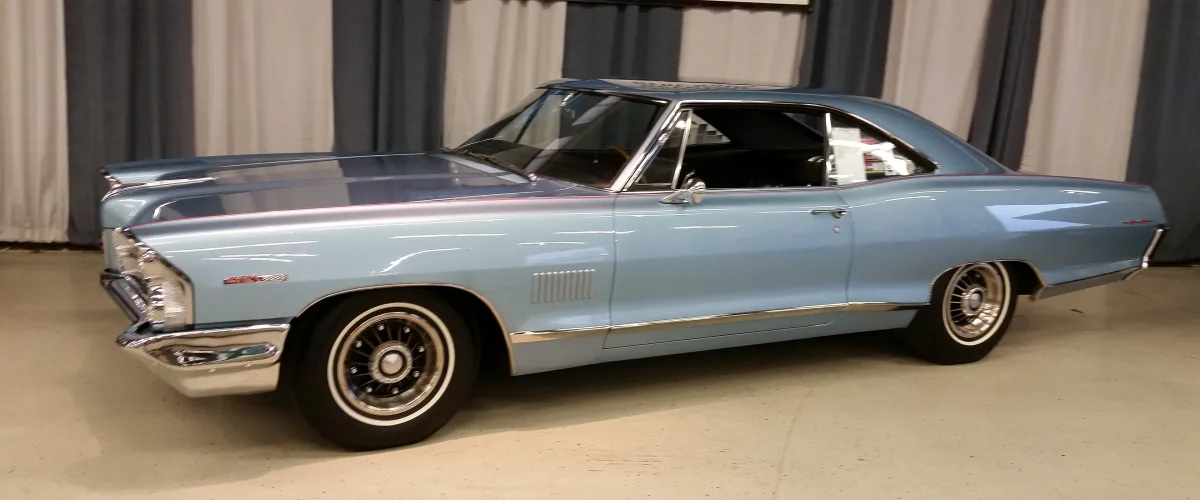
Pontiac 2+2: the American sports coupe and convertible and what the buyer needs to know
The Pontiac 2+2 is a large American sports model introduced in 1964 as a Catalina version and dubbed the “big brother to the GTO”. We look at what makes it special, which engines were offered, and what to check if you’re hunting one as a classic.






2+2 in brief
The Pontiac 2+2 debuted in 1964 as a Catalina trim package with special door panel details, separate front seats with a centre console, and unique exterior badging. The name “2+2” was borrowed from European sports cars and signifies two seats up front and two in the back.
Pontiac marketed it as the “big brother” to the famous GTO. In 1966, the 2+2 became a separate series, and in 1967, it reverted to being an additional Catalina trim. It was discontinued in the US due to poor sales.
Year-by-year differences
From 1965, the name “Catalina” was no longer written on the car, although technically it remained a Catalina variant. In 1965, the standard engine became the high-compression 421 cubic inch (6.9 L) V8, and in 1967, it was the 428 cubic inch (7.0 L).
In Canada, the 2+2 was produced until 1970. Canadian 2+2s had a Chevrolet B-body shell with Pontiac exterior trim, so they could be fitted with any Chevrolet engine — from the inline six to the big-block V8s.
Engines and transmissions
The 1964 base engine was a 389 cubic inch (6.4L) V8 with a dual-carburettor setup and a three-speed manual transmission on the floor. Optional extras included a three-speed automatic and four-speed manual transmissions, a four-carburettor setup, and the 'Tri-Power' system with three carburettors.
From 1965, the base engine was a 421 cubic inch V8, and GM's 'Tri-Power' setup was discontinued after 1966. Exact power figures vary by year and version, so check your vehicle's documentation.
What to check when buying such a car
The most important thing is body corrosion: sills, floors, underside of wings, boot floor. Check if the car is genuinely a 2+2 and not a Catalina with added badges: the body and engine numbers and documentation will help clarify this.
Check the engine number and documentation. Parts can be sourced through US Pontiac specialists, but specific 2+2 trim details might cost more.


Trim levels
The Pontiac 2+2 was produced over several model years, so below we outline the main versions.
Catalina 2+2
1964The first version was the Catalina trim package.
- Base 389 cubic inch V8
- Separate seats and a centre console
- Sport trim
2+2
1965The variant with the 421 cubic inch engine.
- High-compression 421 cubic inch V8
- Hardtop or convertible
- Unique exterior styling
2+2 kaip atskira serija
1966Separate Pontiac series.
- 421 cu. in. V8
- Hardtop or convertible
- Decorative vents in the fenders
Kanadiška 2+2
1967–1970Canadian-built version with a Chevrolet body.
- Often — Chevrolet engines
- Pontiac exterior
- Wide range of engine choices
Comparing the Pontiac 2+2 through the years
| 1964 | 1965–1966 | Kanadiška | |
|---|---|---|---|
| Who it's for | For classic car enthusiasts | For speed lovers | For collectors |
| Engine | 389 cu. in. V8 | 421 cu. in. V8 | Various Chevrolet engines |
| Body | Hardtop, convertible | Hardtop, convertible | Hardtop, convertible |
| Price in the used market (relatively) | €€€ | €€€ | €€€ |
If you're after a powerful classic American coupe, opt for the 1965–1966 model with the 421 cu. in. V8. Canadian cars are rarer and more intriguing for collectors.
Pros
- Powerful V8 engine
- Rare sporty 'big brother' GTO
- Distinctive 1960s design
- Convertible version
Cons
- High fuel consumption
- Some parts are expensive
- Check if it's genuinely a 2+2
Frequently asked questions
Is the 2+2 the same as the GTO?
No: the GTO was a smaller mid-size car, while the 2+2 is the bigger 'brother' on the Catalina platform with a more powerful engine and traditional size.
Why is it called the '2+2'?
The name is borrowed from European sports cars and means two seats up front and two in the back.
Was the 2+2 also produced in Canada?
Yes, it was produced in Canada until 1970 with a Chevrolet body and Pontiac exterior panels.
Updated 2026-10-21 · Trim levels and equipment vary by market and model year — check the equipment of the specific car. · Translated automatically


