 English
 Lietuvių
 Latviešu
 Eesti
 Polski
 Русский
 Українська
 Deutsch
 Nederlands
 Čeština
 Slovenčina
 Svenska
 Norsk
 Dansk
 Suomi


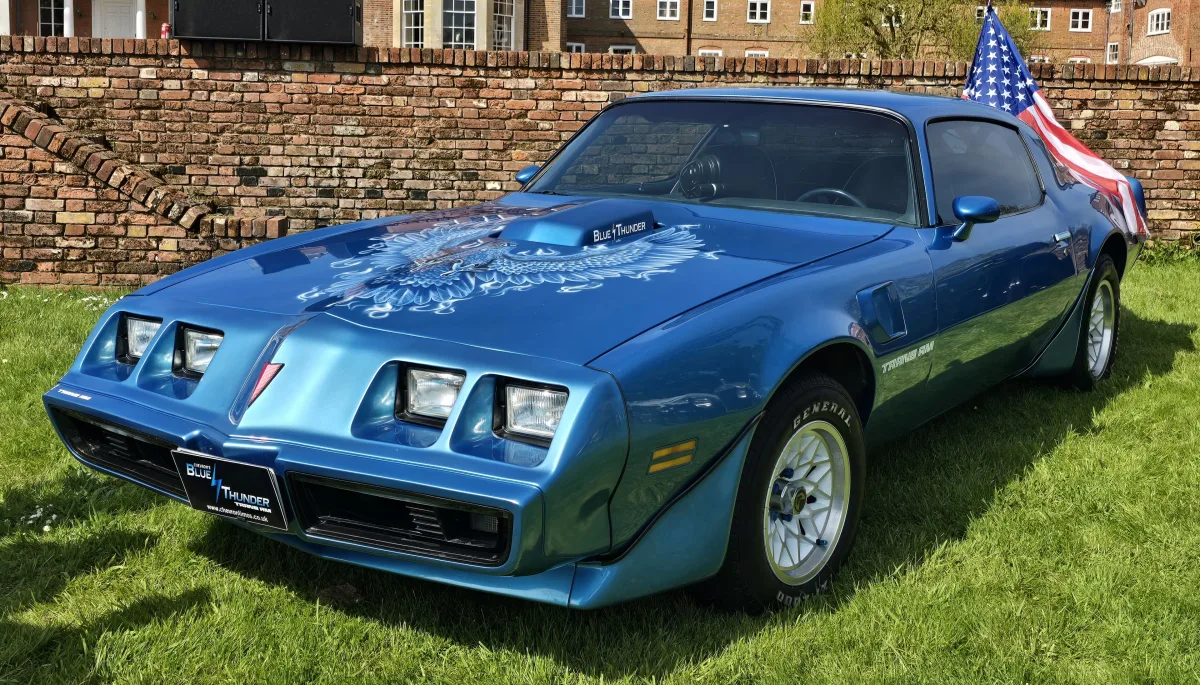
Pontiac Firebird Trans Am: generations, engines and what to know when buying
The Pontiac Firebird Trans Am is the sportiest version of the Firebird, debuting in 1969 and becoming one of the most iconic American pony cars. We look at the generations, engines, and what to check when buying such a car.






Trans Am in brief
The Firebird was introduced on February 23, 1967, just five months after the Chevrolet Camaro, with which it shared the F-body platform. It was designed to compete with the Ford Mustang and was produced until 2002. The Trans Am is the sportier, more distinctive version of the Firebird, debuting in 1969.
For over three decades, the Trans Am stood out with powerful V8 engines, aerodynamic add-ons, and a striking style. Thanks to its popularity in movies and TV, it became a true pop culture icon.
Which generation to choose
The first generation (1967–1969) features a Coke bottle-shaped body, and in 1969, the first Trans Am appeared—a rare and collector's item. The second generation (1970½–1981) is the most popular classic version. In 1979, a record number of Trans Ams were sold, and the 1977 film Smokey and the Bandit popularised the black gold Trans Am with the Firebird bird on the hood.
The third generation (1982–1992) features a lower, more aerodynamic body and a more modern driving experience. The 1982 model also became the car KITT in the TV series „Knight Rider“. The fourth generation (1993–2002) uses more modern V8 engines and is the latest and most readily available Trans Am for daily use.
Engines and transmissions
The first-generation 1969 Trans Am was offered with a 6.6-litre (400 cubic inch) „Ram Air III“ V8 (around 335 hp), or optionally with the „Ram Air IV“ (around 345 hp). In the second generation, the most common V8 engines were the 6.6-litre (400 cubic inch) and the larger 7.5-litre (455 cubic inch) units; later on, you might also find the „Oldsmobile“ 6.6-litre (403 cubic inch) engine.
In 1980–1981, the „Turbo Trans Am“ was offered with a 4.9-litre (301 cubic inch) V8 with a turbocharger. Transmissions varied by generation: from four-speed manuals and three-speed automatics to six-speed manuals and four-speed automatics in the fourth generation.
The fourth-generation Trans Am came with a 5.7-litre V8: early models (1993–1997) had the LT1, later ones (1998–2002) the LS1 (around 305 hp), and with the WS6 package around 320 hp.
What to check when buying a used Trans Am
One of the key questions is whether the car is genuinely a Trans Am. Many standard „Firebird“ models are converted into Trans Ams, so check the VIN, body, and engine numbers, and if possible, the manufacturer’s documents. Original documents are especially important for 1969 and other rare Trans Ams.
Inspect the body: floor, sills, wheel arches, sill beams, and the rear screen. On second-generation cars with removable roof panels ("T-top"), check the seals — water often seeps in through aging seals. On fourth-generation LT1 engines, check the "Opti-Spark" distributor, as water can get into it.
Most Trans Ams are imported from the USA, so check the car's history, accident data, and documents beforehand. The supply of spare parts in the USA is vast, so finding parts is usually straightforward.


Trans Am generations and versions
Names and equipment vary by year; we list the main Trans Am versions.
Trans Am
1969The first Trans Am is a rare collectible car.
- 6.6-litre "Ram Air III" V8 (around 335 bhp)
- Rear spoiler and bold stripes on the body
- Often — white body with blue stripes
Trans Am
1970½–1981The most popular classic generation.
- V8 engines — from 6.6 litres
- Often — "Firebird" bird emblem on the bonnet
- Often — removable roof panels ("T-top")
Turbo Trans Am
1980–1981A more affordable version with a turbocharger.
- 4.9-litre V8 with a turbocharger
- Special hood scoop
- Often comes with a more luxurious interior
Trans Am
1982–1992Third generation with a more aerodynamic body.
- V8 engine
- Manual or automatic transmission
- Often comes with removable roof panels
Trans Am
1993–2002The latest generation.
- 5.7-litre V8 (LT1, later LS1)
- Six-speed manual or four-speed automatic transmission
- Often comes with the WS6 package and Ram Air
Comparison of generations
| 1969 m. Trans Am | 1970½–1981 m. | 1993–2002 m. | |
|---|---|---|---|
| Who it suits | For collectors | For fans of classic American style | For those who want a daily-driven muscle car |
| Engine | 6.6-litre (400) V8, 'Ram Air' | 6.6-litre (400), 7.5-litre (455) and other V8s | 5.7-litre V8 (LT1, LS1) |
| Transmission | Manual or automatic | Four-speed manual or automatic | Six-speed manual or four-speed automatic |
| Rarity | Very rare | Most commonly found | Fairly easy to find |
| Price in the used market (relatively) | High-end | Mid-range–High-end | Budget |
For most buyers, the fourth-generation Trans Am will be the most appealing – it's the easiest to find and the most modern. Those seeking a classic should opt for the second generation, while the 1969 Trans Am is strictly for collectors.
Pros
- Iconic styling and the recognizable 'Firebird' badge
- Powerful V8 engines
- A wide range of parts available in the USA
- Four generations – from classic to more modern cars
Cons
- High fuel consumption
- You often come across modified 'Firebirds' being sold as Trans Ams
- The older bodywork can rust, and the removable roof panels can leak water
Frequently asked questions
How does the Trans Am differ from a standard 'Firebird'?
The Trans Am is the sportiest version with a more powerful engine, aerodynamic add-ons, and more distinctive styling. It first appeared in 1969.
How to spot a genuine Trans Am?
Check the VIN, body and engine numbers, and if possible, the factory specification. Always ensure it's not a converted 'Firebird'.
Which generation is best to buy?
If you're after a classic, go for the second generation (1970½–1981). If you want something more modern, the fourth generation (1993–2002) is the way to go.
Updated 2026-10-21 · Trim levels and equipment vary by market and model year — check the equipment of the specific car. · Translated automatically


