 English
 Lietuvių
 Latviešu
 Eesti
 Polski
 Русский
 Українська
 Deutsch
 Nederlands
 Čeština
 Slovenčina
 Svenska
 Norsk
 Dansk
 Suomi


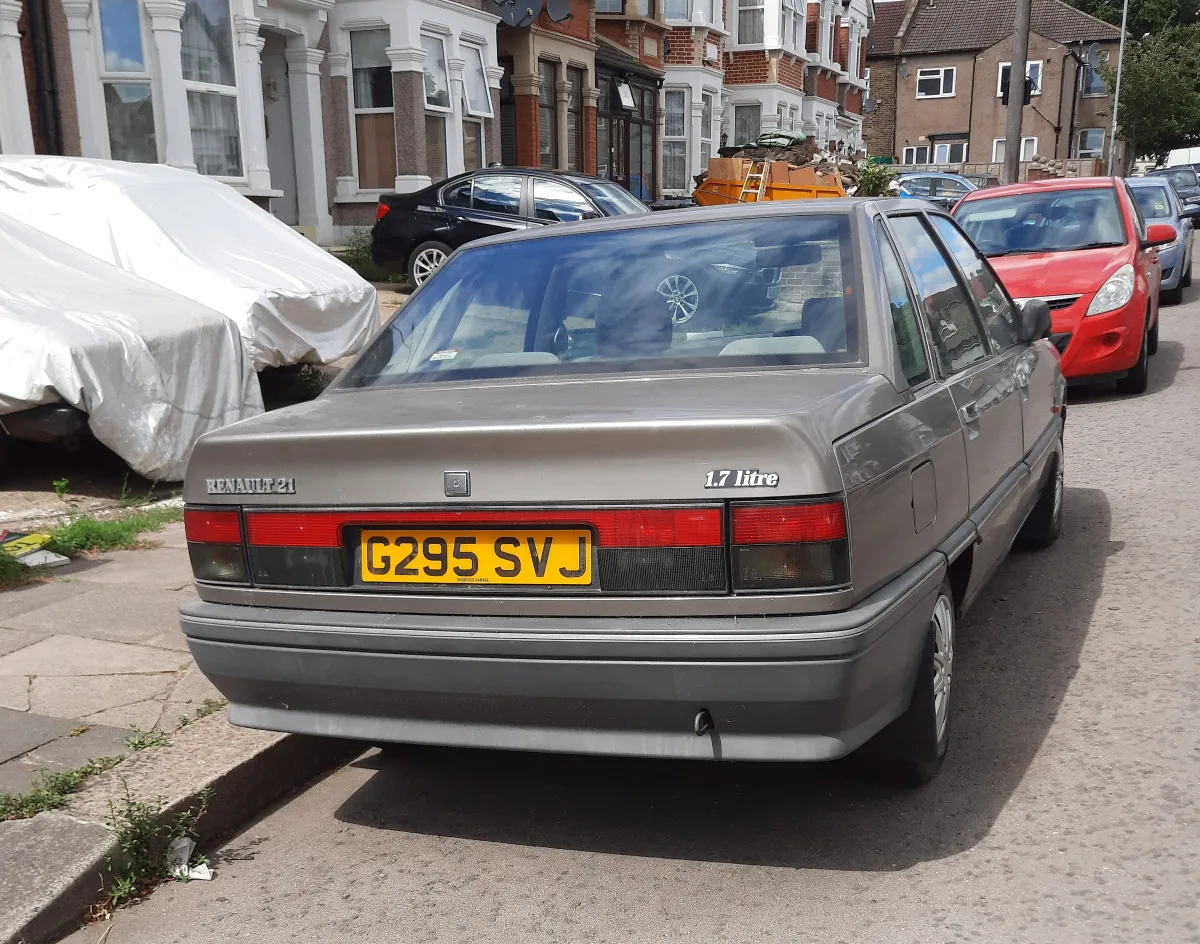
Renault 21: sedans and Nevada, engines and trims
Renault 21 (1986–1995) — a mid-size front-wheel-drive car, offered as a sedan, hatchback, and estate Nevada. We look at the engines, trims, and what to check before buying such an old car.






Renault 21 in brief
The 21 was a spacious and comfortable car, designed for families and long journeys. It was produced in sedan, hatchback, and estate (Nevada) bodystyles, with the sportiest version being the 21 Turbo.
Today, this is an old car, so you need to assess the condition of a specific example: the body, electrical equipment, and engine maintenance.
Which version to choose
Early 21s (up to around 1989) have a simpler appearance and interior, while the facelifted models feature a revised front, rear, and cabin. If you can choose, the later car is often the better option.
The Nevada estate is the most practical for families due to its large boot, while the 21 Turbo is for those who prioritise performance, but it needs to be bought with care.
Engines and gearboxes
Petrol engines range from 1.4 to 2.2 litres, plus a 2.0-litre turbo (21 Turbo). Diesels are 2.1 litres with or without a turbocharger.
Gearboxes are manual, with an automatic option also available. Four-wheel-drive versions (Quadra) are rare.
What to check when buying a used Renault 21
First, inspect the body for rust — sills, wheel arches, boot floor, and front crossmember. Also, check the electrical equipment, heating, and air conditioning.
The engine should run smoothly, without smoke or leaks. In turbo versions, additionally check the condition of the turbocharger, and in all cases, the history of the timing belt replacement.


Trim levels
Names and equipment vary by market and year; we list the most commonly found trims in Europe.
TL / GTL
1986–1995Simpler trims with smaller engines.
- Often a 1.4–1.7 l engine
- Basic interior trim
- Often — simple hubcaps
GTS
1986–1995Common mid-range trim for daily driving.
- Often — 1.7 or 2.0 l engine
- Often — electric windows
- Often — central locking
TXE
1986–1995Better-equipped version with more comfort.
- Often — 2.0 l engine
- Often — climate control
- Often — more luxurious interior
Turbo
from 1987The sportiest version with a turbo engine.
- 2.0-litre turbo engine
- Often — sporty interior
- Often — larger alloy wheels
Comparing versions
| TL / GTL | GTS | TXE | Turbo | |
|---|---|---|---|---|
| Who it's for | Affordable everyday car | For daily driving | For comfort | For dynamic driving |
| Engine | Mostly 1.4–1.7-litre | 1.7–2.0-litre | Often 2.0 l | 2.0 l turbo |
| Interior | Basic | More Comfortable | More Luxurious | More Sporty |
| Price in the used market (relatively) | Budget-friendly | Budget-friendly | Mid-range | Premium |
For most buyers, the condition of the body and engine matters more than the trim level. The Nevada estate isn't the most practical, but the Turbo is worth considering only if it has a clear history.
Pros
- Spacious and comfortable interior
- Nevada estate with a large boot
- Simple mechanics
- A wide range of engines
Cons
- Older cars with a risk of rust
- Electrical and minor faults
- Harder-to-find parts for some versions
Frequently asked questions
Is the Renault 21 still worth buying?
If you find a well-maintained, looked-after example — yes. Go for one without rust and with working electrics.
What's the difference between the Renault 21 and Nevada?
The Nevada is an estate with a larger boot, while the 21 is a saloon or hatchback.
Is the 21 Turbo worth considering?
If you're after a dynamic classic — yes, but you'll need to thoroughly check the turbo and engine condition.
Updated 2026-10-09 · Trim levels and equipment vary by market and model year — check the equipment of the specific car. · Translated automatically


