 English
 Lietuvių
 Latviešu
 Eesti
 Polski
 Русский
 Українська
 Deutsch
 Nederlands
 Čeština
 Slovenčina
 Svenska
 Norsk
 Dansk
 Suomi


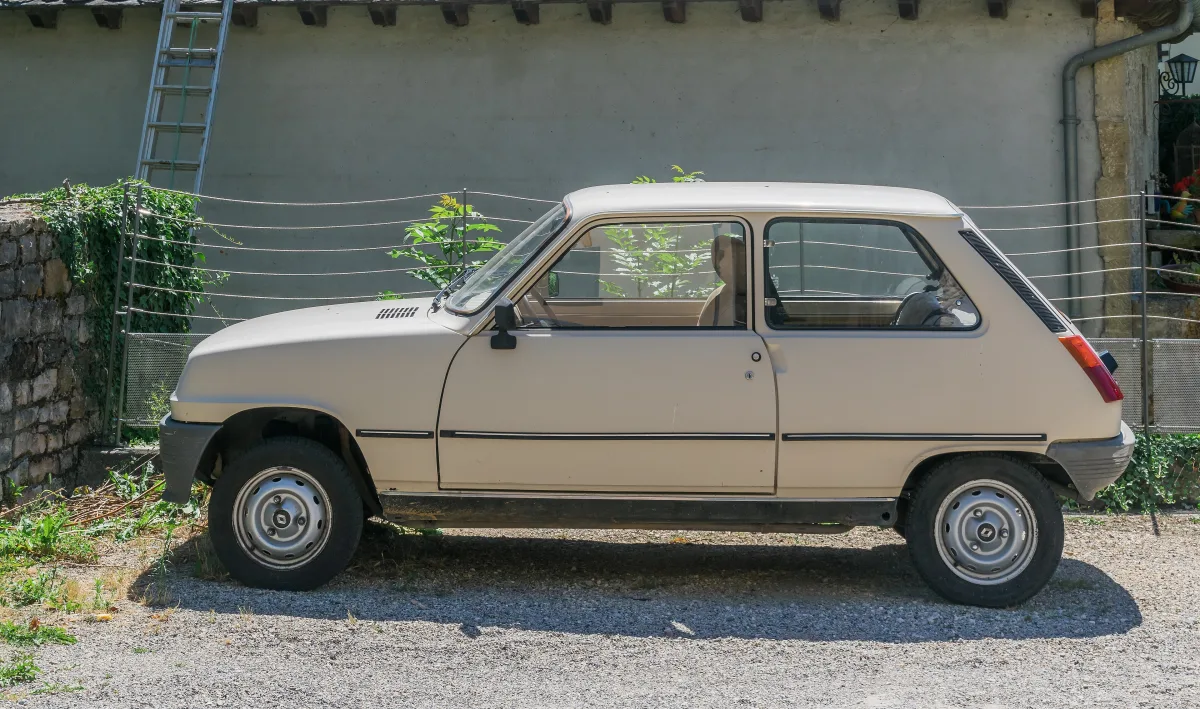
Renault 5: generations, engines, and what to know before buying
Renault 5 — a city hatchback produced from 1972–1996 that became one of France's most iconic cars. In this article, we look at the first generation and Supercinq, engines, sporty versions, and what to check when buying a used Renault 5.






Renault 5 in brief
The Renault 5 was introduced in 1972 as a compact, modern, and practical city car with plastic bumpers and front-wheel drive. Its design was innovative and quickly became iconic, making it one of Renault's most successful models in terms of sales.
The body style is a 3 or 5-door hatchback. The car was produced in two generations: the first ran until 1985, and the second, known as the Supercinq, until 1996. Today, it's a model cherished by classic car enthusiasts, especially the sporty versions.
Generations — what's the difference
The first generation (1972–1985) has a rounder appearance and a simpler construction. Here you'll find the sporty Alpine (known as Gordini in the UK) and the unique Renault 5 Turbo with its rear-mounted engine.
The Supercinq (from 1984) was introduced with a more modern, angular design, improved technology, and better equipment. The GT Turbo stands out — a fast sporty version that's highly sought after today.
Engines and gearboxes
Base versions came with small-capacity petrol engines, roughly from 0.8 to 1.4 litres, with power ranging from a few tens of horsepower to around 100 bhp. The Alpine had an engine producing about 93 bhp, while the sporty turbocharged versions had significantly more.
The Renault 5 Turbo has around 160 hp, while the Supercinq GT Turbo offers around 115–120 hp. Most cars come with a 4- or 5-speed manual gearbox.
What to check when buying a used Renault 5
First off, check for rust: inspect the floor, sills, wheel arches, front end, and wings. For turbocharged versions, the condition of the turbocharger and engine is particularly important, as well as maintenance records.
Check the suspension, steering mechanism, gearbox, and electrical system. Sporty versions are often modified, so ask for documents and an independent appraisal.


Trim levels
Names and equipment vary by market and year; we list the most common trims found in Europe.
Renault 5 TL
First generationThe base first-gen version, a popular classic.
- Small petrol engine
- Basic trim
- Plastic bumpers
Renault 5 GTL
First generationA more comfortable version with a larger engine.
- Engine up to around 1.1 litres
- Often features a better interior trim
- More economical to run
Renault 5 Alpine
First generationSporty version with a more powerful engine.
- Around 93 HP engine
- Sporty looks
- Sportier handling
Renault 5 Turbo
1980–1984Rare and collectible model with the engine behind the driver.
- Around 160 HP engine
- Rear-wheel drive
- Wider and more aggressive body
Supercinq GT Turbo
From 1985Second-generation sporty version with a turbocharger.
- Around 115–120 HP
- Engine at the front
- Sporty handling and interior
Comparison of Renault 5 versions
| 5 TL | 5 Alpine | 5 Turbo | Supercinq GT Turbo | |
|---|---|---|---|---|
| Who's it for? | Classic and relaxed motoring | Sporty classic | Collectors | Nippy little hatchback |
| Engine | Small petrol | 1.4-litre | 1.4-litre with turbocharger | 1.4-litre with turbocharger |
| Power (approx) | A few tens of hp | 93 hp | 160 hp | 115–120 hp |
| Engine location | Up front | Up front | Behind the driver | Up front |
| Price in the used market (relatively) | € | €€ | €€€ | €€ |
For most buyers, the simpler versions are the best fit — they're affordable and easy to fix. The GT Turbo is for enthusiasts of sporty hatchbacks, while the 5 Turbo is for serious collectors.
Pros
- Iconic design and classic value
- A compact, practical city car
- A wide range of versions — from basic to sporty
- A fairly easy-to-maintain construction
Cons
- Rust — the main issue
- Sporty versions are pricey and often modified
- Poor safety by today's standards
Frequently asked questions
What sets the Renault 5 Turbo apart from other 5s?
The Turbo has its engine behind the driver and drives the rear wheels, with a wider body and around 160 HP. It's a very rare, collectible model.
What is the Supercinq?
This is the second generation of the Renault 5, produced from 1984 to 1996. It features a new design, improved technology, and other sporty versions like the GT Turbo.
Is the Renault 5 suitable for daily use?
In short: it's an old car, lacking modern safety systems. It's only suitable for daily use if it's in excellent condition, but it's usually driven as a classic.
Updated 2026-10-19 · Trim levels and equipment vary by market and model year — check the equipment of the specific car. · Translated automatically


