 English
 Lietuvių
 Latviešu
 Eesti
 Polski
 Русский
 Українська
 Deutsch
 Nederlands
 Čeština
 Slovenčina
 Svenska
 Norsk
 Dansk
 Suomi


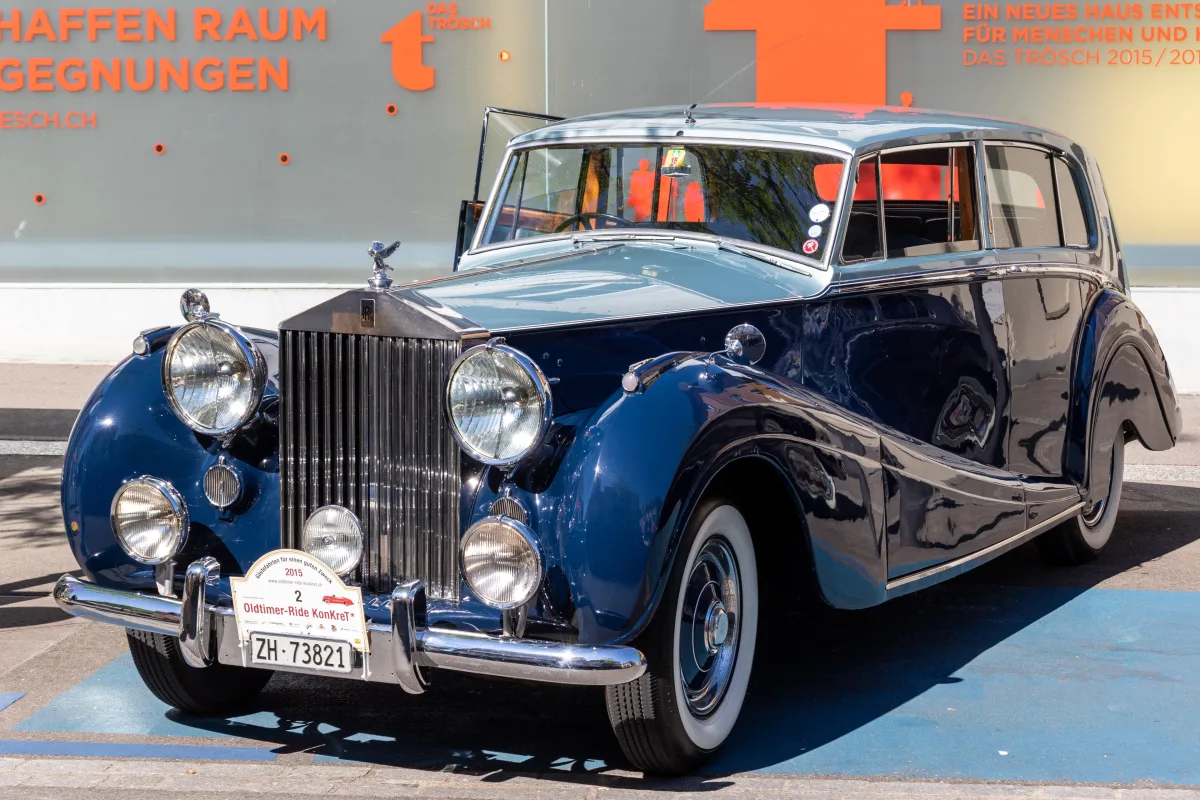
Rolls-Royce Silver Wraith: post-war luxury limousines with bespoke bodies
The Rolls-Royce Silver Wraith was the first post-war Rolls-Royce, produced from 1946 to 1959 and built on a separate chassis with custom bodies. We look at its history, technology, and what collectors need to know.






Silver Wraith in brief
The Silver Wraith was among the first post-war Rolls-Royces. The factory supplied the chassis, while the body was crafted by independent coachbuilders such as Park Ward, Hooper, or H. J. Mulliner.
As a result, there are no two identical cars — most feature unique designs and different interiors. This is crucial when assessing both appearance and value.
Which version to choose
The Silver Wraith was produced in several wheelbase lengths, with passenger comfort often prioritised over the driver's. Longer versions are ideal for those who value passenger space.
Later, from 1977 to 1980, the name Silver Wraith II was used for a completely different car — a stretched version of the Silver Shadow. Make sure you know which version you're interested in.
Engine and transmission
The Silver Wraith features an inline six-cylinder engine, with displacements ranging from approximately 4.3 to 4.9 litres over time. The engine was designed for maximum comfort and smooth operation, not sportiness.
The transmission was initially manual, but an automatic option became available later. Drive is to the rear wheels.
What to check when buying a Silver Wraith
The most important thing is the condition of the body and frame, and any corrosion. Bodies often have wooden elements that can rot, and restoration is complicated and expensive.
Check the condition of the engine, gearbox, brakes, and suspension, as well as the documentation and history. A Rolls-Royce or Bentley specialist can help assess the car.
Buy only from reliable sources and find out in advance about parts availability and maintenance options.


Trims
Names and equipment vary by market and year; we list the versions most commonly found in Europe.
Su įprasta ratų baze
1946–1959The standard version designed for the family and passengers.
- Custom body
- Inline six-cylinder engine
- Luxurious interior
Ilgoji versija
Later yearsLonger wheelbase, more space for passengers
- More room in the cabin
- Often — a partition between the driver and passengers
- Limousine-style body
Comparing Versions
| Įprasta bazė | Ilgoji versija | |
|---|---|---|
| Who It's For | For Classic Luxury Enthusiasts | For Passengers and Representation |
| Body | Custom, from the Manufacturer | Often a Limousine |
| Price in the Used Market (Relatively) | €€€ | €€€ |
Choose based on the body's condition, history, and whether the car is original. The body manufacturer can greatly influence the value.
Pros
- Post-War Luxury Symbol
- Custom, Handcrafted Bodies
- Smooth, Quiet Driving
- High Collectible Value
Cons
- Expensive Restoration and Maintenance
- Large dimensions and fuel consumption
- Rare parts and specialist search
Frequently asked questions
What's the difference between the Silver Wraith and Silver Wraith II?
The Silver Wraith II was a 1977–1980 elongated version of the Silver Shadow, while the original Silver Wraith was a 1946–1959 post-war model.
Who manufactured the Silver Wraith bodies?
Mostly independent coachbuilders like Park Ward, Hooper, or H. J. Mulliner.
Is the Silver Wraith suitable for daily use?
It's an old collector's car, so it's best used on special occasions.
Updated 2026-10-21 · Trim levels and equipment vary by market and model year — check the equipment of the specific car. · Translated automatically


