 English
 Lietuvių
 Latviešu
 Eesti
 Polski
 Русский
 Українська
 Deutsch
 Nederlands
 Čeština
 Slovenčina
 Svenska
 Norsk
 Dansk
 Suomi


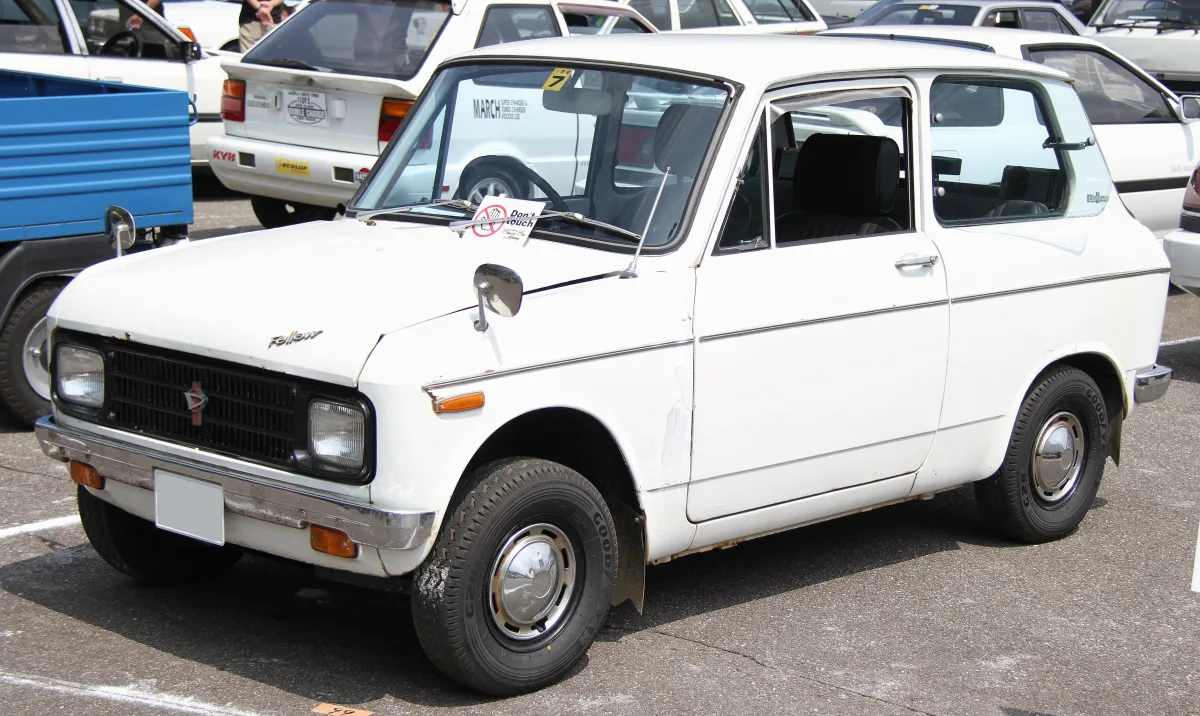
Daihatsu Fellow: A compact classic from Japan
The Daihatsu Fellow is a small Japanese kei-class car produced from 1966 to 1970 and is considered one of the first widely popular Daihatsu compact passenger models. Today, it's a collector's item, so we'll discuss what it offered and what to know if you're hunting for this classic.






The Fellow in brief
The Fellow was a small, lightweight passenger car designed to meet Japanese kei-class requirements—with a very small engine and compact dimensions. It was offered as a two or four-door body, as well as a pickup and microbus.
The Fellow is rarely seen in Lithuania, making it more of a collector's or enthusiast's car rather than a daily driver. Note that it's sometimes listed as the 'Daihatsu Fellow Max,' though that's a later, improved model.
Versions — what sets them apart
The first Fellow version debuted in 1966, with production running until 1970. It was later replaced by the Fellow Max, which was slightly more modern and had improved technology.
Across various body styles—sedan, pickup, or van—the car maintained the same simple technical base. Differences were mainly in the interior trim: Custom versions were better equipped than the standard ones.
Engines and transmissions
The Fellow is powered by a small-displacement, two-cylinder, two-stroke engine with a capacity of around 360 cm³. This design was typical for kei-class cars, as it helped keep the weight and complexity down.
Gearbox — manual. Power is very low, so the Fellow is only suitable for slow city driving, not for highway journeys.
What to check when buying a Fellow
First — the body condition: the biggest issue with old Japanese cars is corrosion. Check the sills, floor, wheel arches, and boot floor, as repairs can be expensive and complex.
Second — parts availability. There are very few original parts, so you often have to search among collectors or order from Japan. Check the documents and whether the car can be registered in Lithuania as a classic.


Body styles
The Fellow was offered in several body styles, so we list them here.
Fellow sedanas
1966–1970The main passenger version.
- Often a two or four-door body
- Two-cylinder two-stroke engine
- Basic interior trim
Fellow Custom
1969–1970Better-equipped version with more trim.
- More chrome details
- Often — a better interior trim
- The same engine as the standard version
Fellow pikapas
1966–1970A cargo version with an open body section
- Small cargo compartment
- Basic design
- Often used for work
Comparing the versions
| Sedanas | Custom | Pikapas | |
|---|---|---|---|
| Who it's for | For the collector | For the enthusiast seeking better trim | For the occasional workhorse owner |
| Body | Sedanas | Sedanas | Pikapas |
| Engine | Around 360 cc | Around 360 cc | Around 360 cc |
| Price in the used market (relatively) | €€ | €€ | €€ |
The Fellow is only worth buying as a collector's car. The most important thing is a well-maintained body and a known history of the car, as repairs and finding parts can be challenging.
Pros
- A rare and interesting collector's car
- Simple and easy construction
- Small size
- Authentic 1970s Japanese look
Cons
- Very hard to find parts
- Corrosion is a big issue with old cars
- Very low power and minimal safety features
Frequently asked questions
Is the Fellow suitable for daily driving?
No. It's an old car with very low power and minimal safety features, suitable mainly for collectors and shows.
How does the Fellow differ from the Fellow Max?
The Fellow Max is a later, improved model that replaced the Fellow. It's more modern and has improved technology.
Can the Fellow be registered in Lithuania?
Yes, but first check the documents and requirements for historic cars. It's best to verify the conditions in advance.
Updated 2026-10-21 · Trim levels and equipment vary by market and model year — check the equipment of the specific car. · Translated automatically


