 English
 Lietuvių
 Latviešu
 Eesti
 Polski
 Русский
 Українська
 Deutsch
 Nederlands
 Čeština
 Slovenčina
 Svenska
 Norsk
 Dansk
 Suomi


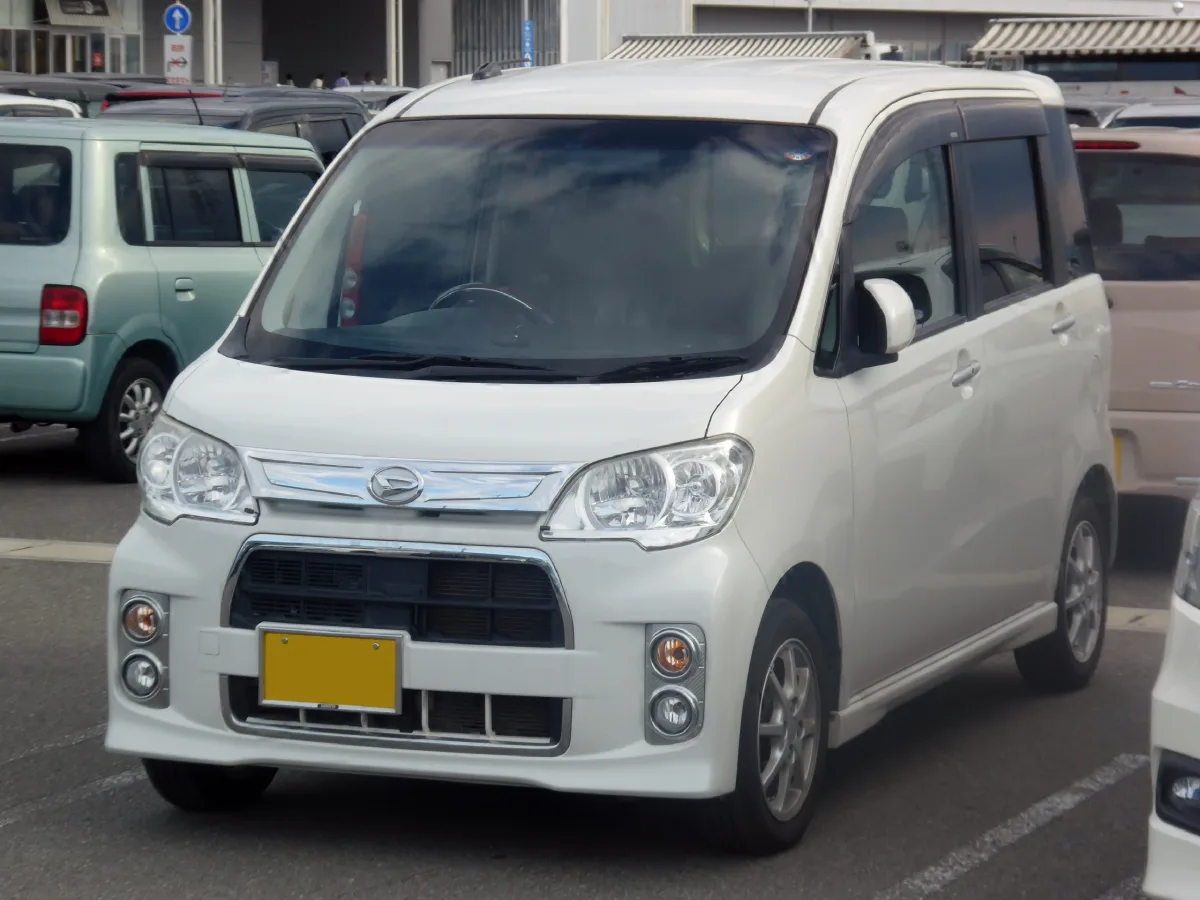
Daihatsu Tanto Exe: a compact kei class microvan, engines and versions
The Daihatsu Tanto Exe is a small, tall kei class car, produced for Japan roughly between 2009 and 2014 and tailored for families and everyday city use. In this article, we look at what sets it apart from the standard Tanto, which engines are fitted, and what you need to know if you're considering importing one to Lithuania from Japan.






The Tanto Exe in brief
The Tanto Exe is designed according to Japan's kei class regulations: compact dimensions, a 660 cm³ three-cylinder engine, and a very tall body that provides plenty of space for passengers and cargo. The car is made exclusively for the Japanese market, so it was never officially sold in Europe.
It's a straightforward city runabout: easy to drive, economical, and convenient to park. For longer highway journeys, it's less suitable, as the engine is small and the tall body is sensitive to side winds.
Tanto Exe vs Tanto — what's the difference
The Tanto Exe was offered alongside the standard Tanto at the time, but featured conventional, opening rear doors rather than sliding ones. As a result, its body looks more car-like, and the doors have a simpler design.
Like many Japanese kei cars, the Tanto Exe was sold in two styles: standard and Custom. The Custom version has a more aggressive front end, different headlights, and a more luxurious interior, with the best-equipped being the Custom RS with a turbo engine.
Engines and transmissions
A 660 cm³ three-cylinder petrol engine: naturally aspirated or turbo. Kei class rules cap power at 64 hp, so the turbo version differs from the naturally aspirated mainly in acceleration, especially when driving a fully loaded car or up a hill.
The gearbox is an automatic CVT. The drive is usually front-wheel, but some versions have all-wheel drive, which is handy in winter.
What to check when buying a Tanto Exe
These cars are often imported to Lithuania from Japan, so they usually have right-hand drive, and the actual condition can be hard to verify. Ask for the auction sheet with body and interior assessments and photos from the auction.
Check the CVT gearbox operation: juddering, hesitation, or vibration when moving can indicate a potentially expensive repair. In turbo versions, pay attention to the engine oil level and whether it has been regularly changed.
Inspect the body for corrosion and signs of repair, test all windows, air conditioning, and electronics. Before buying, find out if the car can be registered and insured, and where you can source parts, as they often need to be ordered from abroad.


Trim levels
Names and equipment vary by market and year; we list the versions most commonly found in Europe.
X
The entire production runA more basic trim with a naturally aspirated engine.
- Most often, a naturally aspirated 660 cm³ engine
- A more basic interior finish
- Often — steel wheels with hubcaps
G
The entire production runA better-equipped version with more comfort features.
- Often — alloy wheels
- Often — automatic climate control
- Often — heated mirrors and keyless entry
Custom G
The entire production runDistinctive styling with a naturally aspirated engine.
- More aggressive front end and bumpers
- Often — alloy wheels
- Luxurious interior trim
Custom RS
The entire production runThe sportiest version with a turbo engine.
- Turbo 660 cm³ engine
- Often — sportier interior and wheels
- Often — all-wheel drive
Comparison of trims
| X | Custom G | Custom RS | |
|---|---|---|---|
| Who it's for | For everyday city use | For style and comfort | For more dynamic driving |
| Wheels (most often) | Generations with roofs | Light alloy | Light alloy |
| Front and headlights | Standard design | More aggressive Custom front | More aggressive Custom front |
| Engine | 660 cm³, naturally aspirated | 660 cm³, naturally aspirated | 660 cm³, turbocharged |
| Price in the used market (relatively) | Budget-friendly | Budget-friendly | Mid-range |
For most buyers, the simpler version with the naturally aspirated engine will suffice. The Custom RS is worth considering if you often drive fully loaded or want a more lively acceleration.
Pros
- Very compact and easy to handle in the city
- Plenty of space inside compared to its exterior dimensions
- Economical engine
- Conventional, opening rear doors — a simpler design than those that swing out
Cons
- Not officially sold in Europe, so parts need to be sourced abroad
- Right-hand drive and a tricky service history to verify
- Not ideal for motorways or long journeys
Frequently asked questions
Can the Tanto Exe be registered in Lithuania?
Registration conditions depend on the car's documents and current regulations. Right-hand drive cars can be registered in Lithuania, but before buying, check the latest procedures at the Registrar.
How does the Tanto Exe differ from the Tanto?
The Tanto Exe has conventional rear doors, while the Tanto has suicide doors. Therefore, the Exe is considered a simpler and slightly more conventional alternative.
Is the Tanto Exe suitable for a family?
For the city and short trips — yes, as there's plenty of space inside. However, the car has modest power, so it's not the most comfortable choice for four adults with luggage on long motorway journeys.
Updated 2026-10-21 · Trim levels and equipment vary by market and model year — check the equipment of the specific car. · Translated automatically


