 English
 Lietuvių
 Latviešu
 Eesti
 Polski
 Русский
 Українська
 Deutsch
 Nederlands
 Čeština
 Slovenčina
 Svenska
 Norsk
 Dansk
 Suomi


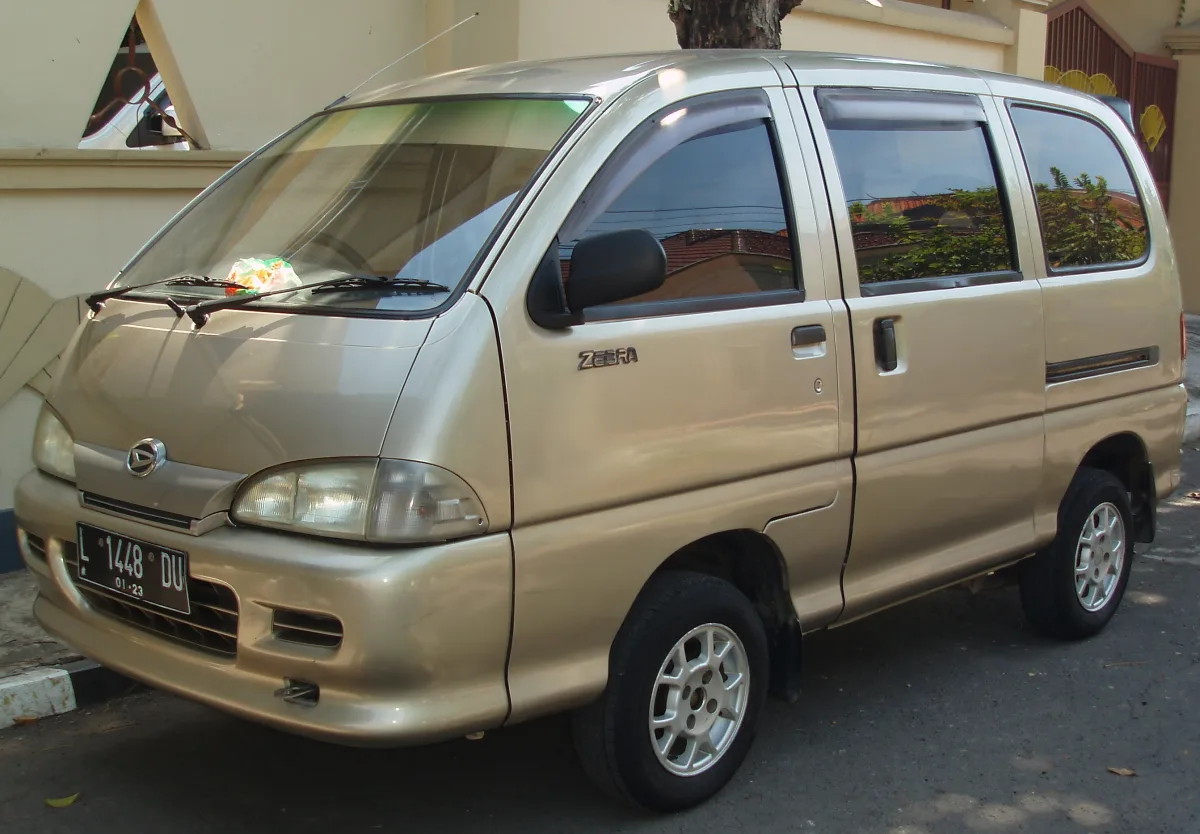
Daihatsu Zebra: generations, engines and trims
The Daihatsu Zebra is a range of passenger vans and pickups produced in Indonesia from 1986 to 2007. It's a model based on the Daihatsu Hijet, which you won't find in Europe. We're taking a look at the generations, engines, and trims — you'll be clued up if you spot this name in classifieds.






Zebra in brief
The Zebra is a van and pickup with a front-mounted engine, created by Daihatsu's Indonesian division. The first generation was introduced in August 1986 as an enlarged seventh-generation Daihatsu Hijet, and the second — in 1995 as the Zebra Espass based on the eighth-generation Hijet.
Production ended in October 2007 when the model was replaced by the Gran Max. In Malaysia, the second-generation car was sold as the Perodua Rusa. The Zebra is practically unheard of in Lithuania, so this article is primarily for getting acquainted with the model.
Generations — what's the difference
The first generation (S88/S89, 1986–1995) stood out with its boxy body. In 1989, it received a 1.3-litre 16-valve engine instead of the previous 1.0-litre, and the pickup version was called the D130 Jumbo.
The second generation (S90/S91/S92, from 1995) has a more rounded, aerodynamic body. The 2000 version was named the Neo Zebra, and vans were offered in five trim levels. In late 2004, the car was refreshed and renamed the Zebra Master.
Engines and gearboxes
The first Zebra came with a 1.0-litre three-cylinder engine (around 53 hp), later followed by a 1.3-litre 16-valve engine (around 72 hp) with a 4-speed manual gearbox. In its second generation, the 1.3-litre engine became standard, while higher trims featured 1.6-litre and later 1.5-litre 16-valve engines with carburettors or electronic fuel injection.
Pickups and vans predominantly featured manual transmissions. As these are commercial vehicles, their design is simple and built for heavy use.
What to know when looking for a Zebra
The Zebra is now a very old car, and most remaining examples are in Indonesia. If you're considering buying one in Lithuania, check if the car can be registered and if you can find parts.
Pay close attention to rust, engine condition, brakes, and body structure. Many parts are shared with the Daihatsu Hijet and Taruna, which can help when searching for spare parts, but finding them is still challenging.


Trim levels
Second-generation (from 2000, Neo Zebra) vans were offered in several trim levels; below are the main ones.
Blind Van
From 2000Cargo van.
- Designed for carrying loads
- Often comes with a 1.3-litre engine
- Basic interior trim
ZL
From 2000Passenger version with a 1.3-litre engine.
- 1.3-litre engine
- Passenger van
- Later came the ZL Xtra variant
ZX
From 2000Better-equipped version with a more powerful engine
- Initially 1.6-litre, from 2002 — 1.5-litre engine
- Often — better equipment than the ZL
- Later offered the ZX9 version
ZSX
From 2000The top passenger trim
- 1.6-litre, later 1.5-litre engine
- Often — chrome accents (post-2004)
- Best equipment of all vans
Comparison of Zebra van trims
| Blind Van | ZL | ZX | ZSX | |
|---|---|---|---|---|
| Who it suits | For hauling cargo | For carrying passengers and cargo | For comfort and a more powerful engine | For the best equipment |
| Engine | 1.3 | 1.3 | 1.6 or 1.5 | 1.6 or 1.5 |
| Price in the used market (relatively) | € | € | € | € |
The Zebra is a solid and affordable workhorse. If you're transporting passengers, opt for the ZX or ZSX, but the key factor is the condition of the specific vehicle.
Pros
- Simple and uncomplicated design
- Plenty of body styles (van, pickup)
- Some parts are shared with the Hijet and Taruna
- Low purchase price
Cons
- Rarely found in Lithuania
- An older vehicle, prone to rust
- Limited comfort and safety by today's standards
Frequently asked questions
Is the Daihatsu Zebra sold in Europe?
No. The Zebra was tailored for the needs of the Indonesian and some Asian markets, so you won't come across them in Europe.
How does the Zebra differ from the Hijet?
The Zebra was created as an upsized version of the Hijet: it features larger engines (1.3–1.6 l) and caters to a different market than the Japanese mini van.
What changes have been made to the Zebra?
Production ended in October 2007, when it was replaced by the Daihatsu Gran Max.
Updated 2026-10-21 · Trim levels and equipment vary by market and model year — check the equipment of the specific car. · Translated automatically


