 English
 Lietuvių
 Latviešu
 Eesti
 Polski
 Русский
 Українська
 Deutsch
 Nederlands
 Čeština
 Slovenčina
 Svenska
 Norsk
 Dansk
 Suomi


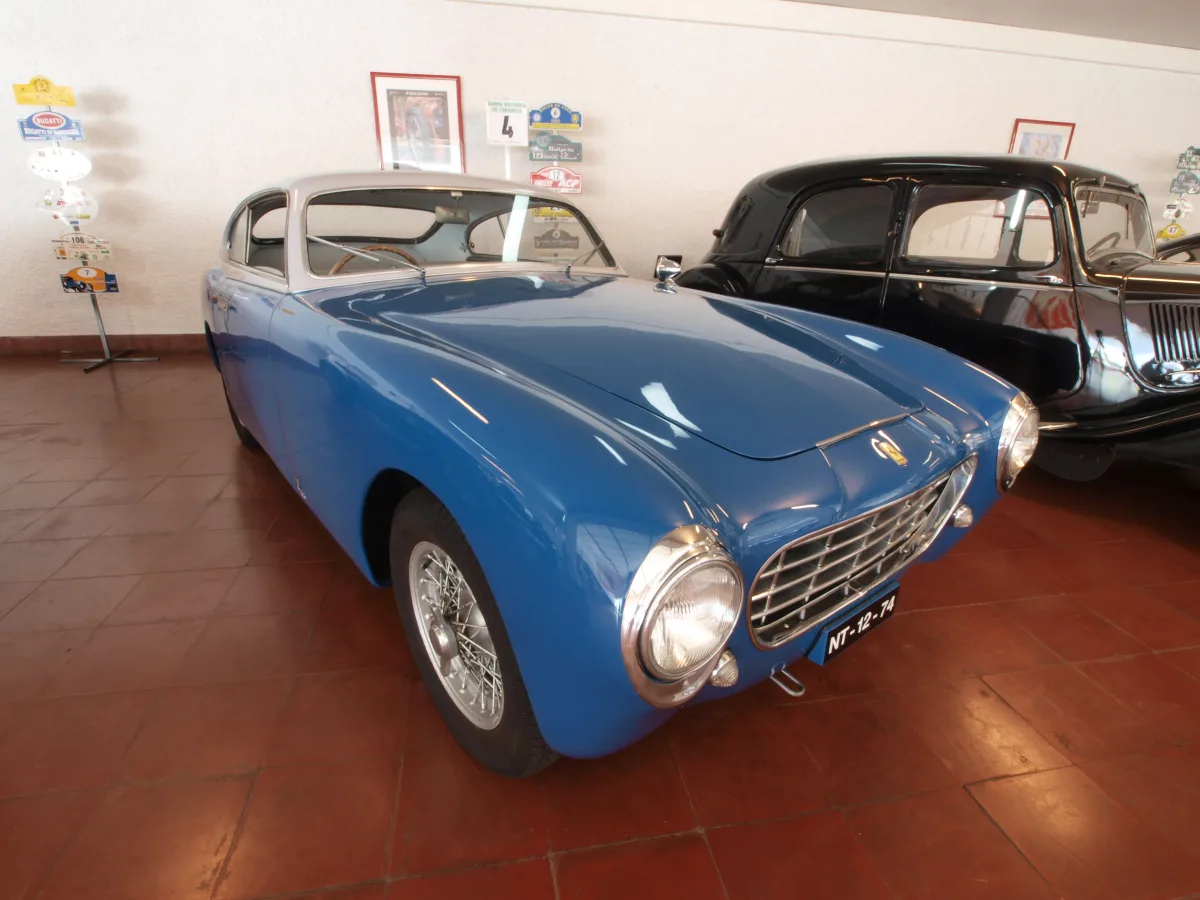
Ferrari 195 Inter: an early Ferrari V12 GT
The Ferrari 195 Inter was a grand tourer produced between 1950 and 1951, featuring an early Ferrari V12 engine. This article delves into its history, technology, and what you need to know about such a rare classic car.






195 Inter in brief
The 195 Inter was one of the first Ferraris designed for long-distance travel. Built on the 166 Inter chassis, it was enhanced and adapted for touring with a closed body and refined styling.
Today, it stands out as one of the most striking early Ferraris. Very few were made, so each surviving example has its own story, and the market is extremely limited.
Bodies and provenance
The 195 Inter chassis was clothed by various coachbuilders—most often Ghia, Vignale, and Touring. As a result, each car can look different.
Due to the handcrafted bodies, each example is slightly unique, and authenticity and body history are crucial to its value.
Engine and gearbox
The 195 Inter featured a Colombo-designed V12 engine with a capacity of around 2.3 litres. This was an early Ferrari V12, prized for its sound and refined construction.
The gearbox is manual. Given its age, all components—the engine, gearbox, and chassis—need to be maintained by specialists familiar with early Ferraris.
What to know before buying
The 195 Inter rarely comes up for sale, usually through specialist dealers or auctions. The key is accurate provenance, documentation, and matching chassis numbers.
Before you buy, consult a Ferrari classic car expert: check the body's originality, engine, restoration quality, and whether the car is eligible for classic car events.


Trims
Names and equipment vary by market and year; we list the most commonly found versions in Europe.
195 Inter Ghia
1950–1951Body by Ghia atelier.
- Elegant design
- Unique handcrafted body
- Very rare
195 Inter Vignale
1950–1951Body by Vignale atelier.
- Unique handcrafted body
- Very rare
- Body provenance is key
195 Inter Touring
1950–1951Body by Touring atelier.
- Unique handcrafted body
- Very rare
- Body provenance is key
Body comparison
| Ghia | Vignale | Touring | |
|---|---|---|---|
| Who it's for | For collectors | For collectors | For collectors |
| Engine | About 2.3-litre V12 | About 2.3-litre V12 | About 2.3-litre V12 |
| Body | Ghia | Vignale | Touring |
| Price in the used market (relatively) | €€€ | €€€ | €€€ |
195 Inter — purely a collector's car. The choice is dictated not by the spec, but by the bodywork, condition, and paperwork.
Pros
- Early Ferrari V12 GT
- Hand-built, unique bodies
- Very high collector's value
- Authentic early Ferrari history
Cons
- Very expensive and hard to find
- Complex and costly maintenance
- Important check of provenance and authenticity
Frequently asked questions
What does the 195 in the name mean?
The number is related to the capacity of one cylinder, and this series has around a 2.3-litre V12 engine.
Who designed the 195 Inter bodies?
Often, Ghia, Vignale, and Touring craftsmen were involved, so cars can look quite different.
Is the 195 Inter suitable for daily driving?
Technically, yes, but it's a collector's car, usually reserved for classic events.
Updated 2026-10-21 · Trim levels and equipment vary by market and model year — check the equipment of the specific car. · Translated automatically


