 English
 Lietuvių
 Latviešu
 Eesti
 Polski
 Русский
 Українська
 Deutsch
 Nederlands
 Čeština
 Slovenčina
 Svenska
 Norsk
 Dansk
 Suomi


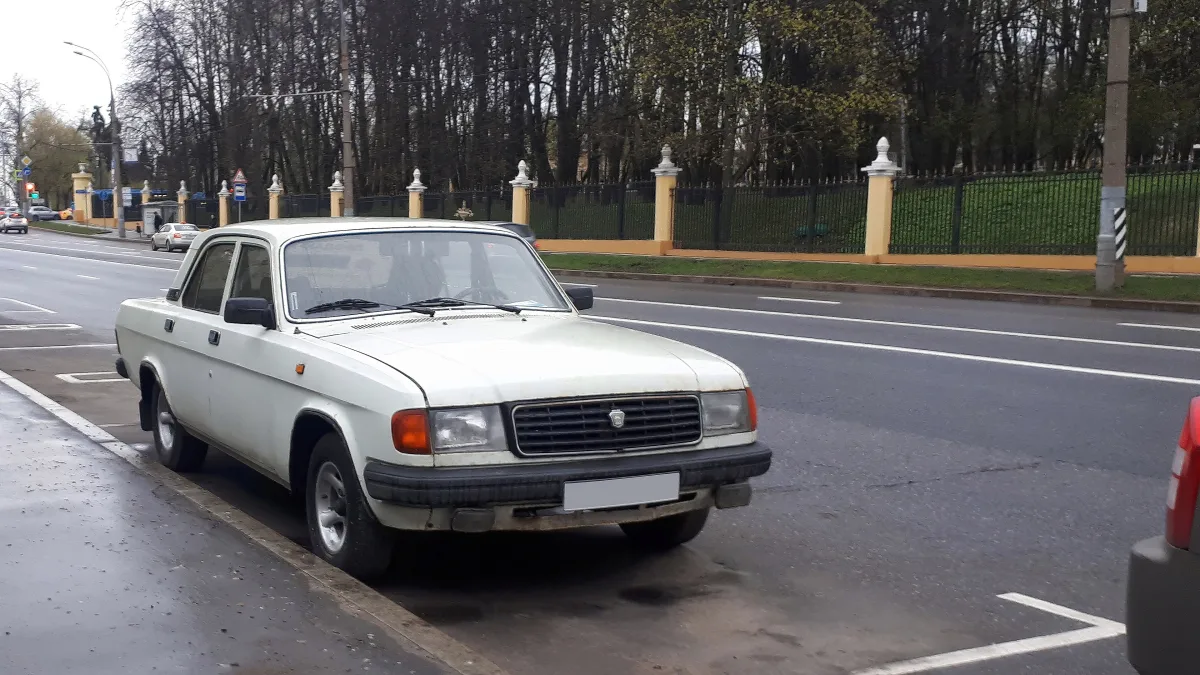
GAZ-31029 Volga: generations, engines, and what to know when buying
The GAZ-31029 was produced from 1992 to 1997 and served as a transitional model between the older GAZ-24 series and the later Volgas. We'll explore its origins, variants, and what to check when buying such a car in Lithuania.






GAZ-31029 in brief
The GAZ-31029 was manufactured by the Gorky Automobile Plant (GAZ) from 1992 to 1997. It was a stopgap solution: the development of the GAZ-3103, 3104, and 3105 series was delayed, and the GAZ-24-10 stamping equipment was worn out, so the plant modernised the existing Volga once more.
Most of the body panels were taken from the GAZ-3102, while the front end became more modern, with a sloping, more aerodynamic profile. The car features black plastic bumpers, so there are hardly any chrome details. The technology remained largely the same as the GAZ-24-10, with just a slight update to the electrical system.
Variants and updates
The base model is a four-door saloon. The taxi version was called the GAZ-31021 and ran on 80-octane petrol, the estate was the GAZ-31022, and the rapid response vehicle was the GAZ-31023. In 1993, a pickup prototype, the GAZ-2304 'Burlak', was shown, but it never made it to production.
In early 1996, the GAZ-31029-50 version appeared with a new 2.3-litre (2287 cc) ZMZ-406 fuel-injected engine, producing 145 hp and paired with a five-speed gearbox. The manufacturer quoted a 0-100 km/h time of 13.5 seconds and fuel consumption of around 9.3 litres/100 km. This version also required the front disc brakes from the GAZ-3102.
Record-breaking production — around 115,000 cars per year in 1993, but as volumes increased, build quality declined. This model changed the image of the 'Volga': from a symbol of authority and career success, it became an affordable everyday car.
Engines and gearboxes
Mechanically, the GAZ-31029 was identical to the GAZ-24-10: it came with a standard carburettor-fed petrol engine (carburettor K-151), rear-wheel drive, and a single rear axle. The electrical system was slightly modernised.
The base version has a manual gearbox, while the GAZ-31029-50 with ZMZ-406 was paired with a five-speed box. For a modern driver, the difference is significant: the fuel-injected engine and the extra fifth gear allow for more relaxed and economical driving.
What to check when buying a used GAZ-31029
First, inspect the body: check for dents, the floor, door sills, wheel arches, and the boot. Build quality dropped significantly, so the condition of cars varies greatly — it's important to see if the body has been treated for rust and hasn't been repainted after accidents.
For carburettor versions, check if the engine runs smoothly at idle, and for the ZMZ-406 version, check the electronics and fuel injection system. Assess the steering and suspension play, brakes, and electrical installation.
Finding spare parts is usually straightforward, as the 'Gazelle' uses more than half of the 'Volga's parts, including the engine and electrical system. Check documents and registration history in advance.


Variants by purpose
This model comes in variants tailored to purpose and engine, rather than specific trim levels.
GAZ-31029
1992–1997The main four-door saloon version.
- Carburetted petrol engine
- Rear-wheel drive
- Black plastic bumpers
GAZ-31029-50
from 1996Updated version with ZMZ-406 injection engine.
- 2.3-litre ZMZ-406 engine, 145 hp
- Five-speed manual gearbox
- Front disc brakes
GAZ-31022
1992–1997Estate version.
- Larger boot
- Same underpinnings as the saloon
- Practical for families and businesses
GAZ-31021
1992–1997Taxi version.
- Designed for 80-octane petrol
- Ideal for heavy city driving
- Often — high mileage and a long service history
Comparing variants
| GAZ-31029 | GAZ-31029-50 | GAZ-31022 universalas | |
|---|---|---|---|
| Who it suits | For daily use | For those wanting more modern tech | For hauling stuff |
| Engine | Carburetted petrol | 2.3-litre ZMZ-406, injection | As a saloon |
| Gearbox | Manual | Five-speed manual | Manual |
| Body | Saloon | Saloon | Estate |
| Price in the used market (relatively) | € | €€ | € |
For most buyers, the best choice is a GAZ-31029-50 with an injection engine and a five-speed box, especially if it's relatively free of rust. If the market allows, opt for this.
Pros
- Simple, easy-to-repair mechanics
- Wide parts availability, as many components are shared with the 'Gazelle'
- Spacious interior and rear-wheel drive
- Choice between saloon and estate
Cons
- Rust and inconsistent build quality
- Carburettor versions are quite thirsty
- Almost no modern safety features
Frequently asked questions
How does the GAZ-31029 differ from the GAZ-24?
The mechanics are essentially the same as the GAZ-24-10, but the body panels are mostly taken from the GAZ-3102, the front is new, and the bumpers are plastic.
Is it hard to find spare parts?
Usually not: many parts are shared with the GAZ-24 and the 'Gazelle', so the supply is quite ample. It's just a bit harder to find body and interior details.
Is it worth choosing the GAZ-31029-50?
Yes, if you can find one: the ZMZ-406 fuel-injected engine and five-speed gearbox deliver better dynamics and lower running costs than the carburetted versions.
Updated 2026-10-21 · Trim levels and equipment vary by market and model year — check the equipment of the specific car. · Translated automatically


