 English
 Lietuvių
 Latviešu
 Eesti
 Polski
 Русский
 Українська
 Deutsch
 Nederlands
 Čeština
 Slovenčina
 Svenska
 Norsk
 Dansk
 Suomi


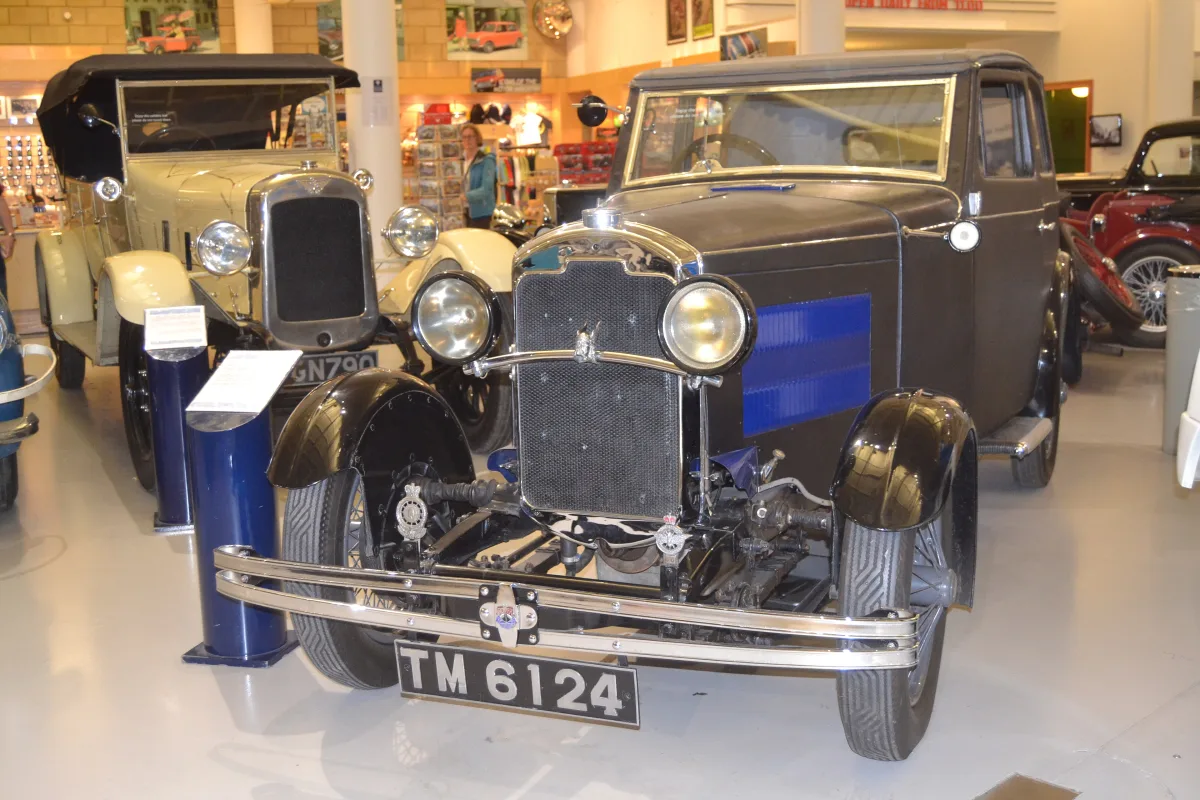
Rover Light Six: 1929–1930 British sedan that outpaced the 'Blue Train'
Rover Light Six — a lighter and narrower version of the 'Two-litre' sports sedan, produced from 1929 to 1930. We look at what makes it special, its technology, and what collectors need to know.






Light Six in brief
The Rover Light Six was introduced in October 1929 — it had a shorter wheelbase and was narrower and lighter than the 'Two-litre' sedan. It emerged at a time when new leaders and engineers joined the Rover team, beginning to modernise the factory.
In the following season, the car was sold with a 2.5-litre 20 hp engine named Rover Light Twenty, so the Light Six was produced very briefly and is extremely rare today.
Famous journey
The Light Six gained fame in January 1930 when it became the first successful participant in the race against the 'Blue Train' (Le Train Bleu) — the train running between Calais and the French Riviera. Rover covered roughly 750 miles in about 20 hours and beat the train by around 20 minutes.
Note that the car that participated in the race was an early factory test example, not every Light Six. Nevertheless, this story remains the model's proudest achievement to this day.
Engine and technology
The Light Six was powered by a 2-litre inline six-cylinder engine with overhead valves, producing around 45 hp, with a top speed of about 60 miles per hour (around 97 km/h). Its cylinder bore (65 mm) placed the car in the 16 hp tax class.
The gearbox is a three-speed unit, controlled by a central gate with a gate and a lock to prevent accidental engagement of reverse. The brake pedal operated all four wheels, while the handbrake acted on the rear wheels only.
What to check when buying such a car
The Light Six featured a very light fabric body under the Weymann license, so it's crucial to inspect the body frame, fabric, leather condition, and wooden elements. A rotting or damaged frame is the most expensive issue.
Check if the engine runs smoothly, if there are no leaks, and if the original mechanisms are still in place. Parts can be found through Rover classic car clubs, so before buying, inquire about their availability.


Trim levels
The Rover Light Six was produced for only a short period, so below are its main specifications.
Rover Light Six
1929–1930A light, short Two-litre sports saloon version.
- 2-litre inline six-cylinder engine
- Three-speed manual gearbox
- Fabric Weymann body
Rover Light Twenty
Early 1930sThe following season's offering featured a larger engine.
- 2.5-litre engine, 20 horsepower class
- The same design lineage
- Often — better equipment
Rover Light Six vs Light Twenty comparison
| Light Six | Light Twenty | |
|---|---|---|
| Who it's for | For collectors and history enthusiasts | For collectors |
| Engine | 2 L, six cylinders | 2.5 L, six cylinders |
| Usage | Events and shows | Events and shows |
| Price in the used market (relatively) | €€€ | €€€ |
The Light Six is a rare collector's car with a striking history, while the Light Twenty is its more powerful version. The choice largely depends on the specific car's condition.
Pros
- Famous history with the 'Blue Train'
- Rare pre-war British car
- Smooth inline six-cylinder engine
- Lightweight construction
Cons
- Extremely rare, almost unheard of in Lithuania
- Fabric body requires specialist care
- Parts need to be sourced through clubs
Frequently asked questions
Is the Light Six suitable for daily use?
No: this is a pre-war car designed for shows, events and leisurely drives, not daily commutes.
How does the Light Six differ from the Two-litre?
The Light Six had a shorter wheelbase and a narrower, lighter body than the Two-litre saloon.
What were the 'Blue Train' races?
These were unofficial races between cars and the high-speed train Le Train Bleu, held at the end of the 1930s and the start of the 1940s. The Light Six became the first successful participant.
Updated 2026-10-21 · Trim levels and equipment vary by market and model year — check the equipment of the specific car. · Translated automatically


