 English
 Lietuvių
 Latviešu
 Eesti
 Polski
 Русский
 Українська
 Deutsch
 Nederlands
 Čeština
 Slovenčina
 Svenska
 Norsk
 Dansk
 Suomi


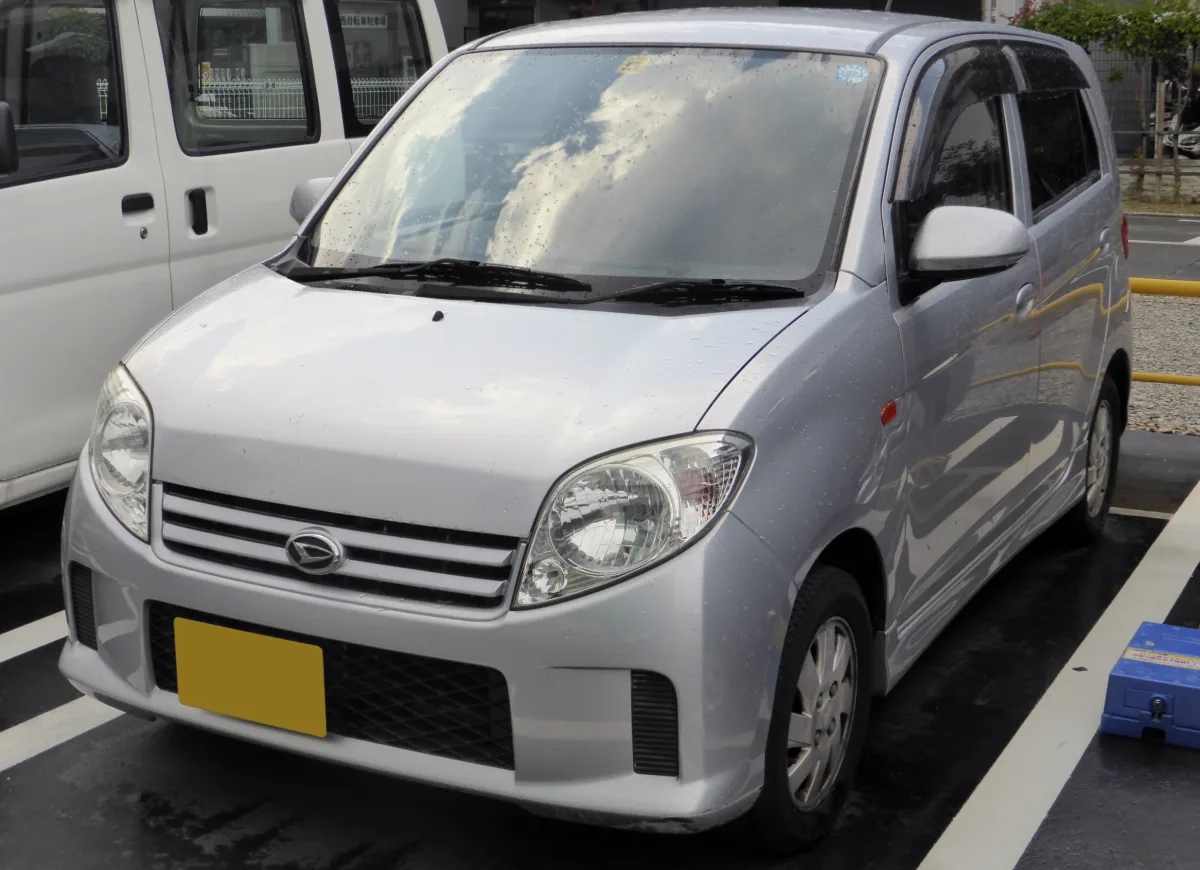
Daihatsu Max: a compact Japanese 'kei' car with a spacious boot
The Daihatsu Max is a Japanese 'kei' class car with three cylinders and a small engine capacity. We look at what sets it apart, its technology, and why it's rare in Lithuania.






Max in brief
The Max (L950S) was sold in Japan between approximately 2001 and 2005 as a tall, very compact 'kei' class hatchback. Its primary purpose is to offer plenty of interior space on narrow city streets.
Kei class cars have strict size and engine restrictions in Japan, so they are narrow and short but tall. In Lithuania, they are only found as imports with right-hand drive.
Versions and drivetrains
The Max was available with a standard naturally aspirated engine and with a turbocharger. Some models feature a four-wheel-drive (4x4) system.
When choosing, consider whether you need a turbo engine — it's more lively but requires more meticulous maintenance.
Engine and transmission
The engine is a 0.66-litre three-cylinder petrol unit, pushing the typical power limit for 'kei' class cars. Most models come with an automatic transmission.
These engines are economical in the city, but they struggle on the motorway, so they're not suited to long journeys.
What to check when buying a used Max
First, check the car's age and condition: it's already two decades old, so corrosion, rubber parts, and the suspension may be worn.
Try out the automatic gearbox, listen to the engine on a cold start and check the condition of the turbo components. Spare parts in Lithuania will need to be ordered from abroad.


Trim levels
Trim names varied by year, so a single consolidated description is provided.
Įprasta komplektacija
Full production runBasic city version with a naturally aspirated engine.
- Often — electric windows
- Often — central locking
- 0.66-litre naturally aspirated engine
Max version comparison
| Atmosferinis | Turbo | 4x4 | |
|---|---|---|---|
| Who it's for | City driving and short distances | For spirited driving | For winter roads |
| Engine | 0.66-litre naturally aspirated | 0,66 l turbo | 0,66 l |
| Gearbox | Front-wheel drive | Front-wheel drive | All-wheel drive |
| Price in the used market (relatively) | € | € | € |
For most, the naturally aspirated version will do just fine. Turbo is worth considering only if you prioritize spirited driving.
Pros
- Very compact size
- Low running costs
- Plenty of space inside, considering the dimensions
- Simple technology
Cons
- Limited comfort and speed on the motorway
- Right-hand drive
- Spare parts need to be ordered from abroad
Frequently asked questions
What is a 'kei' car?
This is a class of small Japanese cars with small engine capacities that benefit from special tax incentives.
Is the Max suitable for daily use in Lithuania?
It's fine in the city, but it's limited in winter and on highways, and the right-hand drive setup takes some getting used to.
Does the Max have a turbo?
Some versions come with a turbo engine, others with a naturally aspirated one. Check the car's documents to be sure.
Updated 2026-10-21 · Trim levels and equipment vary by market and model year — check the equipment of the specific car. · Translated automatically


