 English
 Lietuvių
 Latviešu
 Eesti
 Polski
 Русский
 Українська
 Deutsch
 Nederlands
 Čeština
 Slovenčina
 Svenska
 Norsk
 Dansk
 Suomi


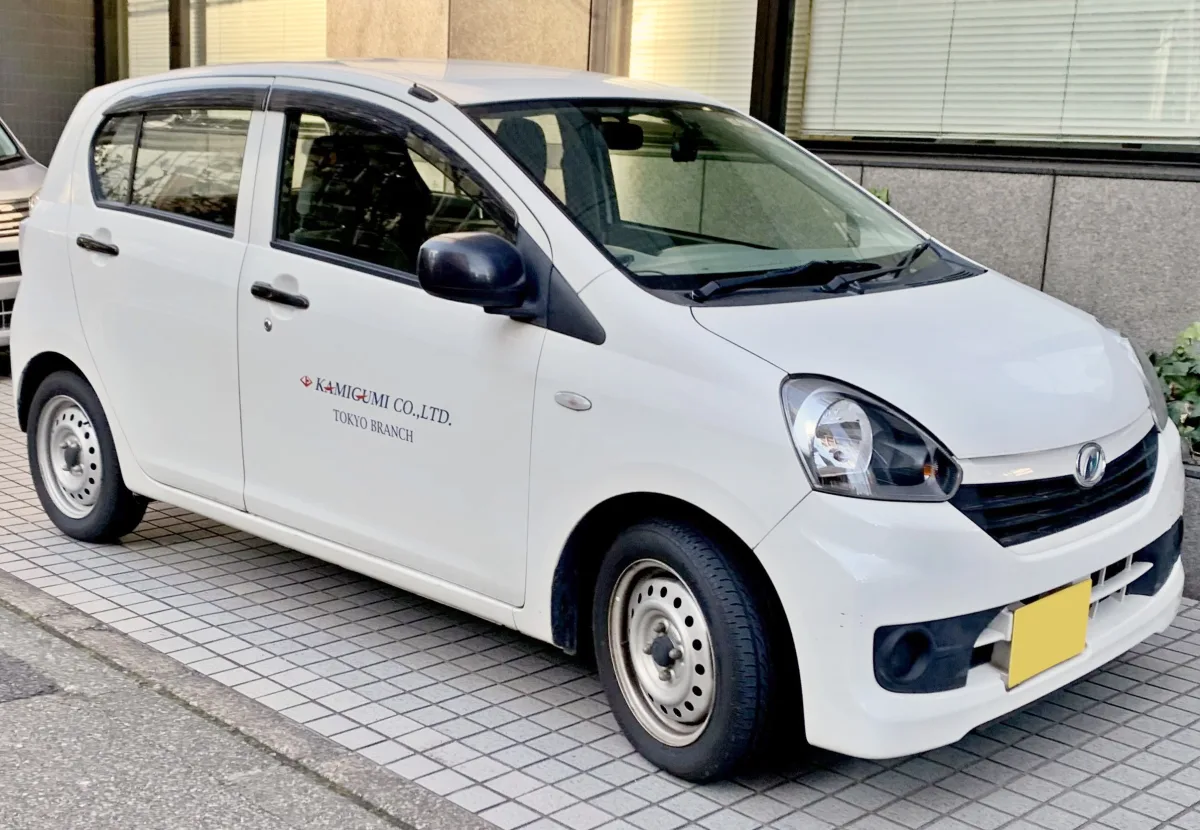
Daihatsu Mira e:S: economical kei class car
Daihatsu Mira e:S — economical kei class hatchback, produced since 2011. We review two generations, what the e:S technology offers and what to check when buying used.






Mira e:S in brief
Mira e:S — a compact five-door Daihatsu hatchback in the kei class, designed as an extremely economical city car. Its key feature is the „e:S“ technology, aimed at reducing fuel consumption.
In some markets or versions, it is sold under different names, for example, as Toyota Pixis Epoch or Subaru Pleo Plus.
Generations — what's the difference
The first generation (LA300) was produced from September 2011 to May 2017, the second (LA350) — from May 2017 onwards. The second generation features updated safety equipment (Smart Assist III) and a slightly more modern look.
Technically, both generations are very similar, so it's worth choosing based on condition and mileage.
Engine and transmission
Mira e:S has a 660 cm³ three-cylinder petrol engine with CVT. The drive is front-wheel, and in some versions, it can be all-wheel. It is equipped with an engine stop-start system that reduces consumption when idling.
This is a very economical car, but power is limited by kei standards, so it's not easy on the motorway.
What to check when buying a used Mira e:S
Inspect the body and interior, check the CVT operation (no juddering), as well as the engine and braking system.
Since the car is imported from Japan, check the mileage according to auction or service documents and whether it meets your country's registration requirements.


Trims
Trims vary by year; below are two of the most commonly found.
X
First generationBasic and budget-friendly trim.
- Often comes with steel wheels
- Basic interior
- 660 cm³ engine and CVT
G „SA III“
Second generationBetter-equipped version with advanced safety systems.
- Often comes with alloy wheels
- Smart Assist III safety system
- 660 cm³ engine and CVT
Mira e:S trim comparison
| X | G „SA III“ | |
|---|---|---|
| Who it's for | For basic and budget-friendly use | For a safer and more modern variant |
| Generation | First | Second |
| Price in the used market (relatively) | € | €€ |
For most buyers, it's better to choose a second-generation car for safety features, if the budget allows.
Pros
- Very economical engine
- Compact for city driving
- Simple and cheap to run
- Five doors for easy access
Cons
- Limited power on the motorway
- Small boot and cramped rear seats
- Parts imported from Japan
Frequently asked questions
How does the Mira e:S differ from the standard Mira?
The e:S comes with fuel-saving technologies like engine stop-start and a lighter build to reduce running costs.
What power does the Mira e:S have?
The standard limit is up to 64 hp, and the e:S usually has around 52 hp without a turbocharger.
Is the Mira e:S suitable for daily use?
Yes, especially in the city. On the motorway, it's slower and noisier than conventional cars.
Updated 2026-10-21 · Trim levels and equipment vary by market and model year — check the equipment of the specific car. · Translated automatically


