 English
 Lietuvių
 Latviešu
 Eesti
 Polski
 Русский
 Українська
 Deutsch
 Nederlands
 Čeština
 Slovenčina
 Svenska
 Norsk
 Dansk
 Suomi


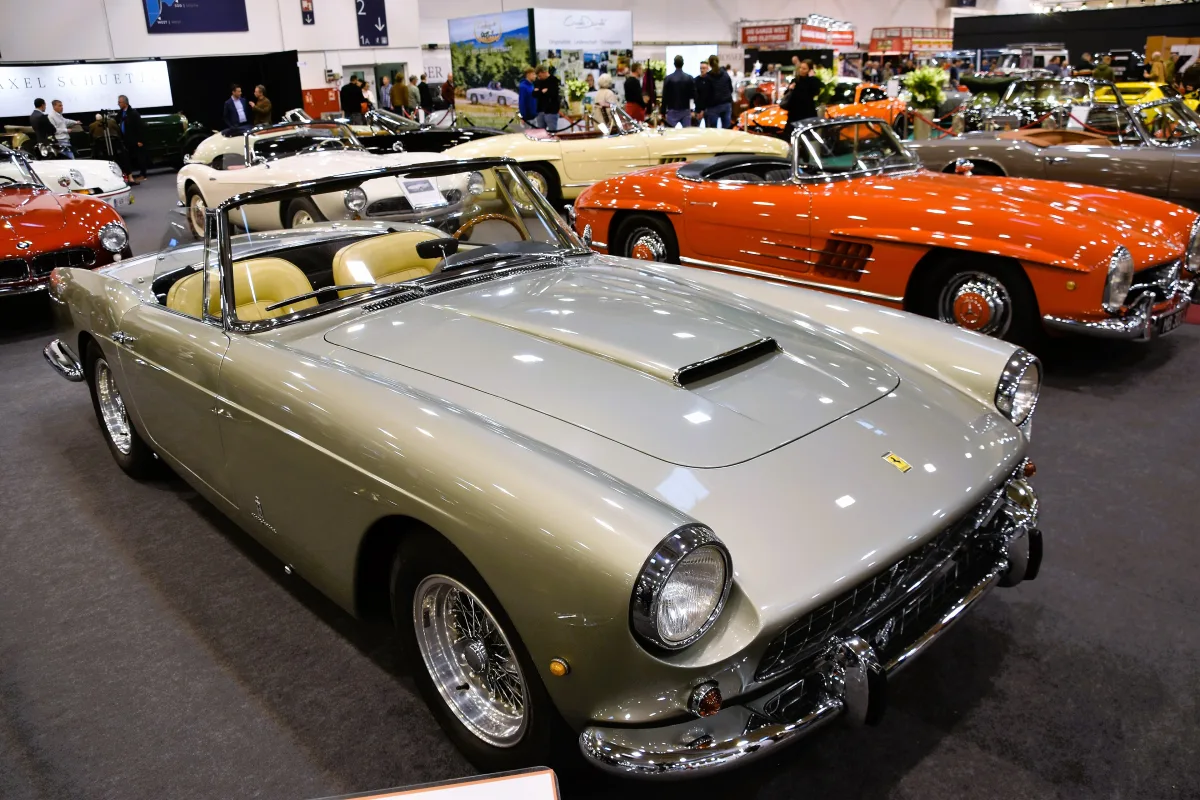
Ferrari 250 GT Cabriolet Pinin Farina: Series I and II, V12 and what to know
Ferrari 250 GT Cabriolet Pinin Farina — late 1950s and early 1960s open-top classic with Colombo V12 engine. We look at Series I and Series II, the tech, and what to check when buying such a collectible car.






250 GT Cabriolet in brief
The 250 GT Cabriolet Pinin Farina was an open-top model from the same 250 GT family, designed by 'Pinin Farina'. It was produced in two series: Series I (1957–1959) and Series II (1959–1962).
Very few Series I models were made — around forty examples. Series II saw about two hundred units produced, making it more common.
Differences between Series I and Series II
Series I is the earlier and significantly rarer series. Series II is the later and more numerous, with certain construction and design changes.
Both versions share the same core technical base — a front-mounted V12 engine and rear-wheel drive.
The engine and gearbox
The car is powered by a 3.0-litre 'Colombo' V12 engine, producing around 240 hp. The gearbox is a 4-speed manual, often with an overdrive.
Driving such a car is different from modern ones: heavier steering, longer braking distances, and higher maintenance demands.
What to check when buying a 250 GT Cabriolet
Most importantly — authenticity: check the chassis, engine, and gearbox numbers, history, and factory documents. Many of these cars have been restored, so the quality of the restoration is crucial.
Check the body for rust and previous repairs, as well as the condition of the soft top. Engine and chassis repairs are expensive, so you'll need a specialist who knows classic Ferraris.


Series
The Cabriolet had two series — Series I and Series II — not trim levels.
Series I
1957–1959The earlier, rarer series — just a few dozen examples.
- Early production series
- 3.0-litre Colombo V12
- Highly collectible
Series II
1959–1962The later, more widespread and modern series — around two hundred examples.
- Later production, with some modifications
- 3.0-litre Colombo V12
- Often — overdrive gears
Comparison
| Series I | Series II | |
|---|---|---|
| Who it's for | For the discerning collector | For the collector seeking a rarer model |
| Produced | Around four hundred | Around two hundred |
| Engine | 3.0-litre V12 | 3.0-litre V12 |
| Price in the used market (relatively) | Very expensive | Very expensive |
Series I is unique and pricier, Series II is more accessible and common. Both require documentation and specialist inspection.
Pros
- Rare classic Ferrari
- Characteristic Colombo V12
- Elegant Pinin Farina design
- High collectible value
Cons
- Very expensive maintenance
- Authenticity check is complex
- A shortage of parts and specialists
Frequently asked questions
How many Series I and Series II were produced?
Series I — roughly forty, Series II — around two hundred.
What are the differences between the series?
Series II — the later and more common series with certain construction and design changes, while Series I — the earlier and much rarer.
Is it suitable for daily use?
Rarely. This is a collector's car with high maintenance costs.
Updated 2026-10-21 · Trim levels and equipment vary by market and model year — check the equipment of the specific car. · Translated automatically


