 English
 Lietuvių
 Latviešu
 Eesti
 Polski
 Русский
 Українська
 Deutsch
 Nederlands
 Čeština
 Slovenčina
 Svenska
 Norsk
 Dansk
 Suomi


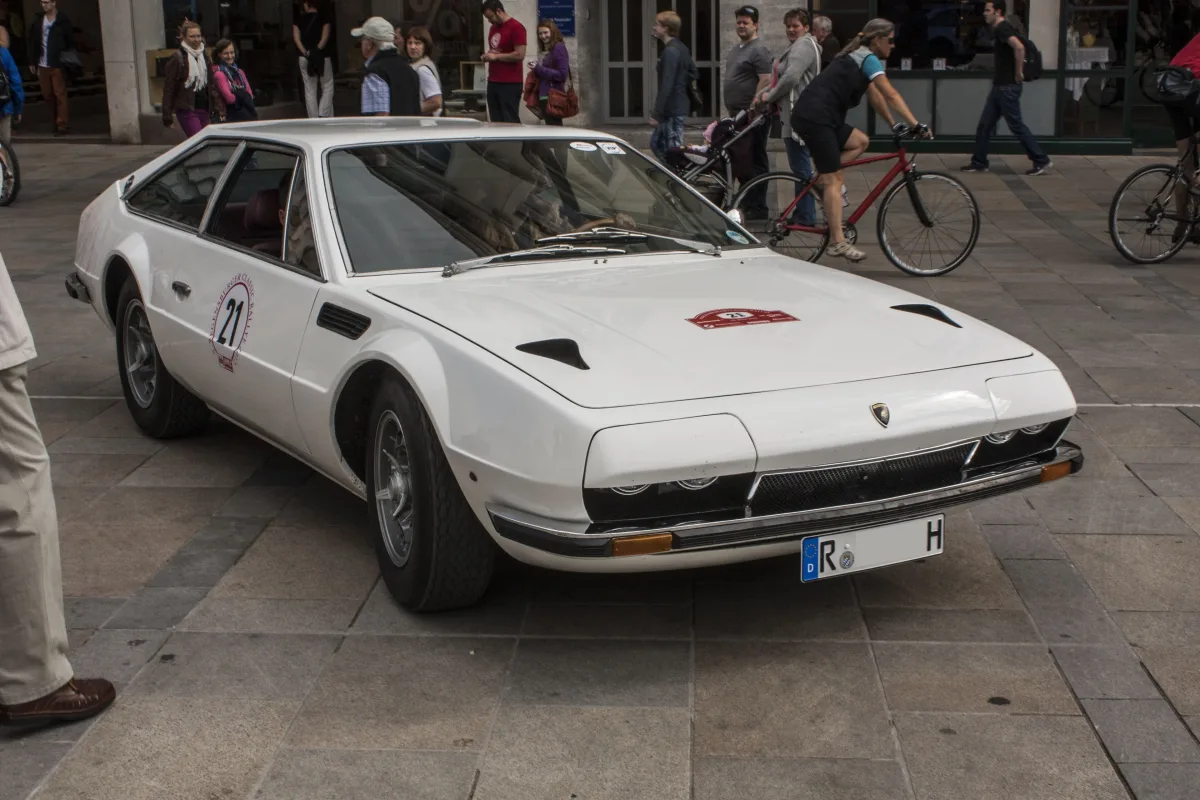
Lamborghini Jarama: generations, V12 engine and what to know when buying
The Lamborghini Jarama is an ultra-rare 2+2 coupé with a front-mounted V12 engine, produced in small numbers between 1970 and 1976. In this article, we discuss the Jarama 400 GT and Jarama S versions, the engine, and what to check before buying this collectible car.






The Jarama in brief
The Jarama was Lamborghini's 2+2 coupé with a front-mounted V12 engine, designed by Bertone. The car was named after the famous Spanish race track and was intended to replace the Islero, which was also a front-engine coupé.
It was designed for fast and comfortable journeys, not the track. Today, the Jarama is one of the rarer classic Lamborghinis, so it's usually found in collections.
Which version to choose
The first version is the Jarama 400 GT (1970–1972), and the later one is the Jarama S (from 1972), which was slightly improved: it has a more powerful engine, a more comfortable power steering, and a different interior trim.
If you have a choice, most collectors favour the Jarama S for its improvements, but the earlier 400 GT is rarer and has its own charm. When choosing, consider originality and history.
Engine and gearbox
The Jarama has a 4.0-litre V12 petrol engine, with around 350 hp, while the Jarama S has around 365 hp. The engine is front-mounted, with rear-wheel drive.
The gearbox is a five-speed manual, although some cars had an automatic option.
What to check when buying a used Jarama
The most important thing is the provenance and documentation. Due to the very small production run, you need to ensure the car is genuine, has the original engine and chassis numbers, and that its history is clear.
Check the body for corrosion and poor repairs, as the Jarama has a steel body that rusts easily. Inspect the V12 engine, gearbox, transmission, cooling system, and oil leaks.
Before buying, enlist the help of a specialist in classic Lamborghinis. Parts can be hard to find, and maintenance is expensive.


Trim levels
Names and equipment vary by market and year; we list the versions and trims most commonly found in Europe.
Jarama 400 GT
1970–1972The first version.
- 4.0-litre V12 engine
- Body designed by Bertone
- Five-speed manual gearbox
Jarama S
1972–1976An improved version with a more powerful engine.
- More powerful V12 engine
- More comfortable power steering
- Refreshed interior trim
Comparing Versions
| Jarama 400 GT | Jarama S | |
|---|---|---|
| Who It's For | For Enthusiasts of Rarer Versions | For Enthusiasts of Enhanced Versions |
| Engine | 4.0-litre V12, around 350hp | 4.0-litre V12, around 365hp |
| Gearbox | Manual, 5-speed | Manual, 5-speed (some with automatic) |
| Price in the Used Market (relatively) | €€€ | €€€ |
For most collectors, the Jarama S is the better choice as it's more refined, but the early 400 GT is rarer. The key is the car's history and originality.
Pros
- Distinctive Bertone design
- Characterful V12 engine
- A rare collector's car
- A comfortable 2+2 coupe for long journeys
Cons
- Very high price and limited supply
- Expensive maintenance and parts sourcing
- Prone to rust
Frequently asked questions
How many Jaramas were made?
Only a few hundred cars were produced between 1970 and 1976
How does the Jarama S differ from the 400 GT?
The Jarama S has a more powerful engine, an improved power steering system, and a slightly different interior.
Does the Jarama have a V12 engine?
Yes, a 4.0-litre front-mounted V12 petrol engine.
Updated 2026-10-19 · Trim levels and equipment vary by market and model year — check the equipment of the specific car. · Translated automatically


