 English
 Lietuvių
 Latviešu
 Eesti
 Polski
 Русский
 Українська
 Deutsch
 Nederlands
 Čeština
 Slovenčina
 Svenska
 Norsk
 Dansk
 Suomi


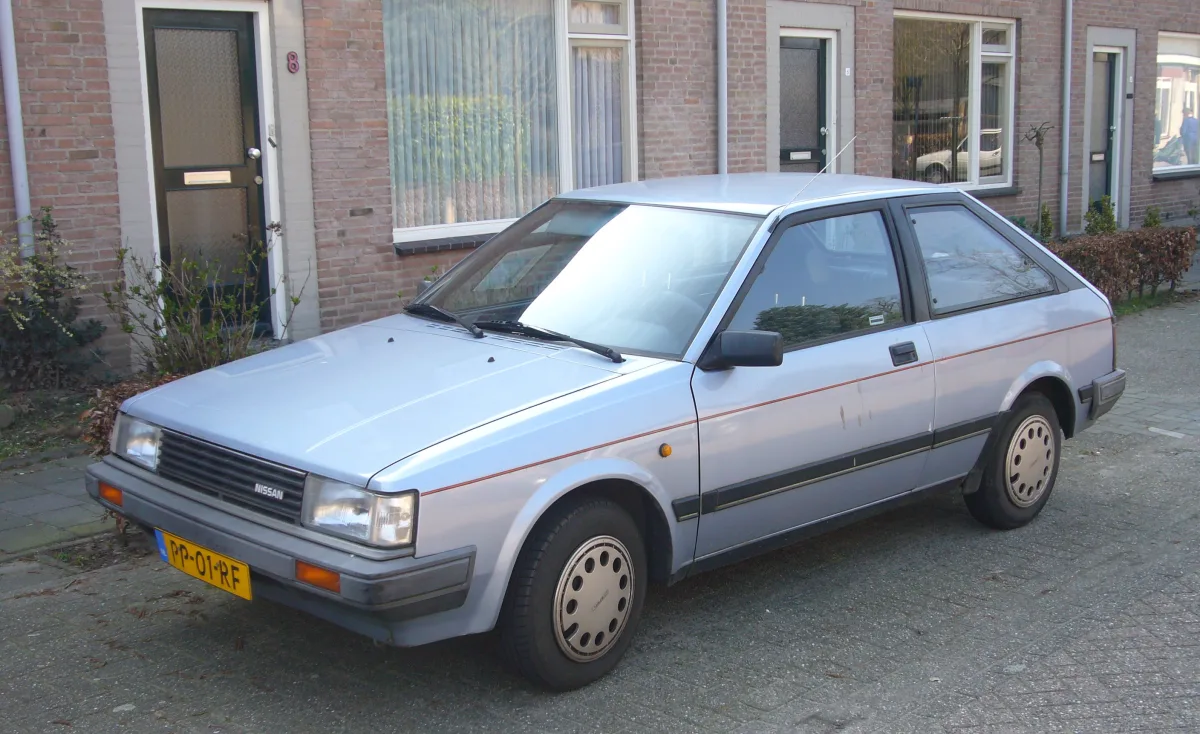
Nissan Cherry: compact hatchback, generations and what to know when buying
Nissan (initially Datsun) Cherry (1970–1986) — a Japanese compact car, known in Europe as the Cherry Europe. Here, we look at its generations, engines, and what you need to know when buying this classic car.






Cherry in brief
The Cherry was widely sold in Europe, where it was appreciated for its simple technology and affordability.
From 1970 to 1986, several generations were released, ranging from rear-wheel-drive models to more modern front-wheel-drive hatchbacks.
Generations — what sets them apart
The first two generations (E10, 1970–1974, and F10, 1974–1978) had rear-wheel drive and a classic look. They are now rare and sought after by collectors.
The third (N10, 1978–1982) and fourth (N12, 1982–1986) generations became front-wheel-drive hatchbacks. The N12 is the most modern and commonly found today.
Engines and transmissions
Earlier generations used 1.0–1.4-litre petrol engines. The N12 came with 1.0, 1.3, and 1.5-litre options, while the sporty Cherry Turbo featured a 1.5-litre turbo engine.
The transmission is usually manual, though some versions came with an automatic.
What to check when buying a used Cherry
Corrosion is the main risk. Check the wings, wheel arches, sills, boot floor, and underbody.
Check the engine, suspension, transmission, and electrical equipment. For turbo versions, the condition of the turbocharger and service history are particularly important.
Choice of parts is limited, but clubs and specialist suppliers can help. It's worth choosing a car with as original a trim as possible.


Trims
Names and equipment vary by market and year; we list the most commonly encountered versions.
DX
N12Base trim.
- 1.0–1.3-litre engine
- Basic trim
- Often — manual gearbox
GL
N12Better-equipped version.
- 1.3-litre engine
- More interior trim
- More comfortable seats
Turbo
N12Sportier version with turbo engine.
- 1.5-litre turbo engine
- Sportier trim
- The more desirable version
Comparing versions
| DX | GL | Turbo | |
|---|---|---|---|
| Who it's for | For everyday classic use | For comfort | For sportier driving |
| Engine | 1.0–1.3-litre | 1.3-litre | 1.5-litre turbo |
| Price in the used market (relatively) | € | € | €€ |
Most buyers will be happy with the DX or GL. The turbo is rarer and more interesting, but requires more maintenance.
Pros
- Simple and reliable technology
- Compact dimensions
- A rare classic Japanese car
- Low running costs
Cons
- Risk of corrosion
- Limited choice of parts
- Outdated interior and safety features
Frequently asked questions
Is the Nissan Cherry and Datsun Cherry the same?
Yes. The Datsun name was changed to Nissan in Europe around 1983–1984.
Which generations of the Cherry are there?
E10 (1970–1974), F10 (1974–1978), N10 (1978–1982) and N12 (1982–1986).
Is the Cherry suitable for daily use?
A well-maintained example can still run, but it's an old car with limited safety and parts availability.
Updated 2026-10-21 · Trim levels and equipment vary by market and model year — check the equipment of the specific car. · Translated automatically


