 English
 Lietuvių
 Latviešu
 Eesti
 Polski
 Русский
 Українська
 Deutsch
 Nederlands
 Čeština
 Slovenčina
 Svenska
 Norsk
 Dansk
 Suomi


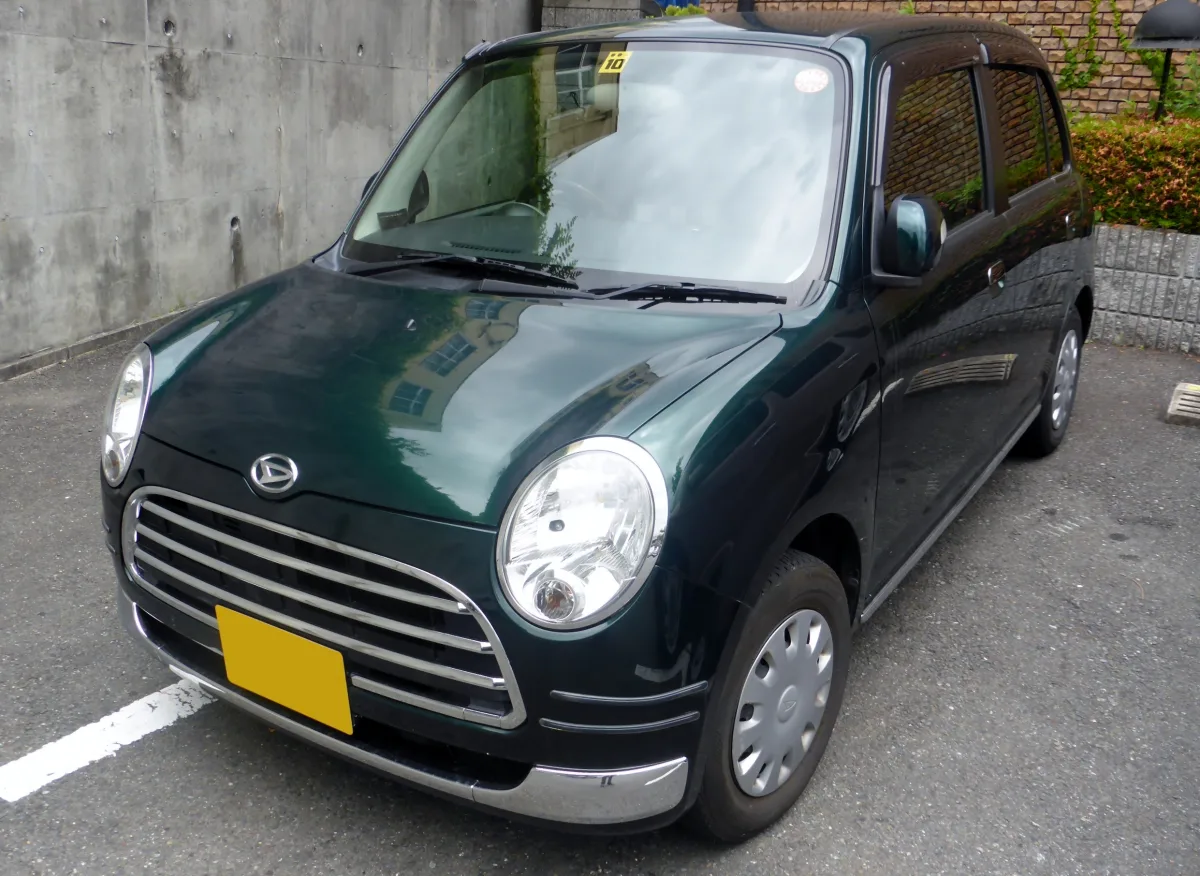
Daihatsu Mira Gino: retro small city car
Daihatsu Mira Gino — a Japanese 'kei' class city car with a retro style, produced from 1999 to 2009. We look at its two generations, engines, trims, and what to know when buying a used Gino, which is often imported from Japan.






Mira Gino in brief
Mira Gino — a small city car inspired by the classic Mini and the older Daihatsu Compagno. It replaced the Mira Classic and stood out with its round headlights, chrome details, and compact dimensions.
In terms of size and engine, it's a 'kei' class car — a Japanese category that benefits from lower taxes. It's rare in Lithuania and usually imported from Japan, so it has right-hand drive.
Which generation to choose
The first generation (L700, 1999–2004) was available as a three or five-door hatchback with several engine options. The second generation (2004–2009) was only available as a five-door hatchback with one engine option.
The first generation offers more choice, including a turbo version, while the second is slightly more modern and refined. In the European market, the second generation was sold as the Daihatsu Trevis with a 1.0-litre engine.
Engines and gearboxes
The first generation had three 3-cylinder engines: a 658 cc naturally aspirated (around 58 hp), a 658 cc turbo (around 64 hp), and a 989 cc (around 64 hp) in the Gino 1000 version. The second generation had only the 658 cc naturally aspirated (around 58 hp), while the Trevis sold in Europe had a 1.0-litre engine.
Transmissions include a 5-speed manual, 3 or 4-speed automatic, and for the first time, CVT. Most cars are front-wheel drive, but all-wheel drive is available in Japan.
What to check when buying a used Gino
First off — import documents and right-hand drive usage. Ensure the car is properly registered and suitable for Lithuanian roads. Verify that the stated mileage matches the car's condition.
Inspect the body (check for rust on sills and arches), engine leaks, turbo (if applicable), and the operation of the automatic transmission. Parts availability in Lithuania is limited, so check where you can get servicing.


Versions
Names and equipment vary by market and year; we list the versions available in Japan.
Gino (atmosferinis)
1999–2004The main first-generation version with a 658 cm³ engine.
- Around 58 HP
- 3 or 5-door body
- Often — retro styling with chrome
Gino Turbo
1999–2004The first-generation turbo version.
- Around a 64 HP turbo engine
- Often — sportier interior
- Rarer version
Gino 1000
first generationVersion with 989 cm³ engine.
- Around 64 hp
- Larger engine capacity
- Often — more features
Gino L / X
2004–2009 model yearsSecond-generation versions.
- 658 cm³ naturally-aspirated engine
- Five-door body
- Often — more modern interior
Comparing versions
| Gino | Gino Turbo | Gino 1000 | Gino L / X | |
|---|---|---|---|---|
| Who it's for | In the city | For faster driving | For mixed driving | For a more modern take |
| Wheels (usually) | Small | Small | Small | Small |
| Interior | Retro styling | Retro styling | Retro styling | Retro styling |
| Engine | 658 cc, around 58 hp | 658 cc turbo, around 64 hp | 989 cc, around 64 hp | 658 cc, around 58 hp |
| Price in the used market (relatively) | € | € | € | € |
The Gino is first and foremost a design car. A well-maintained example with a clear history is more important than the engine version.
Pros
- Distinctive retro looks
- Very compact, easy to park
- Low fuel consumption
- Basic tech
Cons
- Low power and limited comfort
- Right-hand drive and parts accessibility
- Limited space for passengers and luggage
Frequently asked questions
Is the Mira Gino suitable for long trips?
Best suited to the city. Due to its low power and small size, longer journeys aren't comfortable.
How does the Gino differ from the Trevis?
The Trevis is the second-generation Gino tailored for the European market with a 1.0-litre engine.
Does the Gino have four-wheel drive?
Offered in Japan, but most cars have front-wheel drive.
Updated 2026-10-21 · Trim levels and equipment vary by market and model year — check the equipment of the specific car. · Translated automatically


